A Moment Frozen in Pastel Light: Edgar Degas’ Woman Combing Her Hair
Edgar Degas, a figure perpetually debated within the annals of Impressionism, stands apart as an artist profoundly attuned to capturing fleeting moments of everyday life. Unlike his peers who sought to distill landscapes into shimmering impressions—Monet, Renoir—Degas relentlessly pursued realism, albeit infused with an unmistakable sensitivity to light and movement. His masterpiece, “Woman Combing Her Hair,” exemplifies this paradoxical approach, residing within the Ordrupgaard Collection in Denmark and offering a glimpse into the artist’s meticulous observation of the human condition.
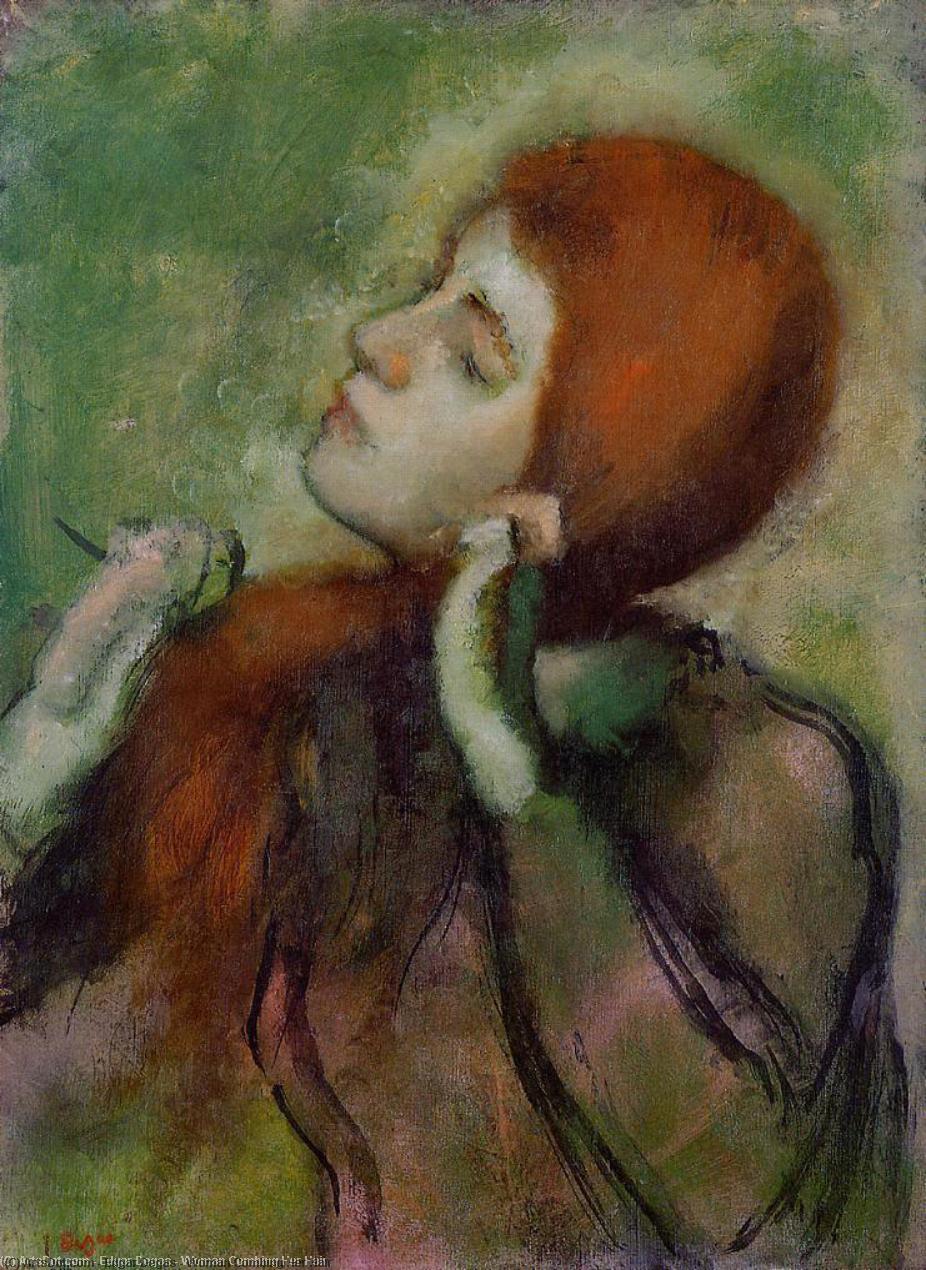
- Subject Matter: The painting portrays a woman engaged in the intimate act of combing her long hair. This seemingly simple scene—a woman tending to her personal grooming—became a recurring motif throughout Degas' oeuvre, reflecting his fascination with portraying women’s lives and domestic rituals.
- Style & Technique: Degas deliberately resisted categorization as an Impressionist, favoring instead a blend of Realism and Impressionism. He achieved this effect primarily through pastel, applying countless layers of pigment to create a velvety surface texture that captures the subtle nuances of light and shadow. The technique is remarkably innovative, prioritizing tonal gradation over bold color palettes—a deliberate departure from prevailing artistic trends.
- Composition: The painting’s composition centers around the woman's face, positioned prominently against a backdrop of flowing hair illuminated by diffused pastel hues. Two birds perched strategically on the left and upper right corners contribute to the visual dynamism, subtly enhancing the sense of tranquility and contemplation inherent in the scene.
The historical context surrounding “Woman Combing Her Hair” is crucial to understanding Degas’s artistic vision. Executed in 1890, it emerged during a period of significant social change—the burgeoning feminist movement challenged traditional gender roles and expectations. Degas' depiction of the woman—her gaze downward, her posture conveying quiet concentration—can be interpreted as reflecting these evolving societal attitudes.
Beyond its aesthetic qualities, “Woman Combing Her Hair” resonates with a deeper emotional impact. The pastel medium lends itself beautifully to conveying tenderness and vulnerability, capturing the subtle expressions of emotion that characterize human interaction. It’s a portrait not merely of appearance but of inner life—a testament to Degas' ability to distill complex psychological states into deceptively simple visual forms.
Considered alongside Degas’s other celebrated works – “Woman Seated on a Balcony,” “Three Women at the Races,” and “Seated Woman Combing Her Hair” housed in Musée d’Orsay – this pastel drawing underscores his enduring legacy as an artist who dared to explore the complexities of human experience with unwavering honesty and artistic brilliance. Its quiet beauty continues to inspire collectors and interior designers alike, offering a timeless reminder of Degas' profound understanding of the human spirit.