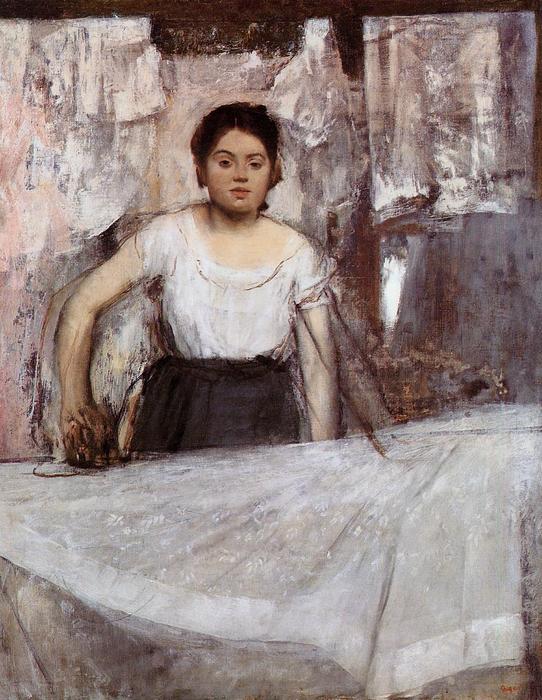
Witness Degas's 'Woman Ironing,' a poignant snapshot of Victorian life. This hand-painted reproduction captures the artist’s realism & social commentary, showcasing domestic labor with stunning detail.
パリ
フランス
エドガー・ドガ
ヒレール・ Germain-エドガール・ドガ
19世紀を代表するフランスの画家、エドガー・ドガ。バレエダンサーやパリの日常風景を捉え、革新的な構図と卓越した描写力で印象主義に影響を与えました。『踊り子』『カフェ・ド・シャワール』など、現代生活の真実を描き出した傑作群。
印象派、写実主義
パブロ・ピカソ
ギュスターヴ・クールベ
1834年7月19日
1917年9月27日
ヒレール・ Germain-エドガール・ドガ
フランス人
タムブリンを持つ踊り子
フランス、パリ
入絵主義
1
エドガー・ドガは、レーベルを拒否しながらも、どの芸術運動と関連付けられることが多いですか?
ミュンヘンのノイエ・ピナコテークで、18~19世紀ヨーロッパ美術の粋を堪能!レンブラント、モネ、クリムトなど、ロマン派から印象派まで、時代を彩る名画に出会えます。2030年までの改修工事中。
ドイツ
Dr. Michael Richartz
ミュンヘン
ノイエ・ピナコテーク
ロマン派絵画
年間約62万
3,000点以上の絵画
美術館
1853年
古代ギリシャ・ローマ彫刻
1
ノイエ・ピナコテークは主に、ヨーロッパのどの時代の美術に焦点を当てていますか?
A Snapshot of Domestic Labor: Degas’s “Woman Ironing”
Edgar Degas stands apart from his contemporaries—the Impressionists—not merely in stylistic preference but in fundamental artistic philosophy. He rejected the fleeting effects of light and color, prioritizing meticulous observation and capturing the essence of everyday life with unflinching realism. This dedication to portraying the tangible world is vividly realized in “Woman Ironing,” painted around 1876-1887, a work that transcends its seemingly simple subject matter to offer profound insights into Victorian society and Degas’s artistic vision.
The Subject Matter: Beyond Mere Representation
“Woman Ironing” isn't simply a depiction of housework; it’s an exploration of the female experience within the confines of domesticity. As noted by the Norton Simon Museum, Degas was fascinated by “the repetitive gestures made by laundresses as they worked,” recognizing their significance as symbols of labor and resilience. The painting portrays a young woman diligently ironing linen—a task emblematic of countless women’s daily routines during the Belle Époque. Her posture conveys both physical exertion and quiet concentration, reflecting the realities faced by working-class women striving to maintain a semblance of comfort amidst challenging circumstances. The inclusion of another figure in the background—presumably her husband—adds nuance to the scene, hinting at the complexities of family life and gender roles within Victorian society.
Style and Technique: Degas’s Impressionistic Realism
Despite his rejection of Impressionist aesthetics, Degas employed techniques that align with the movement's spirit. The loose brushwork characteristic of Impressionism—evident throughout the canvas—captures the immediacy of observation and avoids idealized representations. However, unlike Monet or Renoir, Degas eschewed shimmering surfaces for a more subdued palette dominated by earthy tones and subtle gradations of color. This deliberate restraint enhances the painting’s realism, emphasizing texture and capturing the nuances of light and shadow. The artist skillfully utilizes chiaroscuro—the dramatic interplay between light and dark—to sculpt the woman's form and create a sense of depth within the composition.
Historical Context: Victorian Domesticity Under Observation
“Woman Ironing” emerged during a period marked by significant social transformations in France, particularly concerning gender roles and class distinctions. The Victorian era witnessed increasing urbanization and industrialization, reshaping family structures and challenging traditional notions of femininity. Artists like Degas sought to document these changes, portraying ordinary individuals engaged in commonplace activities—a deliberate departure from the grand narratives favored by academic art academies. As highlighted in Wikipedia’s article, Degas's interest stemmed partly from his wife, Hélène Duerinckx (Nel), who served as a muse and model for many of his paintings. This collaboration underscores Degas’s commitment to portraying authentic human experience—a cornerstone of his artistic legacy.
Symbolism: Fatigue, Resilience, and Quiet Dignity
The painting's symbolism extends beyond its depiction of labor; it speaks to themes of perseverance and dignity amidst hardship. The woman’s slumped posture and weary expression convey the physical toll of repetitive tasks—yet her gaze upward suggests a quiet determination and an unwavering spirit. The wine bottle symbolizes the everyday realities faced by women during this era, reflecting their vulnerability and resilience in the face of illness and societal pressures. Ultimately, “Woman Ironing” transcends its visual representation to embody a powerful statement about the dignity of labor and the enduring strength of the human spirit—a timeless masterpiece that continues to resonate with audiences today.