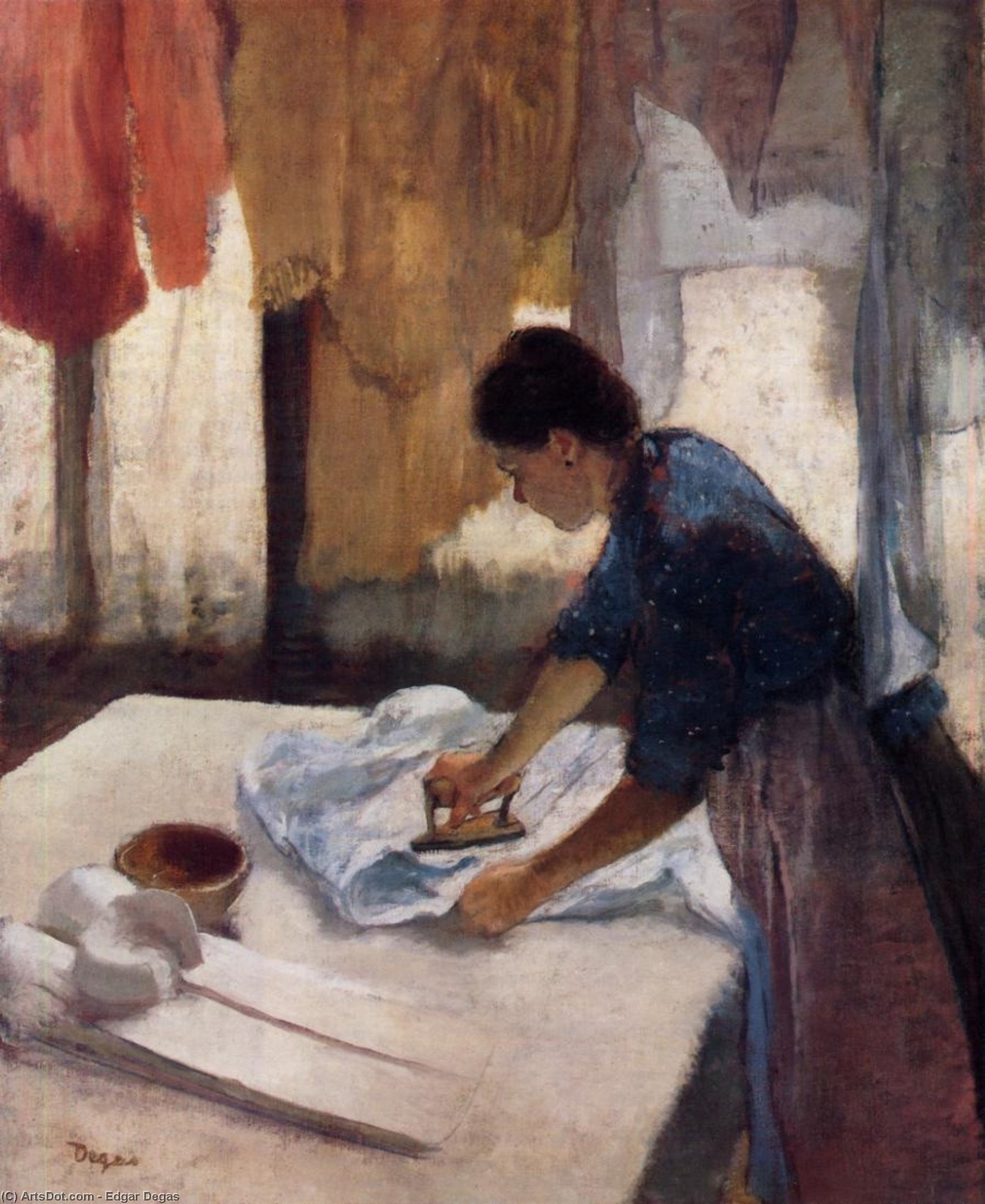
Woman Ironing by Edgar Degas - A captivating portrait capturing a moment of domestic life, showcasing Degas's masterful realism and his fascination with movement. Painted in 1887, it depicts a woman diligently ironing clothes at a dining table, reflecting the artist’s keen eye for everyday scenes.
パリ
フランス
エドガー・ドガ
ヒレール・ Germain-エドガール・ドガ
19世紀を代表するフランスの画家、エドガー・ドガ。バレエダンサーやパリの日常風景を捉え、革新的な構図と卓越した描写力で印象主義に影響を与えました。『踊り子』『カフェ・ド・シャワール』など、現代生活の真実を描き出した傑作群。
印象派、写実主義
パブロ・ピカソ
ギュスターヴ・クールベ
1834年7月19日
1917年9月27日
ヒレール・ Germain-エドガール・ドガ
フランス人
タムブリンを持つ踊り子
フランス、パリ
入絵主義
1
エドガー・ドガは、レーベルを拒否しながらも、どの芸術運動と関連付けられることが多いですか?
レンブラントからモネ、ピカソまで!ワシントンD.C.の国立美術館で、ルネサンスから現代アートまでを無料で堪能。名画の数々を心ゆくまでお楽しみください。
アメリカ合衆国
ワシントンD.C.
国立美術館
ルネサンス期の巨匠作品
膨大、数世紀にわたる
美術館
1937
1927年
1
国立美術館はいつ設立されましたか?
A Portrait of Domestic Labor: Examining Degas’s “Woman Ironing”
The painting "Woman Ironing," executed by Edgar Degas in 1887, stands as a cornerstone of Impressionist art yet simultaneously embodies a profound engagement with realism. More than just a depiction of an everyday activity—the meticulous ironing of clothes—it's a complex meditation on femininity, labor, and the quiet dignity found within domestic life. Located within the Musée d’Orsay in Paris, this artwork continues to captivate viewers with its subtle nuances and masterful execution.
Style and Technique: Impressionistic Precision
While Degas resisted categorization as an Impressionist, “Woman Ironing” undeniably possesses characteristics that align with the movement's core principles. Unlike the shimmering surfaces favored by Monet or Renoir, Degas employs a muted palette—primarily browns, creams, and pale yellows—creating a sense of atmospheric depth rather than immediate visual vibrancy. This deliberate restraint is countered by his remarkable attention to detail; he painstakingly captures the textures of fabric, the sheen of perspiration on skin, and the delicate folds of clothing. The artist’s brushstrokes are loose yet controlled, conveying movement without sacrificing clarity. He achieves this effect through a technique known as “impasto,” applying paint thickly onto the canvas surface, allowing ridges of pigment to remain visible—a deliberate departure from smoother Impressionistic styles.
Historical Context: The Belle Époque and Changing Gender Roles
“Woman Ironing” emerged during the Belle Époque – "The Beautiful Era" – a period marked by unprecedented optimism and prosperity in France following the Franco-Prussian War. However, beneath the veneer of celebration lay significant social transformations, particularly concerning gender roles. Victorian ideals of femininity emphasized piety, domesticity, and subservience; Degas’s portrayal challenges these conventions by presenting a woman engaged in physically demanding labor—a task traditionally performed by men. The painting reflects anxieties surrounding the shifting boundaries between public and private spheres and subtly critiques societal expectations placed upon women.
Symbolism: Quiet Strength and Observation
Beyond its depiction of practical activity, “Woman Ironing” is laden with symbolic resonance. The woman herself embodies resilience and quiet strength—a figure often overlooked in historical narratives. Her gaze directs outwards, suggesting an awareness of her surroundings and a refusal to succumb to passive acceptance. The table upon which she performs her task symbolizes stability and domestic comfort, while the clothes represent responsibility and care for family life. Degas’s masterful observation is paramount; he captures not just what is seen but also what is felt—the subtle emotions conveyed through posture and expression.
Emotional Impact: A Moment Frozen in Time
Ultimately, “Woman Ironing” transcends mere representation to evoke a profound emotional response. The painting invites contemplation on themes of perseverance, dignity, and the beauty found within ordinary moments. It speaks to the enduring fascination with capturing fleeting impressions of human experience—a hallmark of Impressionist art that continues to resonate with audiences today. Degas’s ability to distill complex ideas into a single image is testament to his artistic genius and ensures that “Woman Ironing” remains an unforgettable portrait of both womanhood and the transformative power of observation.