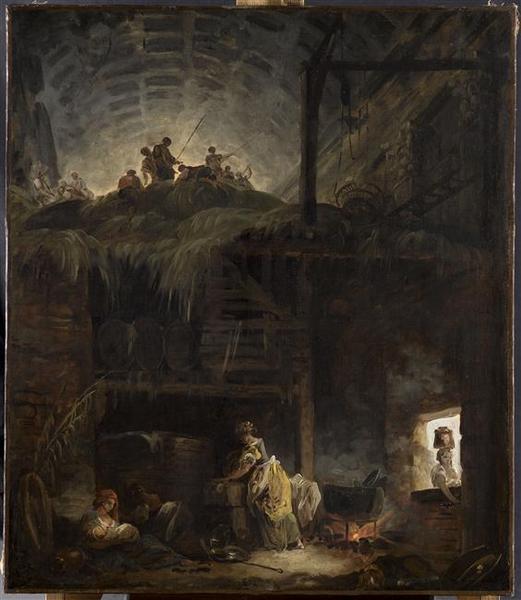
LA GRANGE OU LA VILLA DU PAPE JULES: A Vision of Decay and Romantic Grandeur
Hubert Robert’s “La Grange ou La Villa du Pape Jules” – translated as “The Grange or Pope Julius’ Villa” – stands as a quintessential emblem of the Romantic movement, encapsulating its fascination with ruins, sublime landscapes, and the melancholic contemplation of time's relentless passage. Completed around 1760, this monumental oil painting on canvas transcends mere depiction; it aspires to evoke emotion and provoke thought through masterful composition and atmospheric rendering.
- Subject Matter: The artwork portrays an interior scene within a crumbling papal villa—a deliberate allusion to the grandeur of antiquity juxtaposed with the inevitable decay of earthly power. Robert’s gaze isn't merely on architectural ruin; he seeks to capture the essence of vanished magnificence and the poignant beauty inherent in disintegration.
- Style & Technique: Robert adheres firmly to Romantic principles, prioritizing expressive brushwork and dramatic lighting over strict adherence to classical conventions. His technique is characterized by loose, gestural strokes that convey movement and texture—particularly evident in the depiction of weathered stone walls and moss-covered surfaces. The artist skillfully employs atmospheric perspective, deepening the sense of space and conveying a palpable feeling of solitude and grandeur.
- Composition & Perspective: Robert’s compositional genius lies in layering perspectives to create an illusion of depth that draws the viewer into the scene. A central elevated platform dominates the middle ground, populated by figures engaged in activities—resting, examining objects—further emphasizing the scale of the ruin. Diagonal lines guide the eye across the canvas, reinforcing dynamism and contributing to the overall impression of instability.
- Color Palette & Light: The painting’s muted color palette—predominantly browns, grays, ochres—reflects the somber mood of decay but is punctuated by subtle hints of green and blue within shadowed recesses. Robert utilizes diffused lighting emanating from a window on the right side, illuminating select figures and highlighting architectural details while shrouding others in darkness—a deliberate tactic to heighten suspense and underscore the painting’s emotional impact.
- Symbolism & Emotional Impact: Beyond its visual splendor, “La Grange ou La Villa du Pape Jules” resonates with profound symbolic significance. The ruin serves as a metaphor for the decline of empires and institutions, prompting contemplation on mortality and the ephemeral nature of human achievement. Robert’s depiction invites viewers to contemplate beauty amidst ruin—a core tenet of Romantic aesthetics—and to embrace the melancholic grandeur inherent in confronting the inevitability of change.
Robert's masterful rendering captures not just a physical space but also an intangible spirit – one of wonder, apprehension, and profound artistic sensitivity. It remains a testament to his ability to transform observation into evocative art.