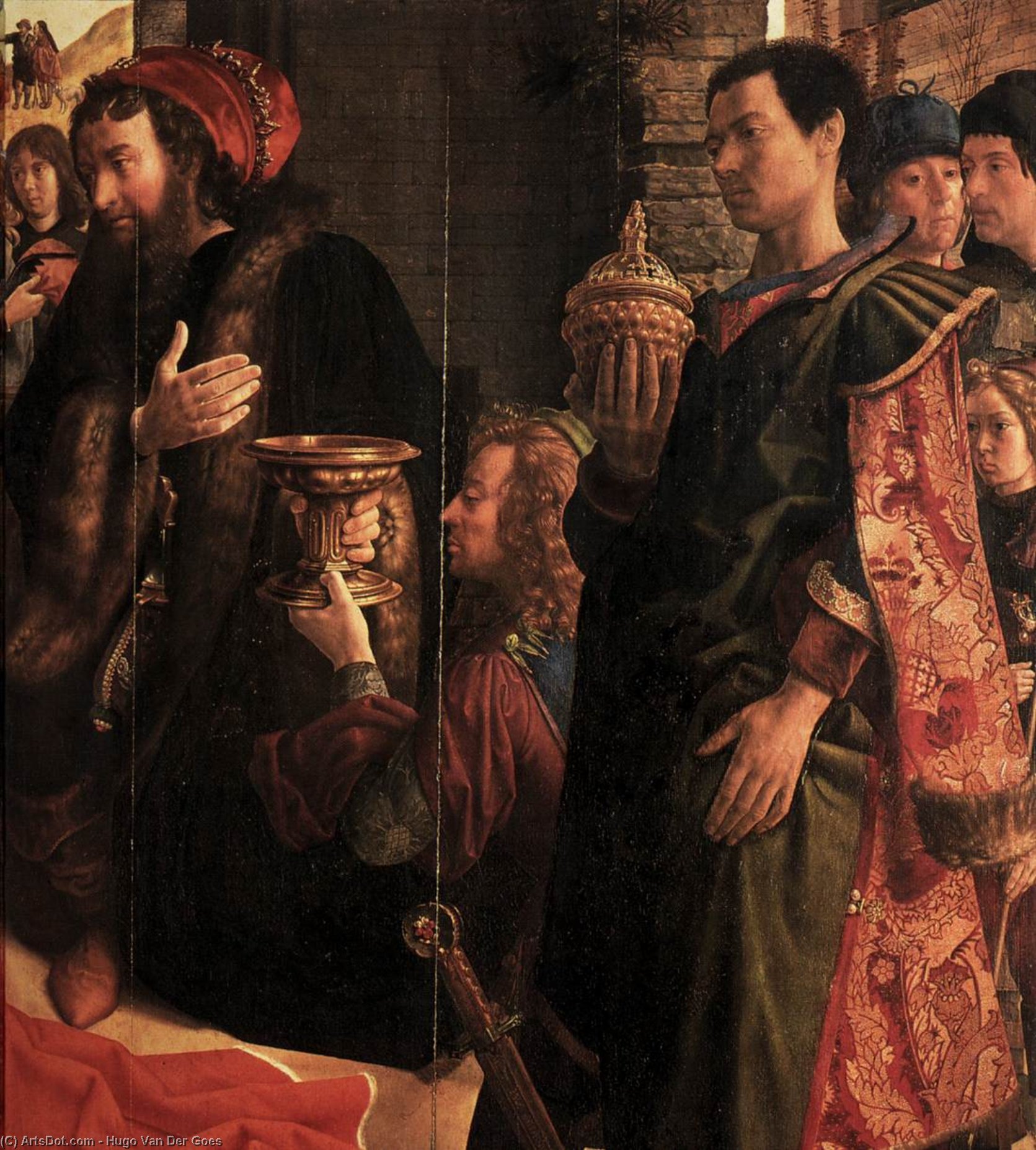
Hugo van der Goes’ Monforte Altarpiece: A Window into Medieval Dignity
Hugo van der Goes’ *Monforte Altarpiece*, completed around 1470, stands as a monumental achievement of Flemish Realism and arguably the most psychologically astute painting from the early Renaissance North. More than just a visually impressive spectacle—measuring approximately 147 x 242 cm—it represents a radical departure from prevailing artistic conventions of its time, cementing Van der Goes’ place among the foremost innovators of his era.
- Subject Matter: The altarpiece depicts a solemn gathering of twelve figures – primarily nobles and clergymen – seated around a dining table. This wasn't merely a portrait session; it was intended to commemorate a significant event, likely commemorating the Feast of Saint John the Baptist.
- Style & Technique: Van der Goes’ masterful use of oil paint on oak distinguishes him from his contemporaries who favored tempera—a technique that produced brighter colors but lacked the depth and luminosity achievable with oil. The artist meticulously rendered textures – from the opulent fabrics draped over the figures to the polished surface of the table – demonstrating an unprecedented level of observational accuracy.
- Historical Context: Ghent, Belgium, during Van der Goes’ lifetime was a thriving center of artistic patronage and intellectual curiosity. The altarpiece reflects the humanist ideals gaining traction across Europe, albeit tempered by deeply ingrained religious beliefs. It stands alongside works by Botticelli and Fra Angelico as evidence of the burgeoning Renaissance spirit.
Psychological Depth & Narrative Complexity
What truly elevates *Monforte Altarpiece* above its technical brilliance is Van der Goes’ profound understanding of human psychology. Each figure possesses distinct facial expressions, postures, and gestures that convey subtle nuances of emotion—contemplation, solemnity, and perhaps even a hint of unease. The artist skillfully utilizes chiaroscuro – the dramatic interplay between light and shadow – to sculpt the forms of his subjects, creating an illusion of three-dimensionality that was revolutionary for its time.
- Symbolism: The inclusion of twelve figures is laden with symbolic significance, referencing the Twelve Apostles. Furthermore, the arrangement around the table symbolizes communion and fellowship—a visual representation of spiritual unity.
- Emotional Impact: Viewing *Monforte Altarpiece* evokes a feeling of reverence and contemplation. It captures a moment of dignified solemnity, inviting viewers to consider themes of piety, honor, and human connection.
A Legacy of Innovation
*Monforte Altarpiece* served as an inspiration for subsequent artists, influencing the development of portraiture and altarpiece painting alike. Its unwavering commitment to realism—coupled with its masterful manipulation of light and shadow—established Van der Goes as a pioneer of Flemish Realism and foreshadowed the stylistic breakthroughs that would characterize the Italian Renaissance. Today, reproductions offer art lovers worldwide access to this extraordinary masterpiece, allowing them to appreciate its enduring beauty and intellectual richness.