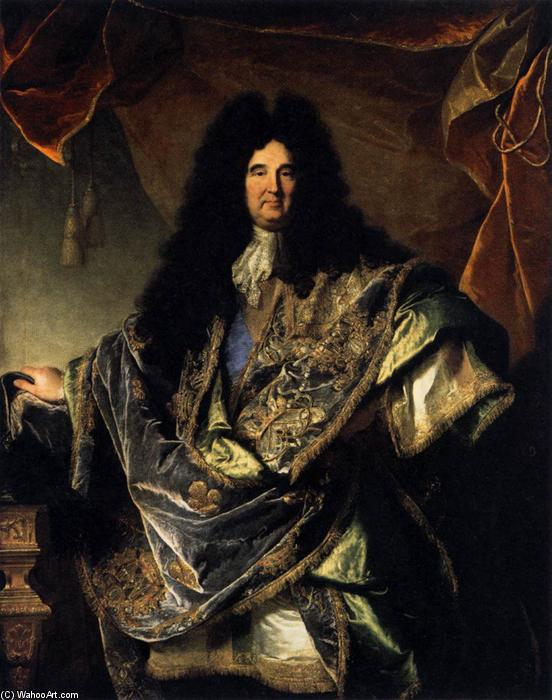
A Regal Vision of Majesty: The Grandeur of Hyacinthe Rigaud
In the annals of French portraiture, few images command the room with such unyielding authority as Hyacinthe Rigaud’s 1702 masterpiece, Portrait of Philippe de Courcillon. To gaze upon this canvas is to be transported directly into the heart of the Baroque era, a period defined by theatricality, opulence, and the calculated projection of power. While the subject is the noble Philippe de Courcillian, the painting breathes with the unmistakable spirit of Louis XIV, the Sun King. Rigaud does not merely capture a likeness; he constructs an icon. Through a masterful command of light and shadow, the artist elevates a single figure into a symbol of the French monarchy at its absolute zenith, creating a work that serves as both a historical document and a breathtaking piece of political propaganda.
The emotional resonance of the portrait lies in its ability to evoke a sense of awe and profound dignity. There is an inherent tension in the composition—a stillness that feels heavy with importance. The viewer is not merely observing a man, but witnessing the embodiment of a divine right to rule. For the modern collector or interior designer, this piece offers more than just aesthetic beauty; it provides a focal point of immense character. It possesses the rare ability to anchor a room, bringing an atmosphere of classical sophistication and timeless prestige to any curated space.
The Alchemy of Light and Texture
Technically, the portrait is a triumph of the Baroque style, specifically through Rigaud’s sophisticated use of chiaroscuro. By sculpting the figure against a dark, velvety background, the artist employs a dramatic contrast that pulls the subject forward into the viewer's space. This manipulation of light acts as a spotlight, illuminating the face and hands with a radiant glow that suggests an almost celestial origin. The shadows are not merely absences of light but are rich, deep textures that provide a sense of infinite depth to the composition.
The artist’s mastery over the medium of oil on canvas is most evident in his rendering of tactile reality. One can almost feel the weight and luxuriousness of the fabrics depicted. Rigaud painstakingly detailed the sumptuous folds of the velvet robes and the intricate, frothy textures of the lace and wigs. Every crease in the drapery is treated with a fluid dynamism, suggesting movement even within a static pose. This meticulous attention to detail—from the glint of jeweled accessories to the soft luminosity of skin—creates an illusionistic realism that remains as captivating today as it was at the turn of the 18th century.
Symbolism and the Art of Presence
Every element within this portrait is a deliberate choice, woven into a narrative of status and permanence. The ornamentation on the clothing, the heavy drapery, and the regal posture are all symbolic components designed to communicate wealth and social hierarchy. In an age where portraiture was the primary vehicle for public image, Rigaud utilized these elements to ensure that the subject's importance was unmistakable. The organic shapes of the flowing fabrics contrast with the structured, geometric precision of the royal regalia, creating a balanced yet energetic visual experience.
For those seeking to incorporate such a profound work into their collection, the Portrait of Philippe de Courcillon represents an investment in history and artistry. It is a piece that speaks of legacy, of the enduring power of the human spirit, and of the technical heights achievable through dedicated mastery. Whether placed in a formal gallery or as a centerpiece in a luxurious contemporary interior, this reproduction serves as a window into a world of unparalleled splendor and aristocratic grace.