A Poetic Intersection of Theater and Literature
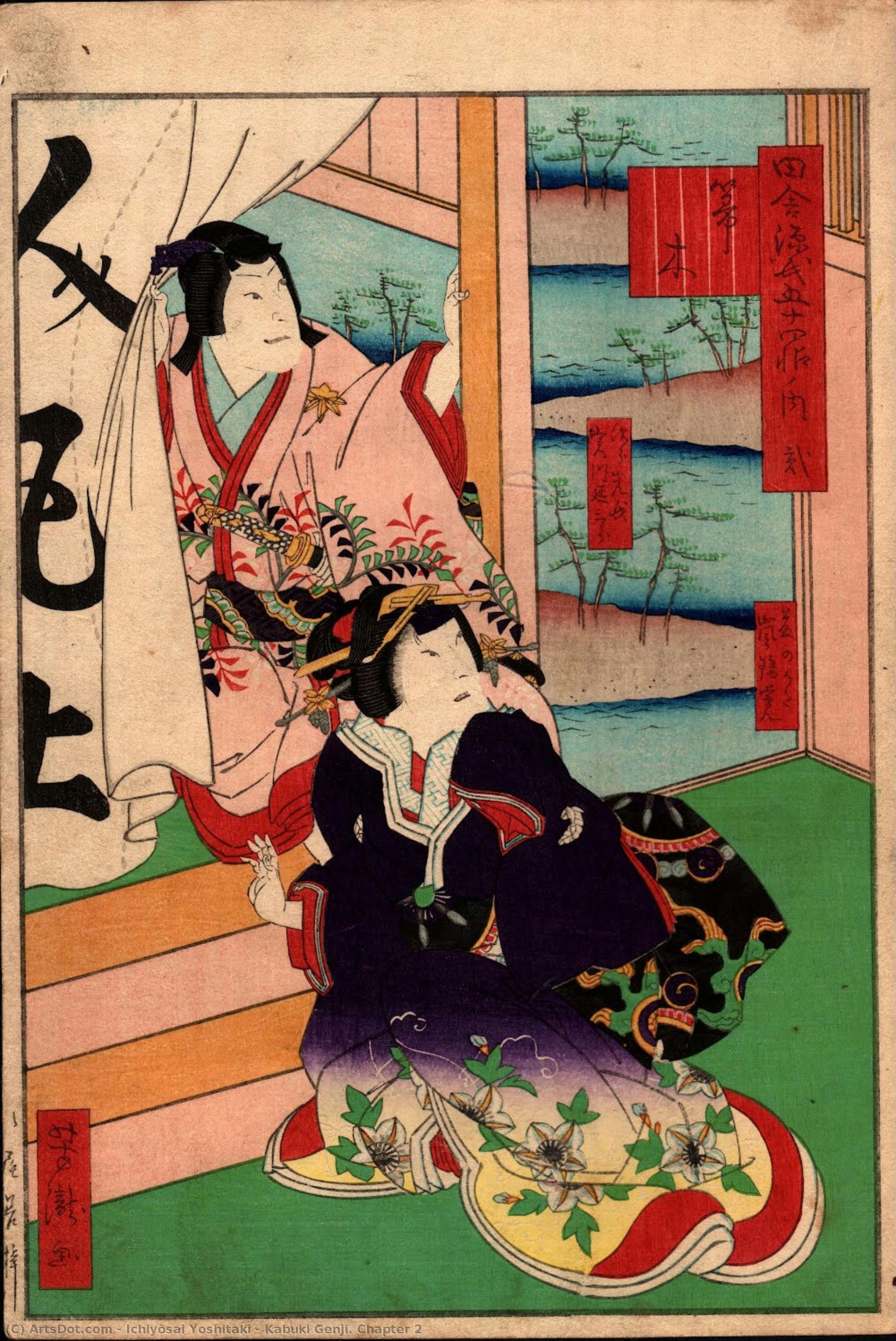
In the delicate interplay of color and line found within Kabuki Genji. Chapter 2, we encounter a profound moment where the ephemeral world of the stage meets the timeless elegance of classical literature. Created in 1880 by the master Ichiyōsai Yoshitaki, this exquisite ukiyo-e print serves as a bridge between two pillars of Japanese culture: the dramatic intensity of Kabuki theater and the sweeping romantic narrative of Murasaki Shikibu’s Genji Monogatari. The artwork is part of an ambitious series of fifty-four prints, each meticulously designed to mirror a specific chapter of the novel through the lens of theatrical performance. In this particular piece, the presence of the Genji prince's emblem—a subtle yet significant heraldic mark—anchors the scene to the second chapter of the tale, inviting the viewer into a world where identity and destiny are inextricably linked.
The composition captures a quiet, intimate moment between two women, dressed in the flowing, layered splendor of traditional Japanese kimonos. One figure stands with a gaze directed toward an unseen presence outside the frame, her posture suggesting a sense of anticipation or perhaps a lingering melancholy. The other rests upon the floor, creating a grounded, domestic stillness that contrasts with the narrative tension inherent in the series. Through Yoshitaki’s masterful use of space, the placement of the figures near a window introduces a sense of depth and light, hinting at an expansive world beyond this private interior. For the collector or designer, this piece offers more than mere decoration; it provides a window into a vanished era of refined grace and storytelling sophistication.
The Mastery of the Kamigata Style
As a preeminent figure in the Osaka (Kamigata) school of printmaking, Ichiyōsai Yoshitaki was celebrated for his ability to transcend mere caricature. Unlike some of his contemporaries who focused on stylized exaggeration, Yoshitaki’s yakusha-e—portraits of actors—are renowned for their striking realism. He possessed a singular talent for capturing the true physical essence, age, and nuanced expressions of his subjects, allowing the viewer to recognize the very soul of the performer behind the costume. In this print, that technical prowess is evident in the way the fabric of the kimonos drapes and folds, suggesting weight and texture even within the medium of woodblock printing.
The technique employed here reflects the late Edo and early Meiji transition, where the precision of line work meets a sophisticated use of color. Although the passage of time has softened some of the original pigments, the structural integrity of the composition remains breathtaking. The subtle interplay of light and shadow, particularly around the window area, demonstrates how Yoshitaki used traditional printing methods to create atmospheric depth. For those seeking to adorn a space with art that possesses both historical weight and visual delicacy, this reproduction offers an unparalleled opportunity to integrate the rhythmic beauty of Japanese woodblock tradition into a modern aesthetic.
A Timeless Legacy for the Discerning Collector
Owning a piece from the Kabuki Genji series is akin to possessing a fragment of Japan's cultural heartbeat. The emotional impact of the work lies in its ability to evoke nostalgia—not just for a specific historical period, but for the universal human experiences of longing, beauty, and the drama of daily life. The print functions as a narrative jewel, where every detail, from the geometric Genji emblems to the soft contours of the women's silhouettes, contributes to a larger tapestry of meaning.
For interior designers, this artwork serves as a sophisticated focal point that can anchor a room with themes of Zen-like tranquility or classical elegance. Its relatively intimate scale of 26 x 19 cm makes it an ideal candidate for curated gallery walls or as a standalone statement in a study or reading nook. As a high-quality reproduction, it allows the enduring legacy of Ichiyōsai Yoshitaki to reside within contemporary homes, offering a continuous dialogue between the artistry of the nineteenth century and the refined tastes of the twenty-first.