A Theatrical Masterpiece: The Intersection of Literature and Stage
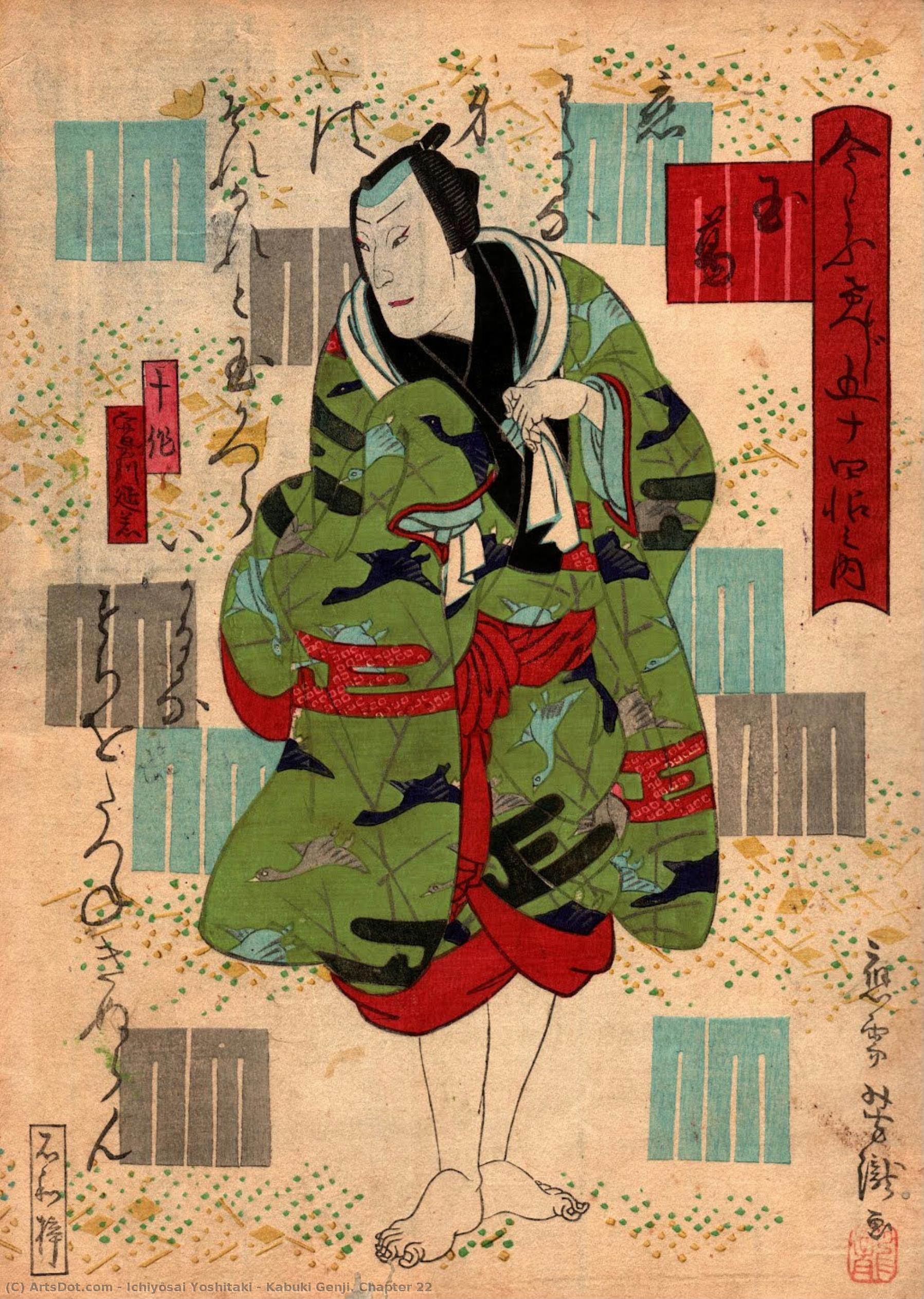
In the delicate dance between classical literature and the vibrant energy of the Kabuki stage, Ichiyōsai Yoshitaki captures a moment of profound cultural synthesis in his exquisite woodblock print, Kabuki Genji. Chapter 22. Created around 1860, this work belongs to a masterful series of fifty-four prints that weave together the legendary tales of the Genji monogatari—the masterpiece of Murasaki Shikibu—with the contemporary celebrity of the Kabuki theater. Through his skilled hands, the ephemeral world of the actor meets the eternal elegance of the Heian court, creating a visual dialogue that resonates with both historical depth and theatrical flair.
The composition is anchored by the subtle yet pervasive presence of the Genji-mon, the fifty-four geometric emblems associated with each chapter of the novel. In this specific rendition of Chapter 22, these rectilinear motifs repeat across the background, acting as a rhythmic, ornamental tapestry that reminds the viewer of the literary foundation upon which this theatrical performance is built. This layering of symbols transforms the print from a mere portrait into a complex intellectual puzzle, inviting the observer to decode the connections between the actor's persona and the noble character they embody.
The Artistry of Yakusha-e and the Mastery of Yoshitaki
As a preeminent designer of yakusha-e (actor prints) in the Kamigata region, Yoshitaki was celebrated for his ability to transcend mere caricature. While many artists of his era focused on exaggerated expressions, Yoshitaki’s technique leaned toward a striking realism. In this piece, one can observe the meticulous attention to the physical presence of the subject, capturing the true likeness, age, and nuanced facial features that defined the great performers of the late Edo period. The print showcases the intricate precision of the woodblock medium, where every fine line of the clothing and every delicate stroke of the hair contributes to a sense of lifelike vitality.
The visual narrative is further enriched by a breathtaking attention to detail in the attire and surrounding elements. The subject is draped in traditional garments, characterized by intricate patterns that suggest both luxury and movement. The presence of natural motifs—such as the graceful birds interspersed throughout the scene—adds a layer of seasonal symbolism and organic beauty, softening the structured geometry of the Genji emblems. This balance between the man-made precision of the emblems and the fluid grace of nature is a hallmark of Yoshitaki’s sophisticated aesthetic.
A Timeless Addition for Discerning Collectors
For the art enthusiast or interior designer, Kabuki Genji. Chapter 22 offers more than just historical interest; it provides a profound emotional and aesthetic anchor for any curated space. The print’s ability to evoke the atmosphere of a bygone era—one of ritual, drama, and refined beauty—makes it an ideal centerpiece for collections focused on Asian heritage or classical Japanese aesthetics. Its sophisticated palette and complex composition allow it to integrate seamlessly into modern settings, providing a window into the soul of Japan's theatrical golden age.
Owning a high-quality reproduction of this work allows one to preserve the legacy of Ichiyōsai Yoshitaki. Whether displayed as part of a gallery wall or as a standalone statement piece, the print invites continuous contemplation. It serves as a reminder of the enduring power of storytelling and the way art can bridge the gap between the written word and the living stage, making it an invaluable acquisition for those who seek to surround themselves with pieces that possess both historical gravity and unparalleled decorative elegance.