ロシア美術を代表するイリヤ・レピン(1844-1930)。「ヴォルガの舟曳き」「ザポロージャ・コサックの返答」など、写実主義的表現でロシア社会や歴史を描き出しました。国民の生活と感情に寄り添う傑作を通して、時代を象徴する芸術家として知られています。
モスクワのトレチャコフ美術館でロシア美術の進化を体験!聖像からアヴァンギャルドまで、数世紀にわたる国民的アイデンティティと芸術的輝きを目撃してください。
モスクワのトレチャコフ美術館でロシア美術の進化を体験!聖像からアヴァンギャルドまで、数世紀にわたる国民的アイデンティティと芸術的輝きを目撃してください。
トレチャコフ美術館, モスクワ, ロシア美術, 聖像, イリヤ・レピン, イサク・レヴィタン, カジミール・マルエヴィチ, ワシリー・カンディンスキー, マルク・シャガール, アヴァンギャルド
ロシア連邦
ユリイ・イヴァノヴィチ・メルコフ
モスクワ
トレチャコフ美術館
聖像
25万人+
3万点以上
美術館
1856
モスクワのトレチャコフ美術館でロシア美術の進化を体験!聖像からアヴァンギャルドまで、数世紀にわたる国民的アイデンティティと芸術的輝きを目撃してください
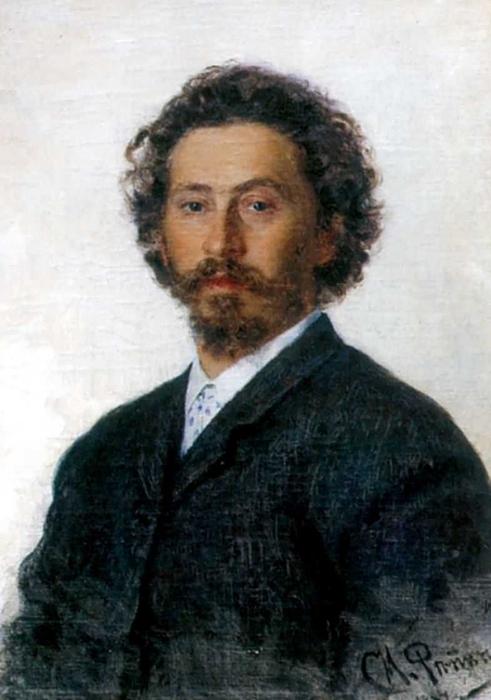
Ilya Repin’s ‘Self-Portrait’: A Window into a Russian Soul
The Tretyakov Gallery in Moscow holds within its walls not just paintings, but echoes of a nation's spirit – and few works capture that essence more powerfully than Ilya Yefimovich Repin’s “Self-Portrait,” painted in 1887. This oil on canvas, measuring a modest 75 x 62 cm, transcends the simple act of portraiture; it’s an intimate revelation, a glimpse into the mind and character of one of Russia's most significant realist painters. More than just a likeness, Repin presents himself as a thoughtful observer, a man wrestling with intellectual depth and quiet confidence – a figure both familiar and profoundly compelling.
Repin’s decision to depict himself in such a deliberate manner is crucial to understanding the painting's significance. Created during a period of intense social and political change in Russia, the portrait reflects a growing awareness of individual identity within a rapidly modernizing society. The neutral background – a subtle wash of grey-brown – serves not as distraction but as a carefully considered stage for the artist’s face. It allows the viewer to fully absorb his gaze, a direct challenge and invitation simultaneously. The meticulous rendering of his features—the strong jawline, the slightly furrowed brow, the piercing eyes—is executed with a remarkable sensitivity to light and shadow, creating a palpable sense of three-dimensionality that draws us into his world.
Realism as a Reflection of Life
“Self-Portrait” is a cornerstone of Repin’s commitment to Realism. Unlike the idealized portraits prevalent in earlier eras, this work eschews romantic embellishment and strives for an honest depiction of the artist himself. Repin wasn't interested in presenting a heroic or glamorous image; instead, he sought to capture the reality of his own appearance – the lines etched by time and thought, the subtle signs of a life lived with intensity. This commitment to accuracy is further emphasized by the muted color palette—a deliberate choice that avoids distracting from the details of his face and clothing. The dark suit and tie, rendered with careful attention to texture, speak to his status as a respected artist, while the slightly worn fabric hints at a groundedness, an awareness of the everyday realities of life.
Symbolism in Simplicity
While seemingly straightforward, “Self-Portrait” is rich in subtle symbolism. The serious expression on Repin’s face isn't merely one of contemplation; it suggests a burden of responsibility, perhaps reflecting his role as both an artist and a keen observer of the social landscape around him. The long, curly hair – a distinctive feature of his appearance – adds to the sense of individuality and challenges conventional notions of masculine beauty. It’s a deliberate statement of self-awareness, suggesting that Repin was comfortable in his own skin and unafraid to defy expectations. The painting can be interpreted as a meditation on identity, perception, and the complexities of being human.
A Legacy of Russian Art
“Self-Portrait” stands as a testament to Repin’s enduring legacy as one of Russia's most important artists. His work, deeply rooted in the experiences of ordinary people – from the barge haulers on the Volga to the Cossacks of Kursk Province – continues to resonate with audiences today. As evidenced by his other celebrated works like “Reply of the Zaporozhian Cossacks,” Repin possessed a rare ability to capture not just physical likeness but also the very essence of human emotion and experience. The painting’s placement within the Tretyakov Gallery, alongside masterpieces from Russian art history, underscores its significance as a pivotal work in the nation's artistic heritage. Reproductions like those offered by ArtsDot.com allow us to appreciate this powerful image with unparalleled clarity and detail, bringing Repin’s profound insights into our own lives.