A Glimpse into Sacred Space: Turner's Interior Vision
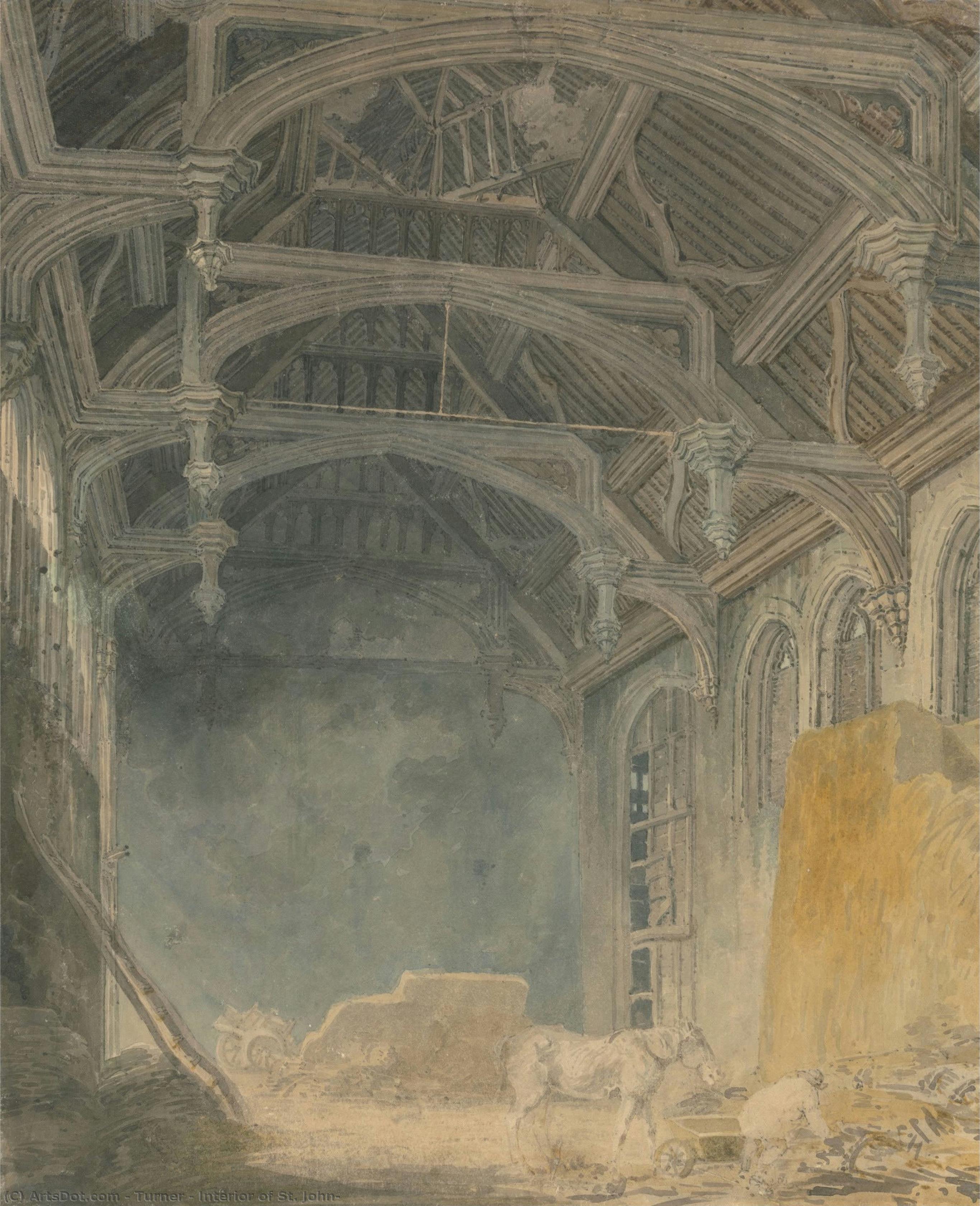
To stand before an image like this is to step across the threshold of time itself. J.M.W. Turner, master of light and atmosphere, has captured not merely a building, but a moment imbued with profound history within the Interior of St. John. The scene unfolds within the grand embrace of a cathedral, its architecture speaking in hushed tones of centuries past. One’s eye is immediately drawn upward to the magnificent wooden ceiling, a complex canopy supported by graceful arches that seem to cradle the very light filtering into the space below. It is a composition that speaks volumes about human endeavor—the melding of divine aspiration with masterful craftsmanship.
The Poetics of Presence and Pastoral Detail
What elevates this work beyond mere architectural documentation is Turner’s subtle inclusion of life within the sacred geometry. Scattered figures populate the nave, some gathered in quiet contemplation near the center, others positioned along the cool stone walls. They are witnesses to a timeless ritual, their presence lending an immediate sense of narrative depth. Yet, amidst the human drama and soaring structure, Turner introduces a touch of pastoral simplicity: two gentle sheep graze within the scene. These animals act as poignant anchors, grounding the sublime grandeur in something humble and enduring. This juxtaposition—the monumental architecture against the quiet grazing life—is a hallmark of his genius.
Technique and Atmosphere: The Mastery of Light
Turner’s technique here is a masterclass in atmospheric rendering. While he is perhaps most famous for his tempestuous landscapes, his handling of interior light remains breathtakingly sophisticated. He does not simply paint the light; he paints the effect of it—the way it catches dust motes, how it softens the edges of carved wood, and how it deepens the shadows in the recesses. The overall effect is one of luminous antiquity. For those considering a reproduction for an interior space, this piece promises not just decoration, but an infusion of ethereal glow, transforming any room into a place of contemplative beauty.
Symbolism and Enduring Resonance
The symbolism woven through the Interior of St. John is rich. The cathedral itself represents permanence, faith, and the enduring spirit of community. The light, ever-present in Turner’s work, symbolizes divine illumination or perhaps moments of profound personal revelation. And those two sheep? They whisper of innocence, simplicity, and the cyclical nature of life that persists regardless of human ceremony or architectural scale. It is a meditation on the intersection of the eternal and the ephemeral, making it a deeply resonant piece for any collector who appreciates art with intellectual weight.