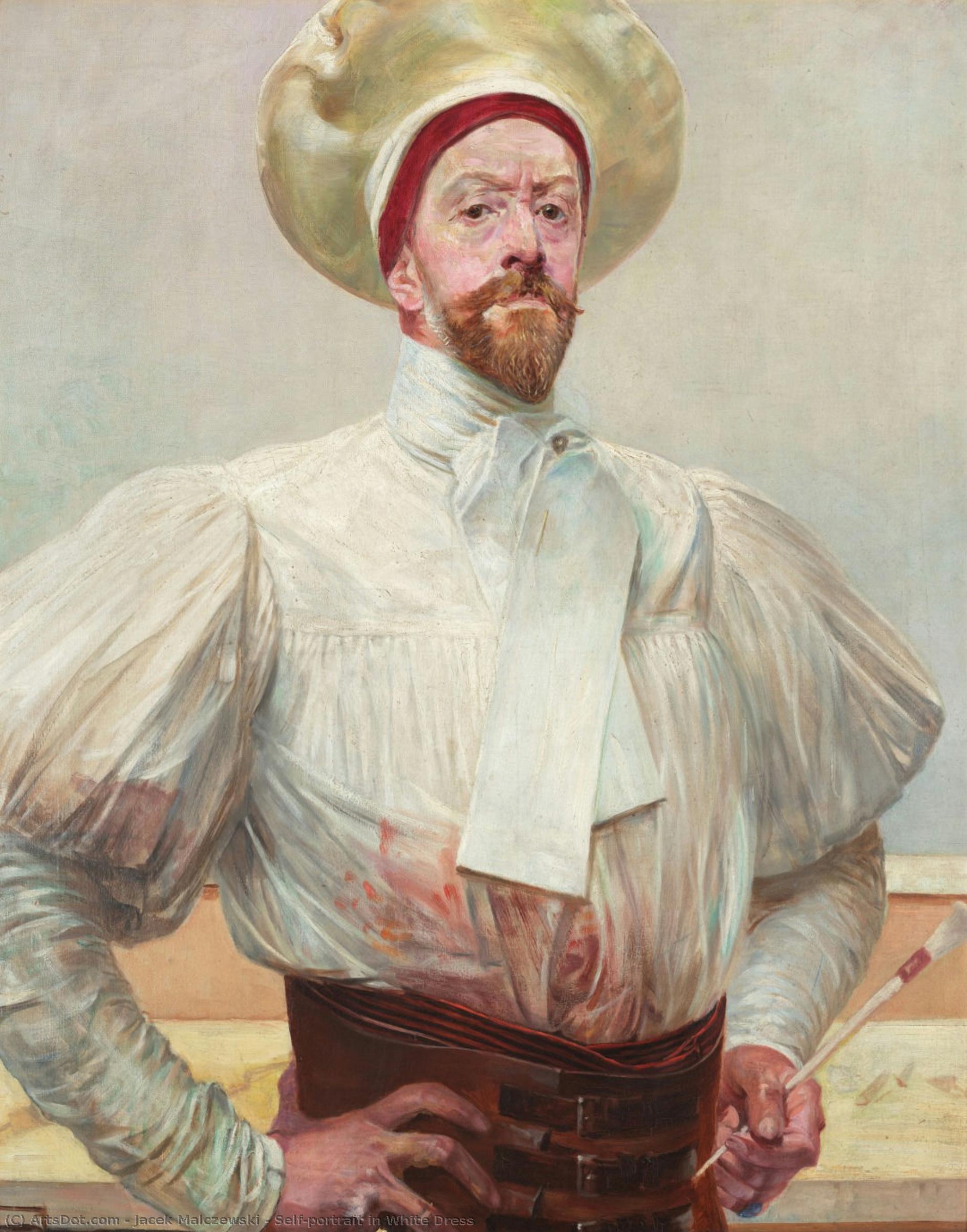
Jacek Malczewski’s ‘Self-portrait in White Dress’: A Portrait of Ambiguity and National Longing
“Self-portrait in White Dress,” painted in 1914 by Jacek Malczewski, stands as a pivotal work within the artist's oeuvre – a complex meditation on identity, aspiration, and the very soul of Poland. Created during a period of intense national yearning, this self-representation transcends a simple likeness; it’s an embodiment of Romantic ideals, steeped in symbolism and imbued with a profound sense of melancholy. Malczewski, already recognized as the “father of Polish Symbolism,” masterfully employs color and costume to evoke a powerful emotional response, inviting viewers into a world where masculine and feminine qualities intertwine, creating a figure both recognizable and profoundly enigmatic.
- Subject Matter: The painting depicts Malczewski himself in a meticulously rendered self-portrait.
- Costume & Symbolism: The white dress, buffy sleeves, and gold clasp immediately draw attention, suggesting purity, nobility, and perhaps even an idealized vision of Poland’s past. The Highlander belt and woven wrap add layers of folk tradition, grounding the figure in a tangible sense of national heritage.
- Gesture & Composition: The knight's gesture – the right hand supporting the hip – is a deliberate reference to Polish chivalry and military prowess, while the paintbrush held by the left hand firmly establishes Malczewski’s role as an artist and visionary.
A Window into Polish Symbolism
Malczewski's work is deeply rooted in the Romantic movement, particularly its fascination with symbolism and the search for spiritual meaning. Influenced by figures like William Blake and drawing on gnostic philosophies, Malczewski explored themes of androgyne – the blending of masculine and feminine qualities – as a pathway to achieving wholeness. This concept wasn’t merely aesthetic; it represented a fundamental aspiration for Polish national identity: a unification of disparate elements into a cohesive whole. The painting reflects this deeply held belief, presenting a figure that is simultaneously powerful and vulnerable, grounded in tradition yet reaching towards an idealized future.
The painting's creation coincided with a period of heightened nationalist sentiment in Poland, following centuries of foreign rule. Malczewski’s work served as a visual expression of this yearning for independence and self-determination, aligning him with the broader cultural movement seeking to reclaim Polish identity and heritage. The critical reception of the portrait – accusations of “costume making” – highlights the controversial nature of his artistic vision and its challenge to conventional notions of representation.
Technique & Historical Context
Executed in oil on canvas, “Self-portrait in White Dress” demonstrates Malczewski’s mastery of color and composition. The use of muted tones—primarily whites, reds, and golds—creates a sense of solemnity and introspection. The meticulous detail in the rendering of fabrics and textures adds to the painting's richness and depth. Painted in 1914, just months before World War I erupted, the work carries an added layer of historical significance, reflecting anxieties about national security and the uncertain future.
Currently housed at the National Museum in Kraków, Poland, this artwork offers a rare glimpse into the mind of one of Poland’s most important artistic figures. Its enduring appeal lies not only in its technical skill but also in its profound exploration of identity, symbolism, and the complex relationship between art and nationhood.
Collecting & Interior Design
“Self-portrait in White Dress” is more than just a beautiful painting; it’s an investment in artistic heritage. A hand-painted reproduction offers a unique opportunity to bring this iconic work into your home or office. Its evocative imagery and rich symbolism make it a compelling addition to any collection, while its historical context adds layers of intellectual and cultural significance. Consider how the painting's color palette and themes might complement your existing décor – perhaps evoking a sense of timeless elegance or reflecting the spirit of Polish national identity.