A Moment of Humble Devotion: Exploring Jacob Jordaens’ ‘Adoration of the Shepherds’
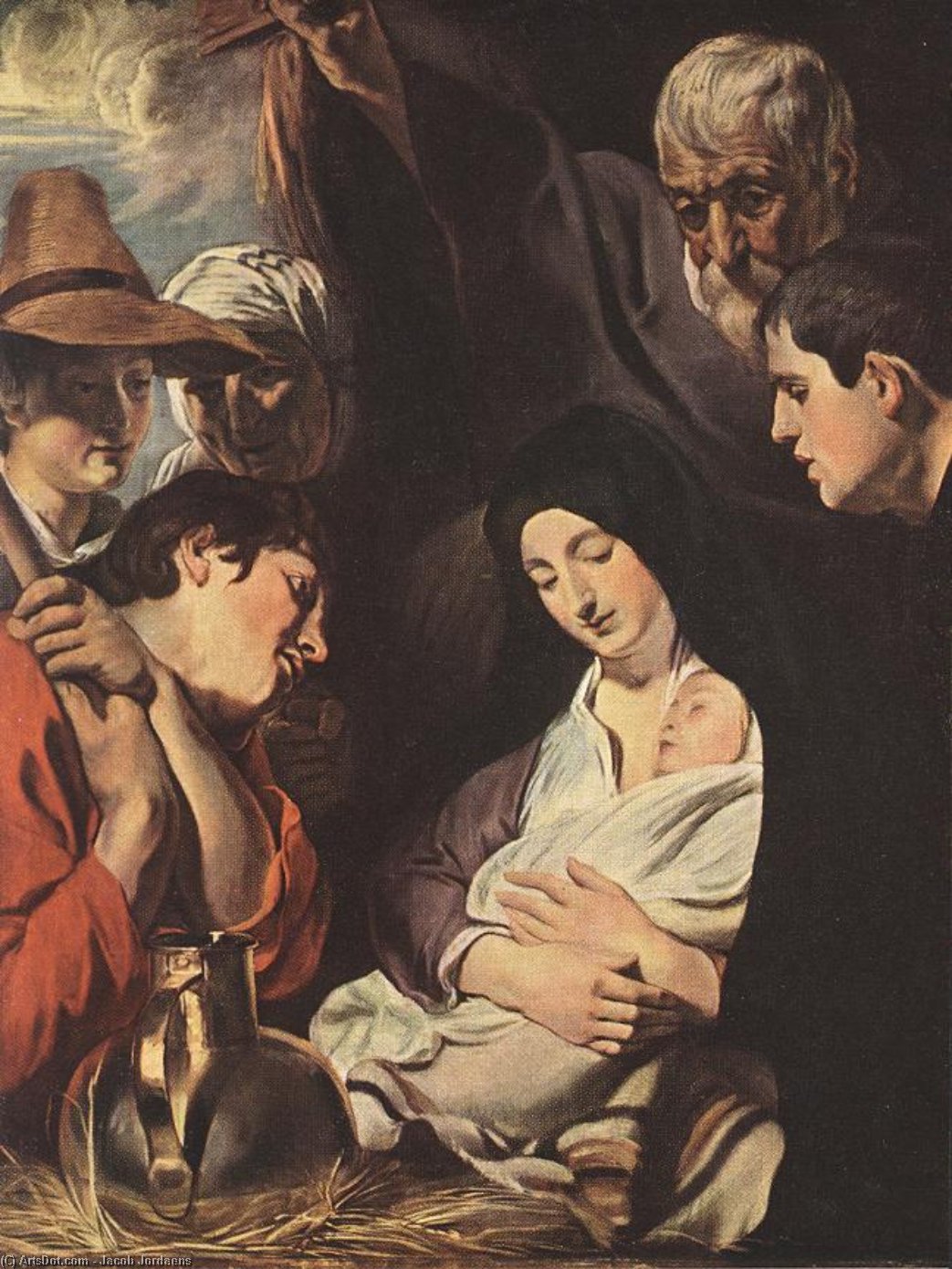
Jacob Jordaens’ “Adoration of the Shepherds,” completed around 1617, stands as a cornerstone of Flemish Baroque art – an era defined by dramatic emotion and meticulous realism. More than just a depiction of biblical narrative, this painting embodies the spiritual fervor of its time while simultaneously capturing the palpable intimacy of familial love.
The Scene: A Narrative Tableau
The artwork portrays Mary cradling the infant Jesus amidst a rustic tableau populated by shepherds – a scene drawn directly from Luke 2:13-14, recounting the Virgin Mary’s tender care for her son as Joseph observes with quiet reverence. Jordaens skillfully compresses the figures into a tightly framed composition, prioritizing immediacy and conveying the profound emotional core of the story. The deliberate positioning of each character contributes to the overall sense of drama and underscores the importance of this sacred encounter.
Baroque Style: Dramatic Light and Shadow
Characteristic of the Baroque movement, “Adoration of the Shepherds” employs masterful chiaroscuro – a technique that utilizes stark contrasts between light and dark – to sculpt form and heighten emotional impact. Powerful beams of illumination illuminate Mary’s face and Jesus’ infant visage, drawing the viewer's eye directly to these focal points while enveloping the surrounding figures in deep shadows. This dramatic lighting isn’t merely aesthetic; it serves to amplify the solemnity of the occasion and imbue the scene with an aura of spiritual grandeur.
Technique: Detail and Texture – A Masterful Craftsmanship
Jordaens' meticulous brushwork is evident throughout the canvas. Layers upon layers of paint build up texture, creating a rich surface that captures the materiality of the setting—straw bedding, woolen garments, and the soft contours of Mary’s skin. The artist demonstrates an unparalleled understanding of color palettes – dominated by warm browns, reds, and golds – skillfully blended to evoke warmth and luminosity. Furthermore, subtle variations in tone contribute to depth perception, subtly hinting at a three-dimensional space within the confines of a two-dimensional canvas.
Symbolism: Poverty and Humility as Expressions of Faith
"Adoration of the Shepherds" resonates deeply with its symbolic elements. The humble setting—the simple straw bedding—represents poverty and humility, mirroring the Virgin Mary’s selfless devotion to God. Joseph's watchful gaze symbolizes paternal protection and unwavering faith – a testament to the importance of family piety within Christian tradition. These understated yet powerful symbols elevate the painting beyond mere visual representation, transforming it into an emblem of spiritual contemplation.
Emotional Resonance: A Portrait of Maternal Love
Ultimately, “Adoration of the Shepherds” succeeds in conveying an overwhelming sense of maternal love and reverence. The tenderness with which Mary holds Jesus communicates a profound connection between mother and child—a timeless depiction of compassion and devotion that continues to captivate audiences centuries later. Jordaens’ masterful artistry captures not only the biblical narrative but also the very essence of human emotion, cementing its place as an enduring masterpiece of Baroque art.
- Artist: Jacob Jordaens
- Year Created: c.1617
- Medium: Oil on Canvas
- Location: Staatsgalerie Schleißheim, Munich
Discover more about this iconic artwork at WikiArt.org.