A Divine Encounter: Exploring Tintoretto’s *Baptism of Christ*
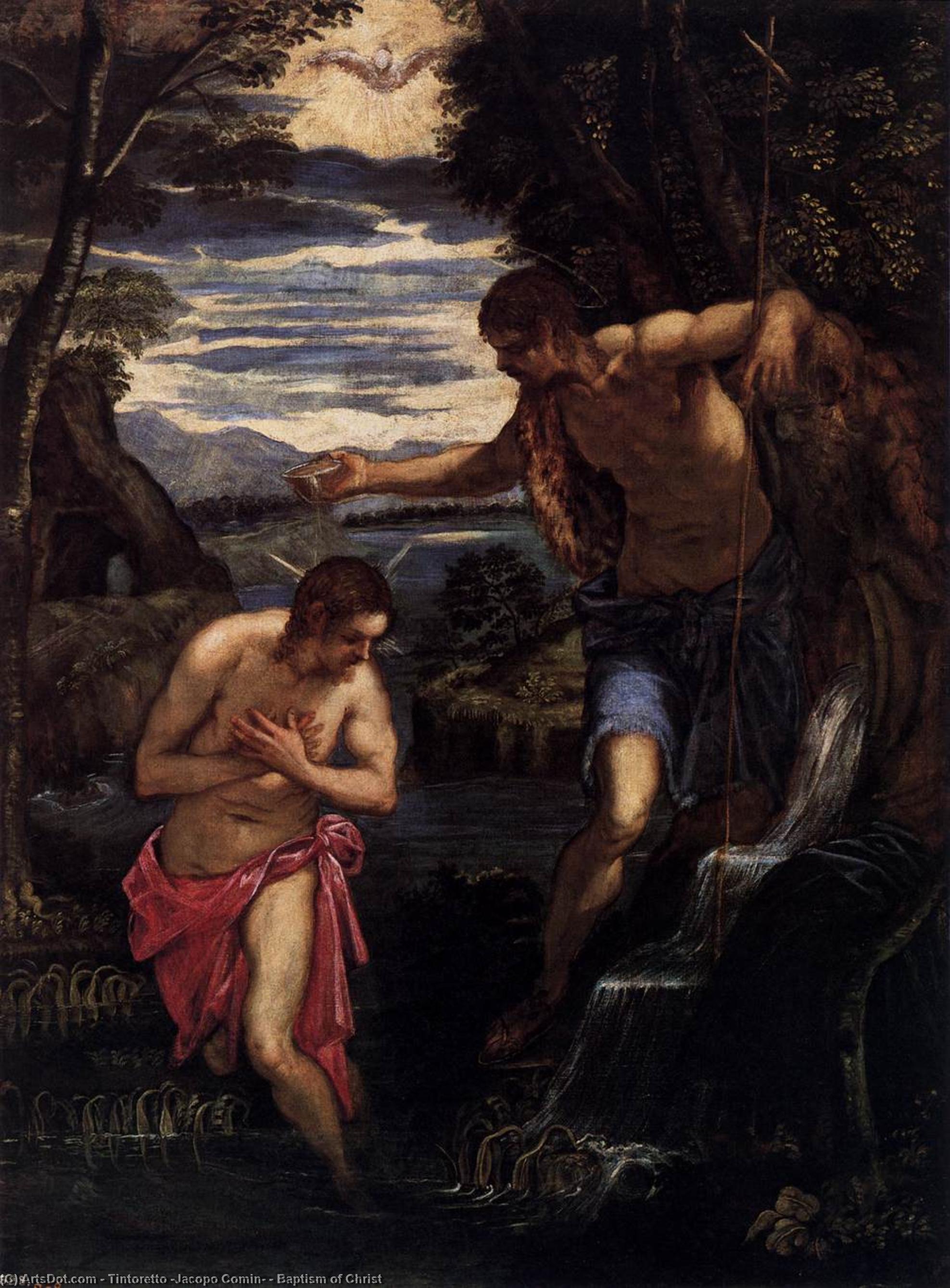
This captivating painting by Jacopo Tintoretto, measuring 137 x 105 cm, offers a powerful depiction of the baptism of Christ – a pivotal moment in Christian theology. Executed with the characteristic flair of the Venetian Renaissance and leaning into the emerging stylistic tendencies of Mannerism, this artwork is more than just a religious scene; it’s an exploration of faith, purification, and divine grace.
Style & Technique: The *Furioso* at Work
Tintoretto, nicknamed
“Il Furioso” (“the furious”) for his energetic and often rapid painting style, masterfully blends the richness of Venetian color with a dramatic intensity that foreshadows the Baroque period. The composition is dynamically arranged in a pyramidal form, drawing the viewer’s eye upwards towards Christ – the focal point bathed in ethereal light. He employs
sfumato, a technique perfected by Leonardo da Vinci, to create soft transitions between colors and forms, lending an atmospheric quality to the scene. The visible brushwork, layered with glazing techniques, adds texture and depth, particularly noticeable in the lush foliage and shimmering water. This isn’t simply paint on canvas; it's a tactile experience rendered visually.
Decoding the Symbolism
Every element within *Baptism of Christ* carries symbolic weight. The flowing water represents purification and spiritual cleansing, while the dove descending from above embodies the Holy Spirit – the divine presence confirming Christ’s sacred identity. The landscape itself isn't merely a backdrop; it symbolizes the natural world being blessed by this holy event. Tintoretto’s elongated figures and dramatic poses, hallmarks of Mannerism, heighten the emotional impact, conveying a sense of awe and reverence. The use of light is particularly significant – illuminating Christ while casting shadows that emphasize the solemnity of the occasion.
Historical Context: Venice & the Renaissance
Born in Venice in 1518, Tintoretto flourished during a period of immense artistic innovation. While initially influenced by artists like Sebastiano del Piombo and Titian, he quickly developed his own distinctive style. This painting reflects the Venetian School’s emphasis on color, light, and dramatic composition. The late Renaissance was also a time of religious fervor and reform, making depictions of biblical scenes particularly relevant and powerful. Tintoretto's work often served to adorn churches and public spaces in Venice, reinforcing faith and civic pride.
Emotional Impact & Interior Design
*Baptism of Christ* evokes a sense of serenity, spiritual awakening, and profound reverence. The painting’s rich colors and dynamic composition make it a captivating focal point for any space. Its blend of Renaissance elegance and Mannerist drama lends itself well to both traditional and contemporary interiors. Imagine this artwork gracing a library, study, or living room – its presence would undoubtedly inspire contemplation and conversation. For collectors, this piece represents an investment in a masterwork by one of Venice’s most celebrated artists.
Key Features at a Glance
- Subject: The Baptism of Christ
- Style: Venetian Renaissance / Mannerism
- Technique: Oil on canvas, Glazing, Sfumato
- Dimensions: 137 x 105 cm
- Date: Unknown (likely late 16th century)