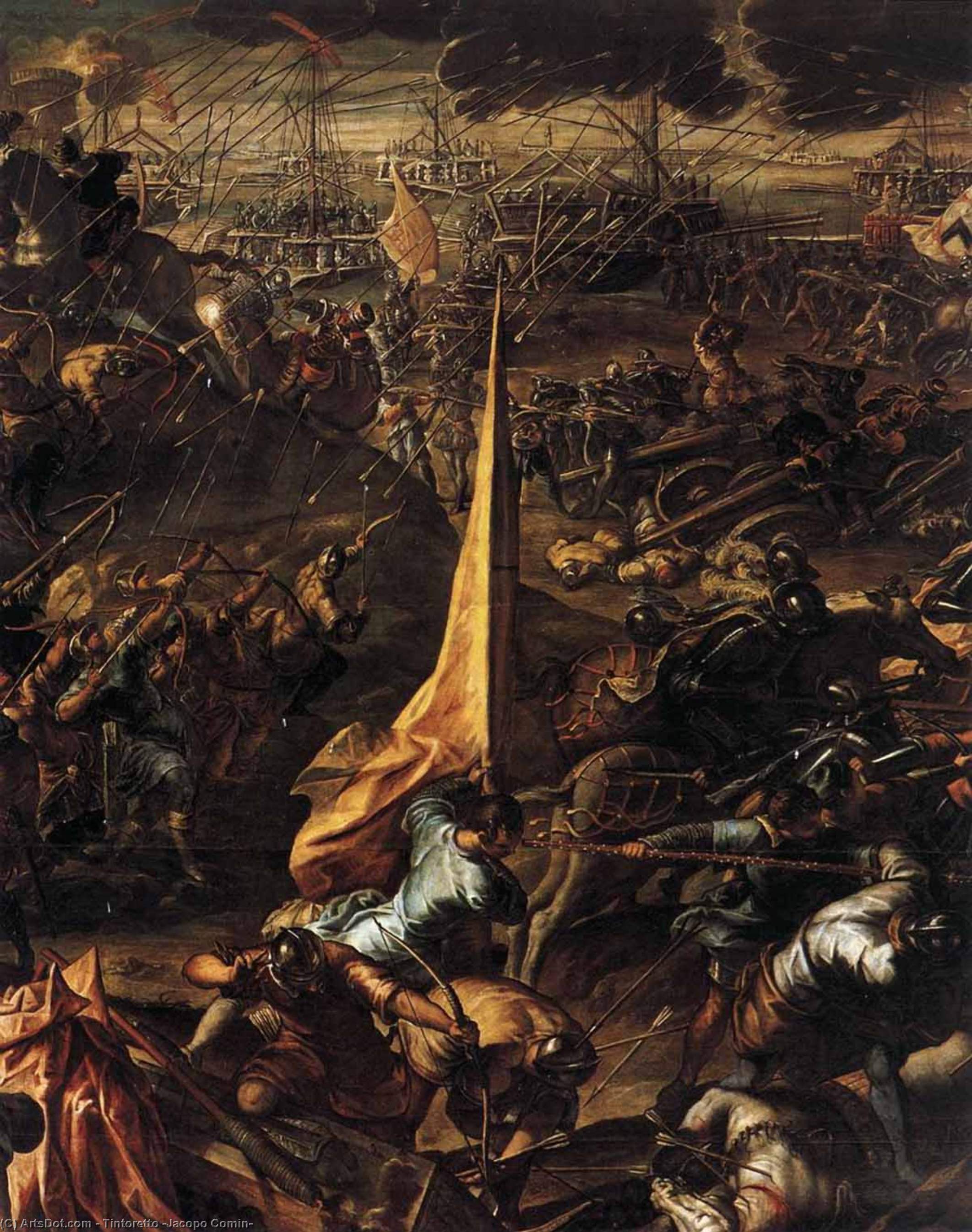
A Dramatic Triumph: Tintoretto’s Conquest of Zara
The Venetian painter Jacopo Tintoretto, born Robusti around 1518, stands as a titan amongst the artistic luminaries of his era—a figure whose restless spirit and revolutionary vision irrevocably altered the course of Baroque art. Unlike many artists groomed by established masters, Tintoretto forged his own path, driven by an unwavering fascination for observation and a determination to push boundaries. While initial encounters with Titian’s studio reportedly ended in discord, marking a pivotal moment in his artistic development, this rejection fueled a singular trajectory characterized by audacious experimentation and unparalleled dynamism. He dedicated himself rigorously to anatomical study, meticulously dissecting human form to achieve breathtaking realism within his canvases—a practice unheard of for the time and profoundly influential on subsequent generations of artists.
- Subject Matter: Tintoretto’s “Conquest of Zara,” completed in 1584, depicts a pivotal siege during Philip II’s reign – the valiant defense of Zara by Venetian forces against Ottoman aggression. The painting captures not merely a military confrontation but embodies the very essence of heroic struggle and triumphant victory.
- Style: Immediately recognizable as Baroque, “Conquest of Zara” exemplifies Tintoretto's signature style—a dramatic chiaroscuro technique that employs stark contrasts between light and dark to heighten emotional intensity. This masterful manipulation of illumination creates a palpable sense of movement and grandeur, immersing the viewer in the tumultuous atmosphere of battle.
- Technique: Tintoretto’s mastery extended beyond mere stylistic choices; he pioneered innovative painting methods. Utilizing a rapid layering technique—often referred to as “alla prima”—he applied paint directly onto wet plaster, achieving unparalleled speed and capturing fleeting moments with astonishing accuracy. This method ensured that every brushstroke conveyed maximum impact, resulting in canvases brimming with energy and immediacy.
Historical Context: The Siege of Zara – A Symbol of Venetian Resilience
The siege of Zara holds immense significance within the broader narrative of European history. Venice, a republic fiercely committed to its independence, faced an existential threat from the Ottoman Empire—the dominant power in the Mediterranean. Tintoretto’s depiction captures this moment of crisis with unflinching realism, reflecting the anxieties and aspirations of his time. The painting serves as a testament to Venetian courage and determination, portraying the defenders as figures of noble fortitude battling against overwhelming odds.
Symbolism: Light Versus Darkness – Triumph Over Adversity
Beyond its depiction of military action, “Conquest of Zara” is laden with symbolic resonance. Tintoretto’s masterful use of chiaroscuro isn't merely aesthetic; it embodies the overarching theme of spiritual struggle—the battle between good and evil represented by the luminous figures confronting the encroaching darkness of Ottoman dominion. The positioning of the soldiers and the radiant light emanating from certain areas underscores the triumph of faith and valor over despair.
Emotional Impact: Capturing the Fury of Battle
Ultimately, Tintoretto’s “Conquest of Zara” transcends mere historical record; it evokes a profound emotional response in the viewer. The dynamism of the composition—the surging horses, the frantic movements of the soldiers—captures the visceral thrill of combat. More importantly, the painting communicates an enduring message of resilience and hope—a reminder that even amidst adversity, courage and determination can prevail.