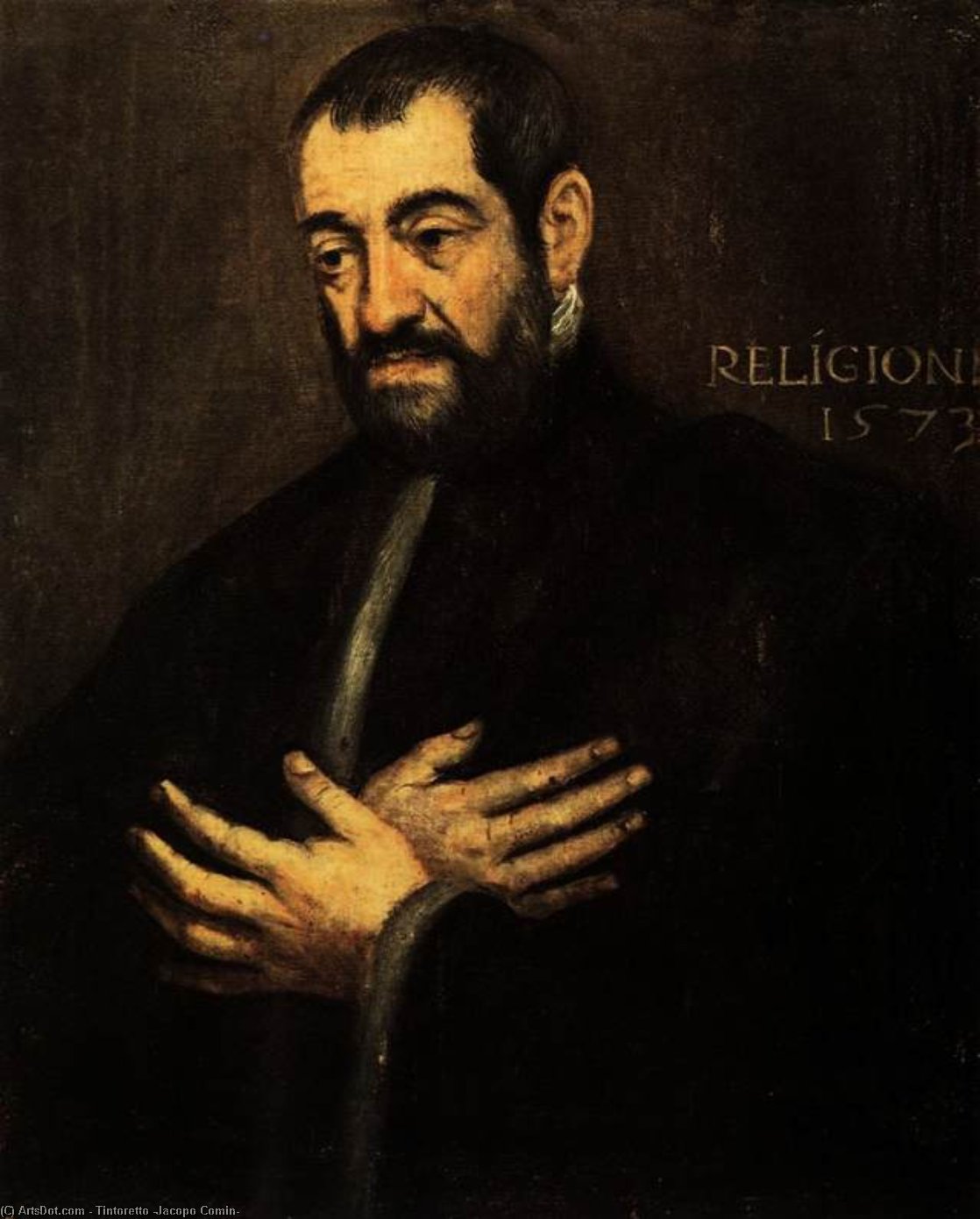
A dramatic study of light and shadow defines this Venetian Renaissance portrait by Jacopo Tintoretto featuring a contemplative man in religious robes that invites you to explore the depth of his masterful technique.
「ティントレト」はヴェネツィアで生まれ、ダヤルの息子として知られるイタリアの画家です。彼の作品は劇的な構成と大胆な筆致が特徴で、特にサンマルコ聖堂の絵画はバロック美術の重要な遺産となりました。「最後の晩餐」など、彼の傑作は視覚的な感動を呼び起こし、芸術家たちに大きな影響を与えました。
サン・マルコ
(ヴェネツィア, イタリア)
ヴェネツィア、サン・ロッコの学校でティントレットの息を呑むような傑作を発見!壮大な歴史的建造物の中で、聖書の場面やヴェネツィア美術に浸りましょう。
イタリア
ヴェネツィア
スクオーラ・グランデ・ディ・サン・ロッコ
ティントレットの絵画
かなりの大きさ
美術と歴史
1478
ルネサンスの古典主義
2
スクオーラ・グランデ・ディ・サン・ロッコで見られる絵画には、どのような芸術スタイルが主に結び付けられていますか?
A Dramatic Portrait Steeped in Venetian Light
The painting “Portrait of a Man,” executed by Jacopo Tintoretto around 1573, stands as a testament to the Venetian Renaissance’s fascination with theatricality and masterful manipulation of light—a hallmark of Tintoretto's distinctive artistic vision. This captivating portrait captures not merely an individual likeness but embodies a profound exploration of human psychology within the framework of religious iconography. The subject himself is presented in profile, clad in robes suggestive of ecclesiastical garb, conveying an aura of solemn contemplation as his gaze drifts towards the distant horizon. Two figures—positioned subtly on either side—add layers of narrative complexity, hinting at a broader spiritual dimension and enriching the visual tapestry of the composition.
Style and Technique: Tintoretto’s Revolutionary Approach
Tintoretto fundamentally challenged prevailing artistic conventions of his time, rejecting the polished surfaces favored by many contemporaries in favor of a technique characterized by rapid brushstrokes and an almost palpable sense of movement. Unlike traditional portraiture which aimed for idealized beauty, Tintoretto prioritized conveying emotion and psychological depth. He achieved this remarkable feat through meticulous anatomical study—a practice considered radical at the outset of his career—resulting in figures rendered with astonishing realism and dynamism. The artist employed a pyramidal composition, skillfully directing the viewer’s eye upwards towards the central figure, maximizing impact and reinforcing the impression of grandeur. Furthermore, Tintoretto's masterful use of chiaroscuro – dramatic contrasts between light and dark – imbues the painting with an ethereal quality, transforming ordinary drapery into luminous folds and casting shadows that sculpt the contours of the face and torso.
Historical Context: Venice at the Crossroads
The portrait emerges from a pivotal moment in Venetian history—the mid-16th century—a period marked by religious upheaval following the Protestant Reformation. Tintoretto’s artistic endeavors coincided with a fervent revival of Catholic piety, influencing his choice of subject matter and reinforcing the symbolic significance of the robes worn by the sitter. Venice itself was grappling with internal tensions between papal authority and republican ideals, creating an atmosphere ripe for artistic expression that interrogated moral dilemmas and explored themes of faith and spirituality. The painting reflects this intellectual climate, inviting contemplation on matters of conscience and conveying a sense of inner solemnity—qualities deeply rooted in Venetian humanist thought.
Symbolism: Layers of Meaning Beyond Appearance
Beyond its immediate visual impact, “Portrait of a Man” is laden with symbolic resonance. The robe’s association with religious institutions speaks to the sitter's piety and underscores the importance of spiritual contemplation within Renaissance culture. The distant gaze symbolizes introspection and perhaps even transcendence—a yearning for something beyond the earthly realm. Even the positioning of the two flanking figures contributes to the overall narrative, suggesting a connection between the individual depicted and a larger cosmic order. Tintoretto’s deliberate use of visual cues elevates the portrait from mere likeness into a profound meditation on human experience and faith.
Emotional Impact: Capturing the Soul
Ultimately, “Portrait of” succeeds in conveying an arresting emotional impression—one of quiet dignity and contemplative seriousness. The artist's ability to capture the subtle nuances of facial expression is remarkable, communicating a palpable sense of inner turmoil and profound introspection. The painting’s luminous chiaroscuro draws viewers into its dramatic embrace, fostering a feeling of awe and prompting reflection on themes of mortality and spiritual aspiration. It remains an enduring masterpiece—a testament to Tintoretto's unparalleled skill in portraying the human soul and cementing his place as one of Venice’s most influential artists.