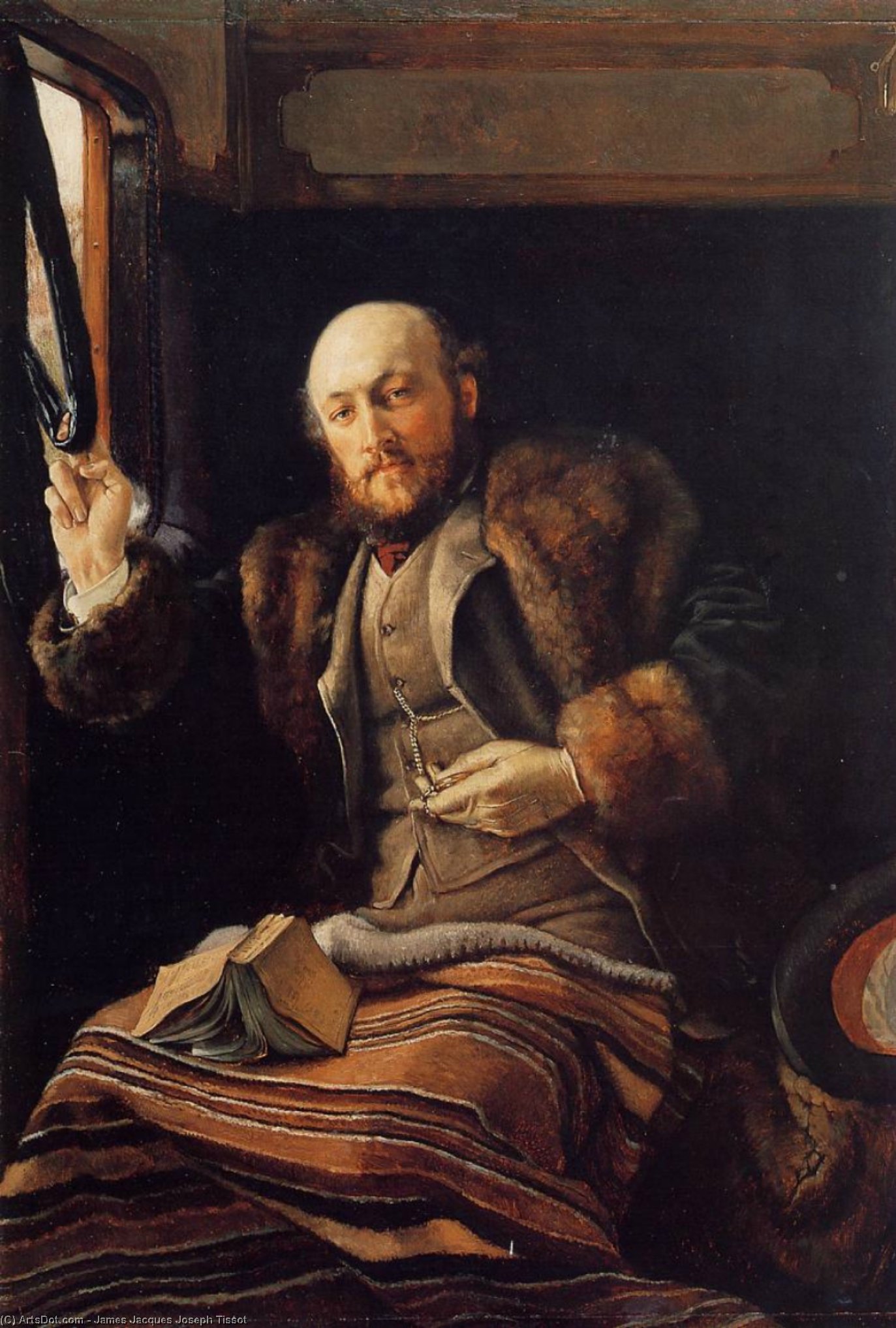
Gentleman In A Railway Carriage: An Ode to Victorian Elegance
The painting “Gentleman in A Railway Carriage” by James Jacques Joseph Tissot stands as an exquisite testament to the artistic spirit of the Victorian era, capturing not merely a scene but an entire atmosphere—one steeped in refinement and subtly imbued with social commentary. Completed in 1872, this oil on panel masterpiece resides within the Worcester Art Museum, offering visitors a privileged glimpse into a pivotal moment in European art history. Tissot’s masterful execution transcends mere representation; he achieves a remarkable level of realism combined with an expressive use of color and light that elevates the artwork beyond a simple depiction of everyday life.
A Window Into Victorian Society
Tissot's artistic vision was firmly rooted in the burgeoning Impressionist movement, yet he skillfully blended its innovative techniques with academic conventions—a hallmark of his oeuvre during this period. Unlike many Impressionists who prioritized capturing fleeting moments of light and color, Tissot meticulously rendered details—the folds of fabric, the texture of a fur coat, even the subtle reflections on polished surfaces—creating an immersive experience for the viewer. This dedication to realism wasn’t merely stylistic; it served as a conduit for exploring broader social themes prevalent in Victorian Britain. The gentleman depicted embodies the aristocratic ideal of the time: impeccably dressed, poised with quiet dignity, and surrounded by symbols of wealth and status – elements meticulously crafted to convey a narrative about class distinctions and societal expectations.
Technical Brilliance and Japonisme Influence
Tissot’s technique is characterized by painstaking layering of glazes—a method perfected during his formative years studying under Ingres—allowing him to achieve luminous colors and subtle tonal variations that imbue the painting with depth and vibrancy. Furthermore, Tissot incorporated elements of Japonisme—the fascination with Japanese art and aesthetics that swept across Europe at the time—evident in the stylized depiction of the interior space and the careful arrangement of decorative motifs. The inclusion of a clock and books reinforces this stylistic influence, mirroring the meticulous attention to detail found in traditional Japanese prints. These visual cues contribute to an overall sense of serenity and contemplation, inviting viewers to consider not just what is seen but also how it feels.
Symbolism Beyond Surface Appearance
Beyond its technical prowess, “Gentleman In A Railway Carriage” resonates with symbolic significance. The gentleman’s posture—relaxed yet watchful—suggests a quiet confidence in his position within society. His gaze directs towards the window, symbolizing both observation and introspection – themes central to Victorian philosophical thought. The train itself represents progress and connection, but also isolation; it's a microcosm of the larger social landscape where individuals strive for upward mobility while simultaneously grappling with anxieties about identity and belonging. The painting’s muted palette—dominated by browns, creams, and golds—underscores the understated elegance characteristic of Victorian interiors and reinforces the artwork’s contemplative mood.
Emotional Resonance: A Portrait of an Era
Ultimately, “Gentleman In A Railway Carriage” succeeds in transporting viewers back to a bygone era—a time defined by social formality, artistic innovation, and profound intellectual curiosity. Tissot's ability to capture not only visual accuracy but also emotional nuance elevates the painting beyond mere representation, transforming it into an enduring symbol of Victorian culture. It remains a captivating subject for art historians, collectors seeking authentic reproductions, and interior designers striving to evoke a sense of timeless beauty and sophistication.