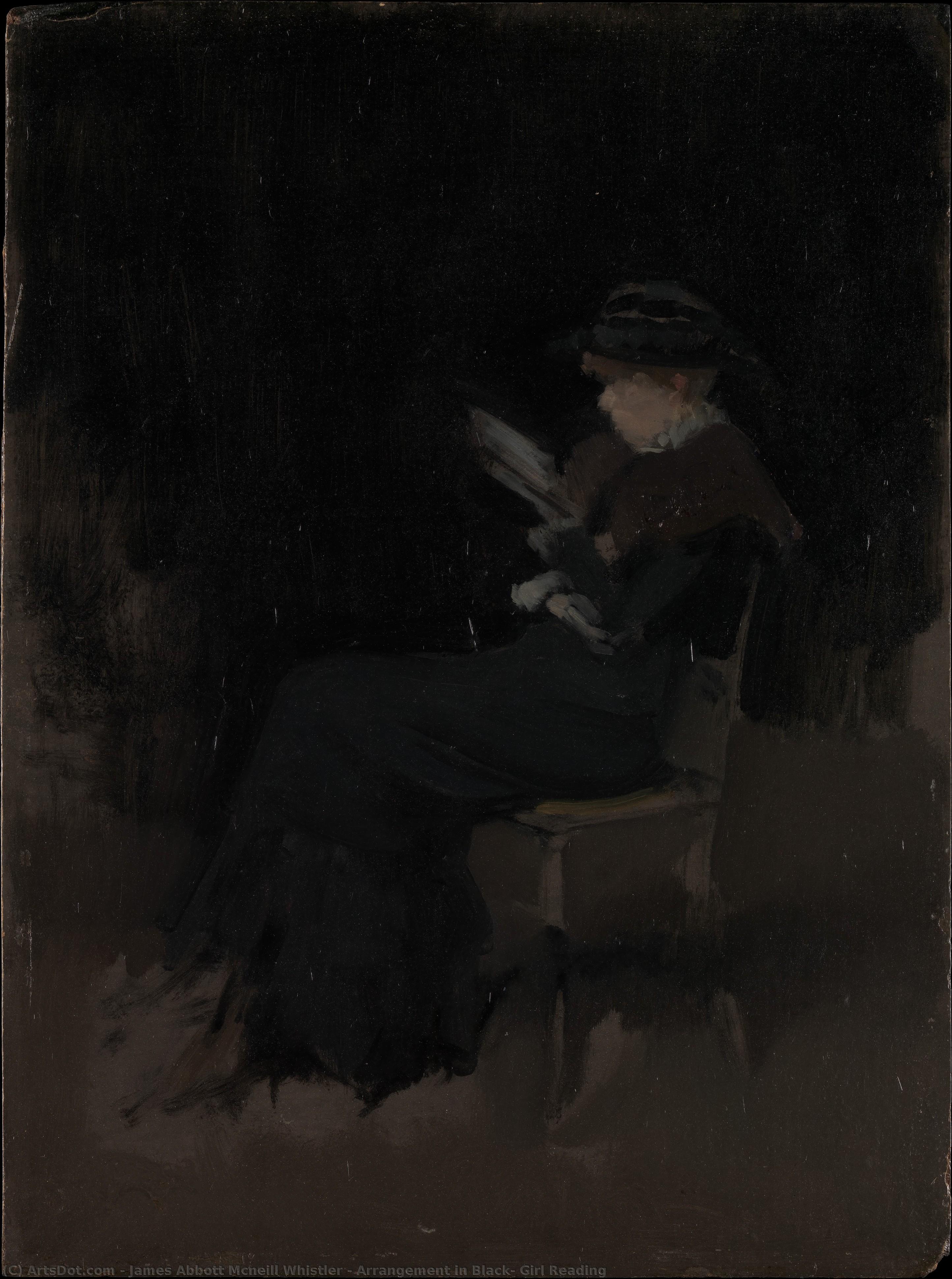
ウィスラーは、絵画における美しさのみを追求する「芸術のための芸術」という思想を提唱し、印象派とは異なり、色彩とトーンの調和を重視した独特のスタイルで知られるアメリカの画家です。彼の代表作は、『モザイクの母』や『黒と金のノクターン』などがあり、美術批評家ジョン・ルシンとの訴訟は美術界に大きな影響を与えました。
メトロポリタン美術館
(New York, United States of America)
5千年の芸術と文化を体験!メトロポリタン美術館で、古代エジプトの遺産からルネサンス絵画まで、世界中の至宝を発見。ニューヨークの象徴的な美術館へ。
(229文字)
A Quiet Reverie Captured in Gray: Analyzing Whistler’s “Arrangement in Black”
James Abbott McNeill Whistler's "Arrangement in Black: Girl Reading," completed in 1880, stands as a cornerstone of Aestheticism—a movement that prioritized artistic beauty and emotional resonance above narrative storytelling. More than just a depiction of a woman absorbed in her book, this painting embodies Whistler’s philosophical stance on art itself, presenting it as an experience rather than merely an object to be observed. The artwork resides within the Metropolitan Museum of Art's collection, where its subtle elegance continues to captivate audiences today.
Composition and Technique: Impressionistic Harmony
Whistler meticulously crafted this piece using oil paints on canvas—a technique characteristic of his era—employing loose brushstrokes that prioritize atmosphere over precise detail. Unlike Romantic painters who sought dramatic effects, Whistler aimed for a harmonious blend of color and tone, mirroring the principles of Japanese prints (Ukiyo-e), which profoundly influenced his artistic vision. The vertical orientation emphasizes the woman’s posture, creating a sense of stillness and inviting contemplation. Lines are used sparingly to delineate forms—a deliberate choice designed to soften edges and contribute to the painting's overall softness. Notice how Whistler skillfully manipulates tonal gradation; darker shades recede into the background, while lighter tones draw attention to the woman’s face and the illuminated pages of her book.
Historical Context: Aestheticism and Artistic Ideal
The Victorian era witnessed a burgeoning interest in philosophical debates surrounding art's role in society—debates fueled by thinkers like Oscar Wilde. Whistler firmly believed that “art for art’s sake” was paramount, rejecting the didactic impulse prevalent at the time. He sought to elevate painting beyond mere representation, striving instead to evoke emotion and capture the essence of a particular moment. This pursuit aligns perfectly with Aestheticism's core tenets: beauty as an end in itself, rejecting moral judgments and prioritizing sensory experience. The painting’s influence extends beyond its immediate visual appeal; it represents Whistler’s unwavering commitment to artistic integrity—a legacy that resonates powerfully within the contemporary art world.
Symbolic Resonance: Light and Reflection
Beyond its formal qualities, “Arrangement in Black” carries symbolic weight. The monochromatic palette – predominantly shades of gray – deliberately eschews color to heighten emotional impact. Gray represents neutrality, contemplation, and spiritual purity—values central to Whistler’s aesthetic philosophy. Furthermore, the diffused lighting mimics the soft glow of candlelight, creating an intimate setting that underscores the woman's solitary reading experience. The subtle reflection in her eyes hints at inner thoughts and emotions, inviting viewers to engage in a dialogue with the artwork itself.
Emotional Impact: Tranquility and Reflection
Ultimately, Whistler’s “Arrangement in Black” succeeds in conveying a profound sense of tranquility and introspection. It captures not just a visual scene but also an emotional state—a moment of quiet absorption where beauty transcends mere observation. The painting's understated elegance speaks to the enduring power of simplicity and harmony—qualities that continue to inspire artists and collectors alike. Its timeless appeal lies in its ability to transport viewers back to a bygone era while simultaneously resonating with contemporary sensibilities.