ウィスラーは、絵画における美しさのみを追求する「芸術のための芸術」という思想を提唱し、印象派とは異なり、色彩とトーンの調和を重視した独特のスタイルで知られるアメリカの画家です。彼の代表作は、『モザイクの母』や『黒と金のノクターン』などがあり、美術批評家ジョン・ルシンとの訴訟は美術界に大きな影響を与えました。
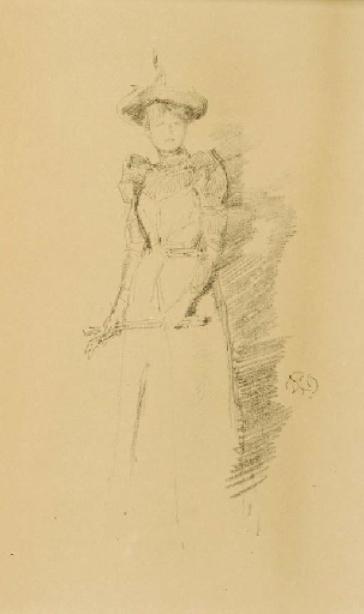
James Abbott McNeill Whistler’s Gants de Suède: A Study in Tone and Impression
James Abbott McNeill Whistler (1834-1903), a pivotal figure in the Aesthetic movement, relentlessly pursued artistic autonomy—a stance diametrically opposed to the Victorian preoccupation with didactic narratives. His upbringing, characterized by frequent relocations accompanying his father’s railroad engineering career, fostered adaptability and exposure to diverse cultural landscapes. Despite an unsuccessful foray into military service at West Point, Whistler persevered in honing his craft through work with the U.S. Coast and Geodetic Survey, experiences that solidified his dedication to artistic expression despite delaying his professional ambitions. This unwavering commitment propelled him across the Atlantic, immersing him within the vibrant currents of European avant-garde circles where he would forge a legacy as one of its most influential voices. Whistler’s artistic rebellion began not with grand pronouncements but with meticulous observation—a profound belief that art should exist for its own sake, independent of moral instruction or narrative purpose.
The Painting's Subject Matter and Composition
“Gants de Suède,” meaning “Gloves of Swedish Silk,” depicts a woman standing confidently before an indistinct building façade. Whistler’s deliberate choice to portray this seemingly simple scene—a woman holding an umbrella against the backdrop of urban architecture—was anything but accidental. He sought to capture not just what he saw, but how he *felt* seeing it. The woman's posture exudes composure and contemplation as she gazes off into the distance, inviting viewers to share in her quiet observation. Whistler skillfully employs tonalism – a technique prioritizing subtle gradations of color and light—to create an atmosphere of understated beauty and emotional resonance. The umbrella serves as a visual anchor, grounding the composition while simultaneously symbolizing protection from both physical weather and perhaps metaphorical anxieties.
Technique and Artistic Style
Whistler’s masterful execution exemplifies tonalism, achieved through a process known as transfer lithograph printing. This method involved transferring pigment from a painted canvas onto a stone matrix, ensuring exceptional fidelity to the original artwork. The resulting print utilizes black ink alone—a bold departure from conventional color printing—to emphasize Whistler's preoccupation with pure form and tone. He meticulously blended shades of gray and brown to achieve an ethereal luminescence that transcends mere representation; instead, he aimed to evoke a mood or feeling. This technique perfectly aligns with Whistler’s core artistic philosophy – “art for art’s sake,” where beauty itself is considered the ultimate goal.
Historical Context and Aesthetic Influences
“Gants de Suède” emerged during the height of the Aesthetic movement, a reaction against Victorian moralism and melodrama. Artists like Whistler championed intellectual pursuits and sensory experience as sources of artistic inspiration, rejecting didactic storytelling in favor of exploring subjective perception. Whistler’s work drew heavily from Japanese prints—particularly *ukiyo-e*—which captivated European artists with their flattened perspective, bold compositions, and emphasis on capturing fleeting moments of beauty. This influence is palpable in Whistler's deliberate simplification of form and his masterful manipulation of tonal harmonies.
Symbolism and Emotional Impact
Beyond its formal qualities, “Gants de Suède” resonates with deeper symbolic meanings. The gloves themselves—a luxurious item—represent refinement and elegance, mirroring Whistler’s artistic ideals. More broadly, the painting speaks to themes of solitude, contemplation, and the pursuit of aesthetic pleasure. Whistler invites viewers to immerse themselves in a tranquil scene that transcends literal description, fostering an appreciation for subtle nuances of color and light – elements crucial to capturing the essence of experience itself. It remains a testament to Whistler’s unwavering conviction that art should elevate the spirit rather than instruct the intellect.