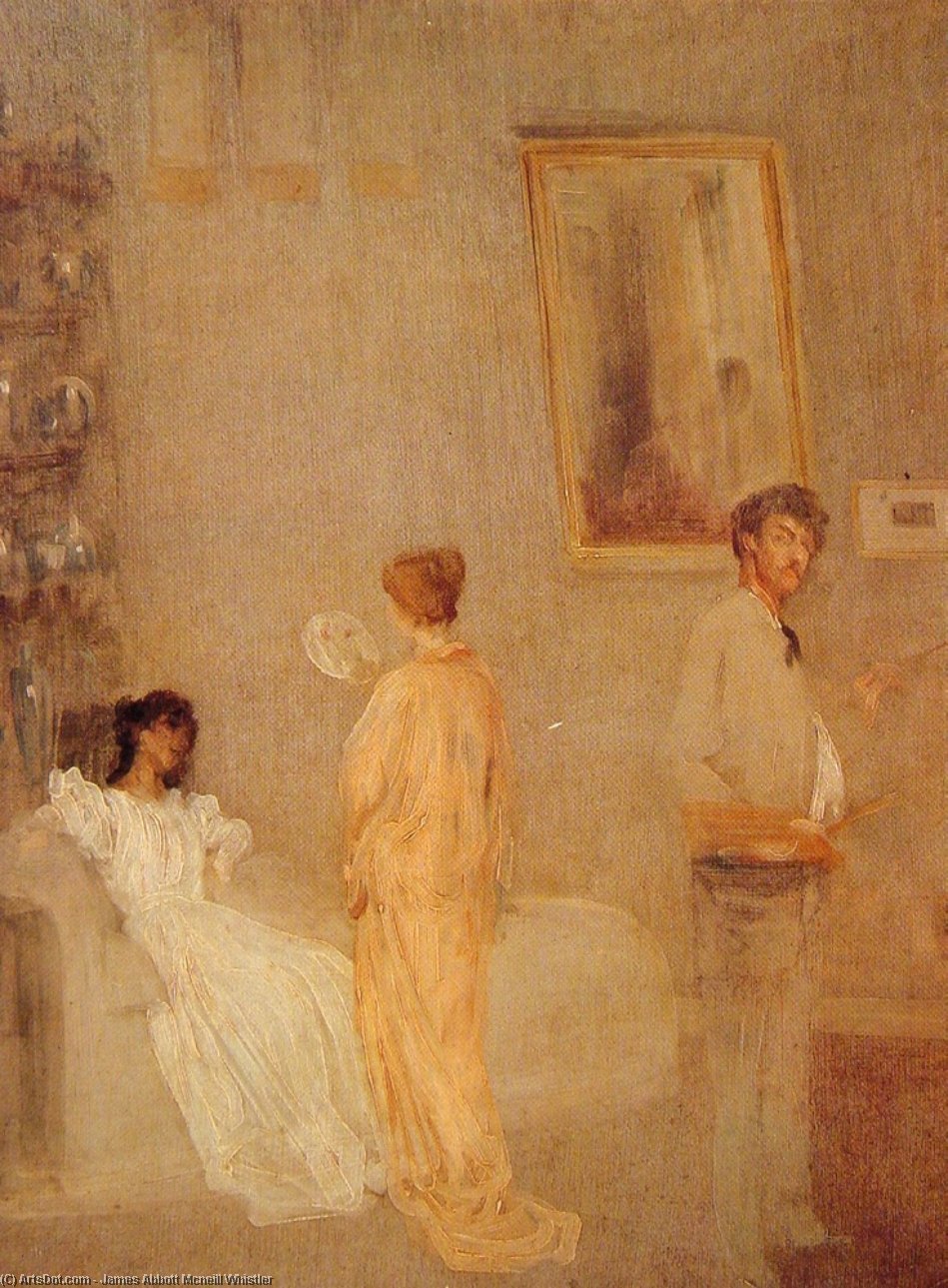
Captured in Whistler’s signature tonal Impressionism style, this intimate studio portrait depicts three figures amidst scattered bottles and furniture—a serene glimpse into artistic contemplation during the Aesthetic movement.
ウィスラーは、絵画における美しさのみを追求する「芸術のための芸術」という思想を提唱し、印象派とは異なり、色彩とトーンの調和を重視した独特のスタイルで知られるアメリカの画家です。彼の代表作は、『モザイクの母』や『黒と金のノクターン』などがあり、美術批評家ジョン・ルシンとの訴訟は美術界に大きな影響を与えました。
A Portrait of Quiet Observation: Whistler’s “In His Studio”
The painting "In His Studio," attributed to James Abbott McNeill Whistler (1834-1903), transcends mere representation; it embodies the core tenets of Aestheticism—a movement that prioritized beauty and sensory experience above didactic moral instruction. Created sometime around 1866, this deceptively simple composition captures a moment of intimacy within a domestic setting, offering viewers a glimpse into Whistler’s artistic world and reflecting broader cultural anxieties about authenticity and intellectual engagement.
Subject Matter and Composition
At first glance, the scene depicts three figures—likely Whistler himself and two companions—gathered in what appears to be his studio. The arrangement is deliberately understated, prioritizing spatial harmony over dramatic narrative. Whistler meticulously crafted the composition using a pyramidal structure, grounding the figures and creating a sense of stability amidst the subtle interplay of light and shadow. Notice how the bed dominates the background, serving as a visual anchor and subtly hinting at the contemplative mood of the scene. Scattered bottles contribute to the atmosphere, adding textural interest and perhaps symbolizing intellectual stimulation or artistic experimentation—elements central to Whistler’s philosophical stance.
Style and Technique: Impressionistic Echoes
Whistler's approach aligns closely with Impressionism, though he consciously distanced himself from its populist appeal. Unlike Impressionists who sought to capture fleeting moments of outdoor life, Whistler focused on interior spaces and the effects of light upon surfaces. He employed a technique characterized by broken brushstrokes—a hallmark of Impressionistic painting—allowing for nuanced gradations of color and capturing the subtle nuances of tonal variation. Whistler’s masterful use of muted hues—primarily creams, browns, and blues—creates an ethereal quality, prioritizing mood over precise detail. The artist deliberately avoided rendering textures realistically, opting instead for a flattened perspective that emphasizes visual sensation rather than tactile accuracy.
Historical Context: Aestheticism's Challenge to Victorian Values
“In His Studio” emerged during the height of Aestheticism, a reaction against the moralizing conventions of Victorian society. Whistler’s manifesto declared “art for art’s sake,” arguing that painting should exist solely for its aesthetic pleasure—a radical proposition at the time when art was frequently viewed as a vehicle for conveying religious or social messages. This rejection of didactic purpose reflects Whistler's broader belief in the importance of cultivating intellectual and sensory awareness, prioritizing beauty and contemplation over practical concerns. The painting’s quiet dignity speaks to this ethos, presenting an idealized vision of artistic life—a refuge from the pressures of societal expectations.
Symbolism and Emotional Impact
Beyond its formal qualities, “In His Studio” resonates with symbolic significance. The bottles could represent intellectual curiosity and the pursuit of knowledge, mirroring Whistler's own dedication to artistic exploration. Furthermore, the subdued palette evokes feelings of serenity and introspection—encouraging viewers to appreciate the beauty of stillness and contemplation. Ultimately, Whistler’s masterpiece invites us to consider what constitutes true art – not merely what is seen but how it feels; a timeless reminder that beauty itself possesses inherent value.