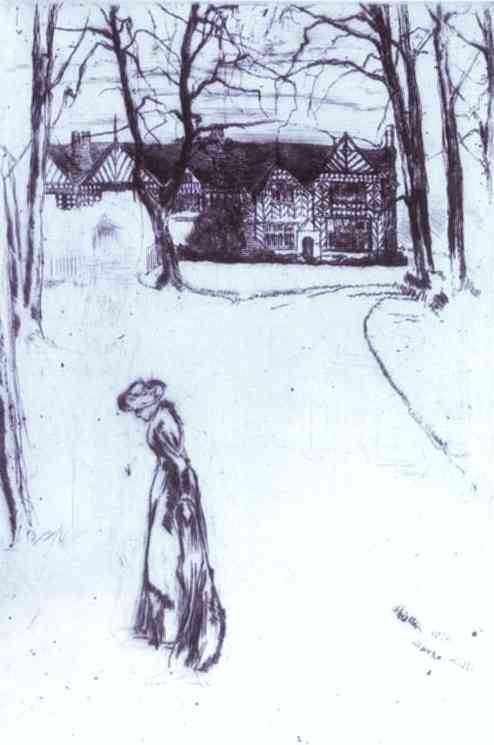
Speke Hall by James Abbott McNeill Whistler: A Study in Tonal Harmony
“Speke Hall” by James Abbott McNeill Whistler (1834-1903) is a captivating example of the Tonalist movement, showcasing Whistler's masterful ability to evoke mood and atmosphere through subtle tonal values rather than precise detail. Created between 1876 and 1877, this painting offers a glimpse into a historic manor house while embodying the core principles of Tonalism.
The Essence of Tonalism
Emerging in late 19th-century America as a reaction against Impressionism’s emphasis on light and color, Tonalism prioritized creating atmospheric landscapes with soft, muted colors. Artists like Whistler sought to evoke feelings of calmness and tranquility through harmonious tonal relationships rather than striving for realistic representation. This movement valued the overall impression or "tone" of a scene over sharp details, resulting in works characterized by their quiet beauty and contemplative mood.
Depicting Speke Hall: A Moment in Time
Whistler’s “Speke Hall” portrays the historic manor house located in Liverpool, England. The painting captures a wintry scene, with the grand hall standing amidst bare trees and a snow-covered field. Whistler employs a limited palette of grays, browns, and subtle greens to create an overall sense of harmony and balance. His loose brushstrokes and delicate use of color contribute to the painting's ethereal quality, suggesting a fleeting moment in time rather than a precise depiction of reality. The composition is deliberately asymmetrical, drawing the viewer’s eye across the canvas and enhancing the feeling of quiet contemplation.
Whistler's Artistic Vision & Technique
James Abbott McNeill Whistler was an American artist who spent much of his career in the United Kingdom. He was a key figure in the Aesthetic movement, advocating for "art for art’s sake"—the belief that art should exist purely for its aesthetic value, free from moral or narrative constraints. In “Speke Hall,” Whistler demonstrates this philosophy by focusing solely on creating a harmonious visual experience. The painting's technique is characterized by soft edges and blended tones, achieved through layering thin washes of paint. This approach creates a sense of depth and atmosphere while maintaining the overall tonal unity that defines Tonalism.
Symbolism & Emotional Impact
Beyond its aesthetic appeal, “Speke Hall” carries symbolic weight. The manor house itself can be interpreted as representing history, tradition, or even societal grandeur. However, set against the stark winter landscape and viewed through Whistler’s muted palette, it evokes a sense of solitude and perhaps a touch of melancholy. The solitary figure in the foreground further amplifies this feeling, inviting viewers to contemplate themes of isolation and introspection. The painting's emotional impact lies not in dramatic narrative but in its ability to create a quiet, contemplative space for reflection.