A Window into the Dutch Golden Age
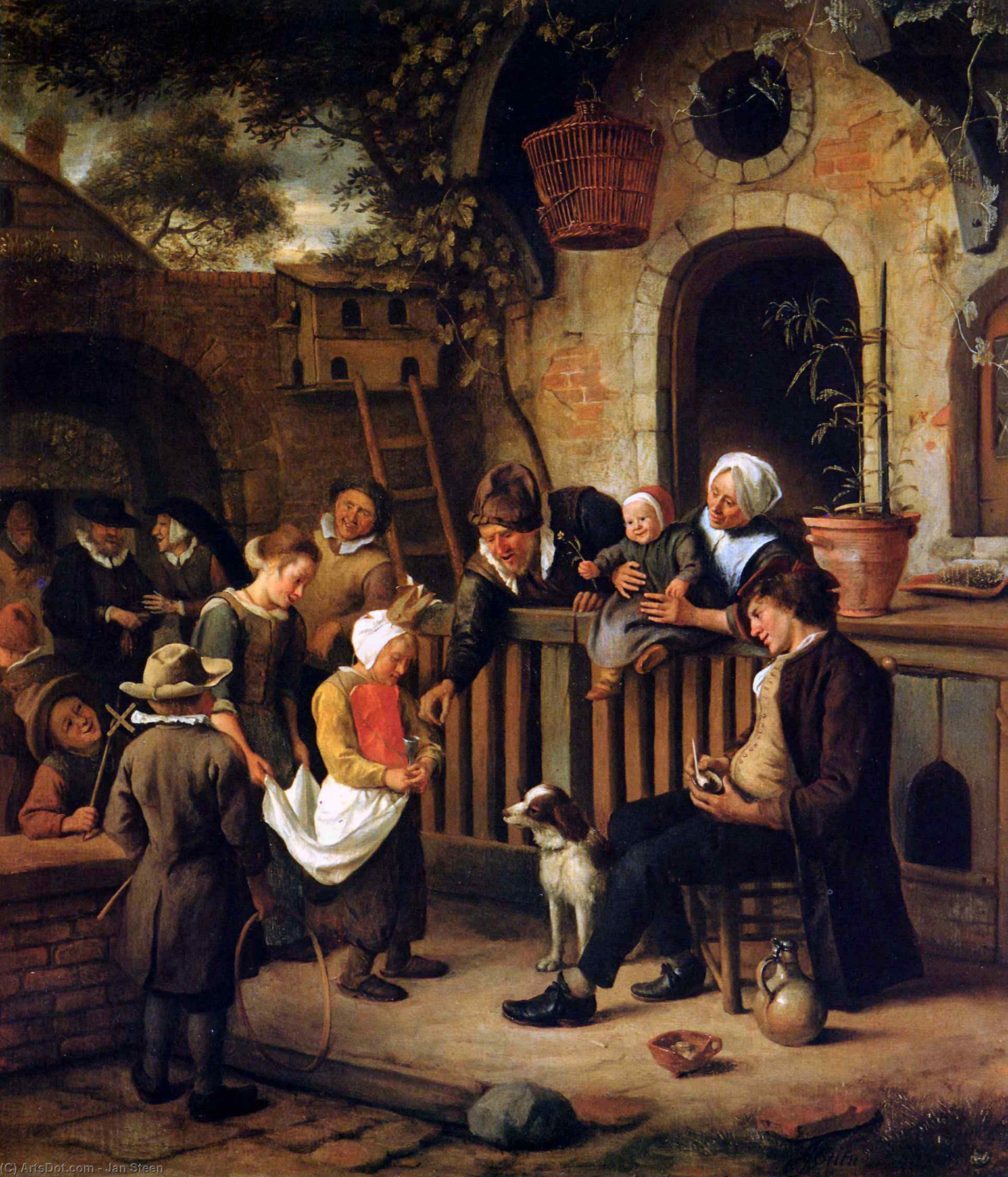
In the masterful hands of Jan Havickszoon Steen, the mundane becomes extraordinary. His 1665 masterpiece, "Little Collector," serves as a breathtaking portal into the heart of seventeenth-century Dutch life, capturing a moment of quiet curiosity and communal connection. This Baroque gem does not rely on the grandiosity of kings or the drama of myth; instead, it finds its soul in the gentle gathering of figures around a rustic fence. As we gaze upon this scene, we are drawn into an intimate circle where children and adults alike are united by a shared focus, their gazes anchored by the simple joy of discovery. The presence of a loyal dog resting nearby adds a layer of domestic warmth, grounding the composition in a sense of lived-in reality that feels as immediate today as it did centuries ago.
The painting is a triumph of genre painting, a style where Steen truly reigned supreme. Through his expert use of light and shadow—the very essence of the Baroque period—he breathes life into every texture, from the rough grain of the wooden fence to the soft foliage of the potted plant tucked to the right. His technique allows for a remarkable depth of field, guiding the viewer's eye through the social tapestry of the group. For the discerning collector or interior designer, this piece offers more than just visual beauty; it provides a narrative richness that invites conversation. The subtle interplay of light suggests an outdoor setting bathed in the soft glow of a Dutch afternoon, creating an atmosphere of tranquility and nostalgic charm that can transform any sophisticated space.
Symbolism and the Art of Everyday Life
Beyond its surface beauty, "Little Collector" is steeped in the psychological depth for which Steen is celebrated. Every element within the frame serves a purpose, contributing to a larger narrative about learning, observation, and the human condition. The act of collecting—whether it be shells, stones, or memories—serves as a poignant metaphor for the way we interact with the world around us. The figures are not merely posing; they are engaged in the profound human ritual of witnessing. This sense of shared experience is reinforced by the inclusion of domestic elements like the solitary chair and the greenery, which suggest a bridge between the wildness of nature and the structured comfort of home.
For those looking to integrate fine art into a modern interior, this reproduction offers a unique emotional resonance. It evokes a sense of timelessness and stability, making it an ideal centerpiece for a room designed for reflection or intimate gatherings. The painting’s ability to balance humor with moral undertones—a hallmark of Steen's oeuvre—ensures that the artwork remains intellectually stimulating long after the first viewing. It is a piece that celebrates the beauty in the small, the overlooked, and the communal, making it an enduring choice for anyone who appreciates art that speaks to the heart of the human experience.