A Snapshot of Dutch Life: The Playful World of Tric-Trac
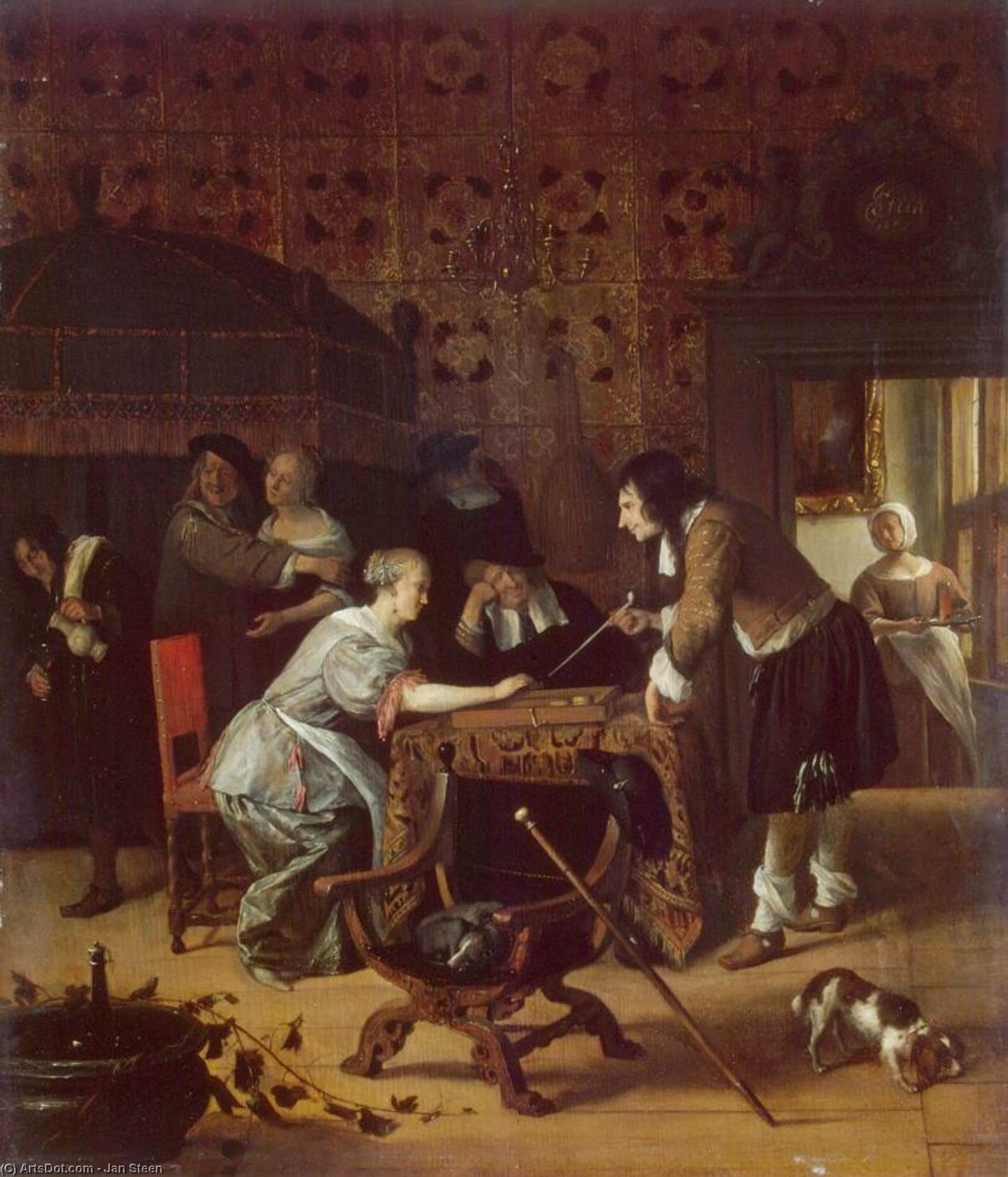
Jan Havickszoon Steen’s “Tric-Trac Players,” painted in 1667, isn't merely a depiction of a game; it’s a vibrant window into the social fabric and psychological landscape of 17th-century Holland. This remarkable work, now housed within the Hermitage Museum in St. Petersburg, captures a moment of convivial chaos – a group of men and women engrossed in a spirited game of tric-tac-toe (also known as draughts or ninepins). Steen masterfully eschews the grand narratives favored by many of his contemporaries, instead choosing to focus on the everyday, imbuing it with an extraordinary level of detail and astute observation. The scene unfolds within a modestly furnished room, dominated by a table upon which the game is laid out – a simple wooden surface that becomes the focal point of the entire composition.

The Master of Domesticity: Steen’s Unique Vision
Jan Steen stands apart as one of the most distinctive figures in the Dutch Golden Age. Unlike Rembrandt's dramatic portraits or Van Goyen’s serene landscapes, Steen dedicated his artistic life to portraying scenes of domestic life – farmers’ families, tavern gatherings, schoolrooms, and, crucially, moments of social interaction. This commitment to the ordinary, coupled with his remarkable ability to capture human psychology, established him as a pioneer of “genre painting.” His work isn't simply about recording events; it’s about revealing character, exposing folly, and offering subtle moral commentary. Steen’s genius lies in his capacity to infuse even the most commonplace scenes with an undercurrent of humor, irony, and profound insight.
A Theater Within a Painting: The Influence of the Rederijkers
Steen's connection to the Rederijkers – the Dutch equivalent of amateur theatrical guilds – is a key element in understanding his art. These groups, comprised of wealthy merchants and professionals, staged elaborate plays and performances, often incorporating elements of satire and social critique. Steen’s uncle was a member of the Leiden Rederijkers, and the artist frequently depicted scenes directly inspired by their activities. “Tric-Trac Players” embodies this influence; the game itself becomes a stage for observing human behavior – boasting, deception, rivalry, and quiet amusement. The figures are not simply playing a game; they’re enacting roles, engaging in social rituals, and revealing their personalities through their actions and expressions. This theatricality is further reinforced by Steen's use of composition, reminiscent of the stage design employed by the Rederijkers.
Technique and Detail: A Window into 17th-Century Holland
Steen’s masterful technique is evident in every detail of “Tric-Trac Players.” Executed in oil on panel, the painting showcases his remarkable ability to render textures – from the worn wood of the table to the folds of clothing and the expressions on faces. The use of light and shadow creates a sense of depth and realism, while the vibrant color palette adds to the overall liveliness of the scene. Notice the meticulous attention to detail in the figures’ attire, their gestures, and the arrangement of objects within the room – all contribute to a remarkably convincing portrayal of everyday life. The painting's composition is carefully balanced, drawing the viewer's eye across the scene and inviting them to become part of this lively gathering.
Collecting and Inspiring: A Timeless Masterpiece
“Tric-Trac Players” remains a captivating work of art, offering a glimpse into the social customs and psychological nuances of 17th-century Holland. Reproductions of this iconic painting are highly sought after by collectors and interior designers alike, adding a touch of historical charm and intellectual depth to any space. Its enduring appeal lies in its ability to evoke laughter, provoke thought, and celebrate the simple pleasures of human connection – qualities that resonate just as strongly today as they did centuries ago.