A Window into Fifteenth-Century Devotion: Jan van Eyck’s *Madonna with Canon van der Paele*
Jan van Eyck's *The Madonna with Canon van der Paele*, completed in 1436, is more than just a painting; it’s a meticulously crafted portal into the spiritual and social world of fifteenth-century Bruges. Housed within the Groeninge Museum, this monumental work exemplifies the burgeoning artistry of the Early Netherlandish period, showcasing Van Eyck's revolutionary oil painting technique and his profound ability to imbue religious scenes with startling realism. The painting isn’t simply a depiction of the Virgin Mary and Christ Child; it is a carefully constructed testament to faith, status, and the enduring power of art as commemoration.
The Composition: A Dialogue Between Worlds
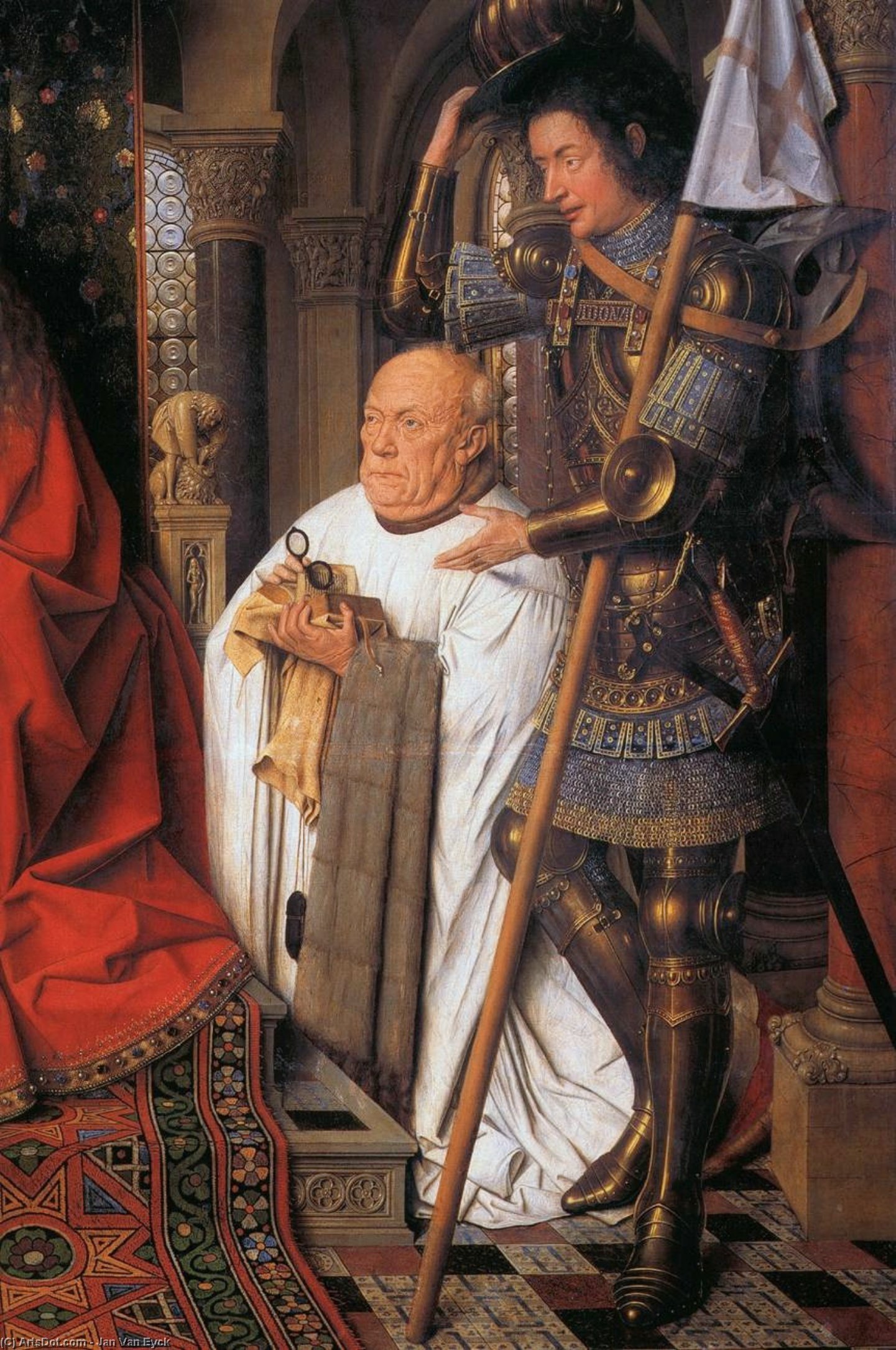
The scene unfolds within an imagined church interior, a space rendered with astonishing detail. The Virgin Mary, enthroned in regal splendor, cradles the Christ Child, her gaze serene and knowing. Flanking this central devotional image are two figures who anchor the painting firmly in the earthly realm: Joris van der Paele himself, the canon for whom the work was commissioned, and the patron saints Saint George and Saint Donatian. Van Eyck masterfully balances the sacred and the secular, presenting a scene that feels both otherworldly and intimately connected to the viewer’s own world. The inclusion of Van der Paele isn't merely as a donor portrait; he is actively *within* the divine space, presented by Saint George, his protector, suggesting a direct line of intercession and spiritual grace. The architectural setting, with its illusionistic arches and detailed carvings, further enhances this sense of immersive realism, drawing the viewer into the heart of the scene.
Symbolism Woven in Light and Detail
Every element within *The Madonna with Canon van der Paele* carries symbolic weight. The rich fabrics, meticulously rendered to convey texture and sheen, speak to Van Eyck’s technical prowess but also represent wealth and status. Van der Paele's spectacles, a relatively rare item at the time, are not simply a detail of portraiture; they symbolize his intellectual pursuits and devotion to scripture – he holds an open book in his hands. The inclusion of Saint George, with his gleaming armor and protective stance, alludes to Van der Paele’s name saint and offers a promise of divine protection. Even the seemingly decorative carvings on the Virgin's throne tell stories from the Old Testament, prefiguring the life and sacrifice of Christ. The inscription along the frame, written in elegant script, not only identifies the figures but also details Van der Paele’s pious intentions – his endowment of chaplaincies to ensure prayers for his soul. This is a painting deeply rooted in its historical context, reflecting the religious anxieties and social aspirations of the time.
A Lasting Legacy: The Power of Early Netherlandish Realism
Jan van Eyck’s *Madonna with Canon van der Paele* remains a captivating work not only for its technical brilliance but also for its emotional resonance. The painting invites contemplation, prompting viewers to consider the complexities of faith, mortality, and the enduring human desire for connection with the divine. Van Eyck's innovative use of oil paint allowed him to achieve an unprecedented level of detail and luminosity, creating a sense of depth and realism that was revolutionary for its time. This masterpiece continues to inspire awe and admiration centuries after its creation, serving as a testament to the power of art to transcend time and connect us to the past. For those seeking to bring a touch of Renaissance splendor into their homes or collections, a high-quality reproduction of this iconic work offers a timeless expression of beauty, faith, and artistic mastery.