The Delicate Dance of Light and Bloom
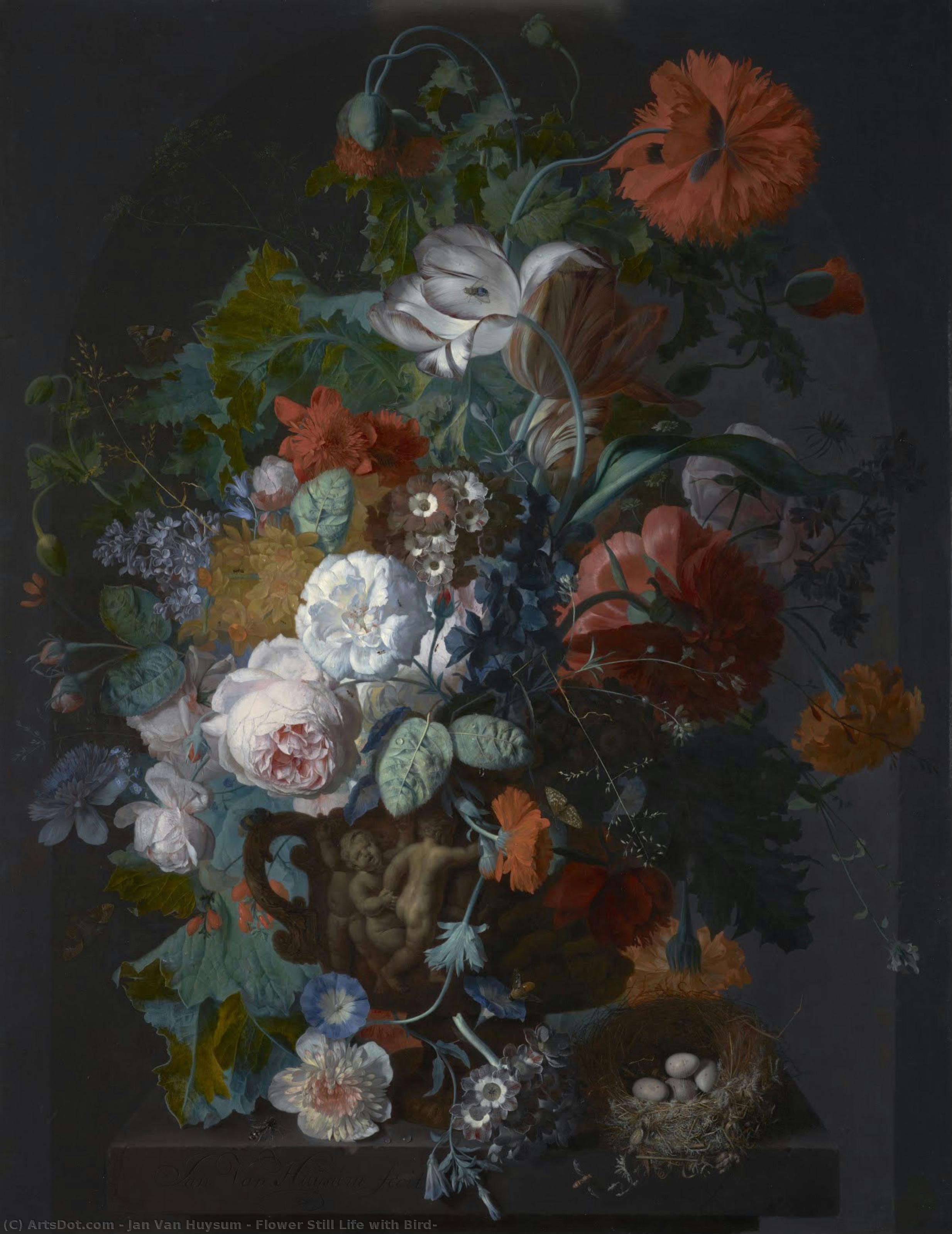
Jan van Huysum's “Flower Still Life with Bird,” painted in 1718, isn’t merely a depiction of flowers; it’s an invitation into a meticulously crafted world of beauty, tranquility, and subtle symbolism. Born into a family steeped in artistic tradition – his father, Justus van Huysum the Elder, was himself a respected flower painter – Jan inherited not just technical skill but also a profound understanding of capturing the ephemeral grace of nature. This particular piece exemplifies his mastery: a symphony of color, texture, and light that draws the viewer into an intimate moment frozen in time.
The painting unfolds within a dark, richly shadowed interior, creating a dramatic contrast with the vibrant blossoms before us. Van Huysum’s technique is characterized by an almost obsessive attention to detail – each petal appears to possess its own unique form and texture, rendered with astonishing realism. He employed a layering of translucent glazes, building up color gradually to achieve luminous effects, particularly evident in the delicate blush of the pink flower on the left and the subtle sheen of the white bloom near the center. The artist’s use of light is masterful; it doesn't simply illuminate the flowers but sculpts them, highlighting their curves and contours with a gentle, diffused glow.
A Dutch Golden Age Masterpiece
“Flower Still Life with Bird” resides firmly within the context of the Dutch Golden Age – a period of unprecedented artistic flourishing in the Netherlands. During this era, flower painting reached its zenith, transforming from a relatively minor genre into a highly esteemed and commercially successful one. The demand for exquisitely rendered floral arrangements fueled a thriving industry, attracting talented artists like Van Huysum who dedicated their careers to capturing the beauty of the natural world. These paintings weren’t simply decorative; they were often commissioned by wealthy patrons as symbols of status, prosperity, and an appreciation for the finer things in life.
The inclusion of a bird within the composition adds another layer of meaning. Birds were frequently depicted in still lifes during this period, symbolizing joy, beauty, and even resurrection – alluding to the transient nature of earthly pleasures and the promise of eternal life. Van Huysum’s careful placement of the bird amongst the flowers suggests a harmonious balance between the fleeting beauty of the natural world and the enduring principles of faith and morality.
Symbolism and Vanitas
Like many still lifes of the era, “Flower Still Life with Bird” incorporates elements of *vanitas*, a symbolic genre that served as a poignant reminder of mortality. The inclusion of a partially opened vase, perhaps hinting at decay, alongside the vibrant blooms underscores the ephemeral nature of beauty and life itself. The arrangement is not just visually pleasing; it’s imbued with a quiet contemplation on the passage of time and the inevitability of death – a concept deeply rooted in Dutch Golden Age culture.
Furthermore, the specific flowers chosen—roses, tulips, and other varieties—each carry their own symbolic weight. Roses traditionally represent love and beauty, while tulips were highly prized during this period, becoming symbols of wealth and status. The careful selection and arrangement of these blooms contribute to the painting’s rich tapestry of meaning, inviting viewers to engage in a deeper interpretation of its visual language.
A Legacy of Blossoms
Jan van Huysum's legacy extends far beyond this single masterpiece. He is widely considered the greatest flower painter of his time, renowned for his unparalleled ability to capture the delicate beauty and intricate details of blossoms. His work continues to inspire artists and collectors alike, offering a glimpse into the artistic sensibilities of the Dutch Golden Age. Reproductions of “Flower Still Life with Bird” provide a tangible connection to this remarkable artist and his enduring contribution to the world of art.