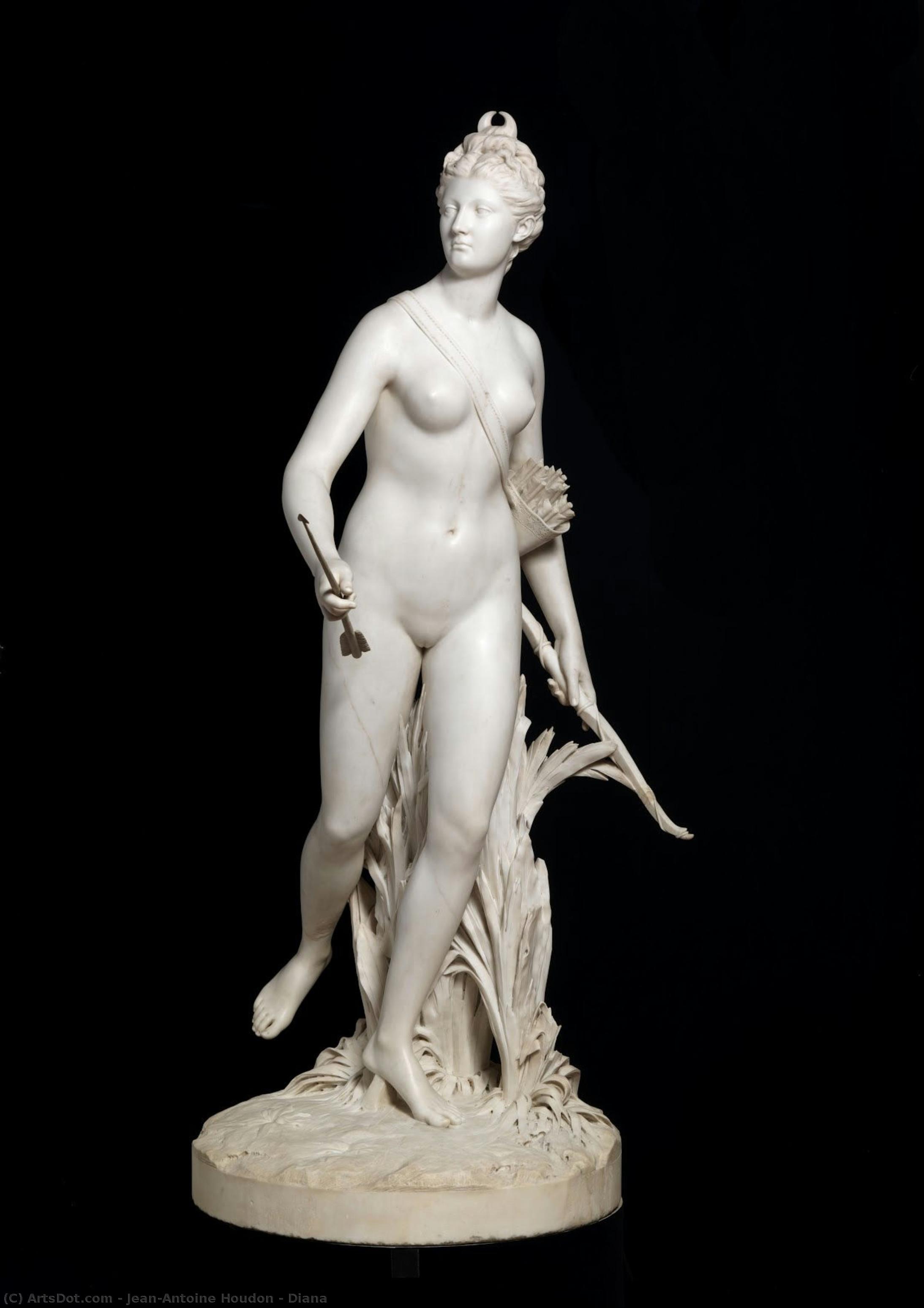
A Goddess in Motion: Jean-Antoine Houdon’s “Diana”
Jean-Antoine Houdon's "Diana," crafted around 1780 during the twilight of the Rococo era and the burgeoning rise of Neoclassicism, is more than just a marble sculpture; it’s a potent distillation of Roman mythology, Enlightenment ideals, and the artist’s profound understanding of human form. This captivating piece, originally commissioned for Catherine of Russia and later gracing the halls of the Hermitage Museum in St. Petersburg, embodies a revolutionary shift away from the idealized, static representations of antiquity towards a dynamic portrayal of the divine—a goddess caught in an exhilarating moment of pursuit.
Houdon’s genius lies not merely in his technical skill – though undeniably masterful – but in his ability to imbue stone with life and emotion. He deliberately departed from the prevailing artistic conventions, rejecting the smooth, polished surfaces and serene expressions favored by earlier sculptors. Instead, he opted for a raw, almost palpable energy, capturing Diana in a state of vigorous movement. The goddess is not poised or regal; she’s actively engaged in her hunt, her body coiled with power as she leaps forward, an arrow poised to strike. This departure from the traditional, passive depiction of Diana—often portrayed as a serene and untouchable virgin—immediately sparked controversy at the time, reflecting a broader societal unease with overt displays of female nudity.
The Anatomy of Rebellion: Technique and Material
The sculpture’s remarkable realism is achieved through Houdon's meticulous study of anatomy and his innovative approach to marble carving. He employed a subtractive technique, carefully removing material to reveal the underlying form, resulting in an astonishingly detailed depiction of musculature, tendons, and even the subtle wrinkles around Diana’s eyes. Notice the incredible precision with which he captures the weight of her body as she lands—a testament to his deep understanding of human movement. Crucially, Houdon addressed a significant technical challenge: the sheer scale of the figure. To accommodate the immense weight of the marble, he ingeniously incorporated support structures – a cluster of aquatic plants at the base and a quiver of arrows attached to her left arm – subtly integrated into the composition without detracting from the overall dynamism.
The choice of white marble itself is significant. The material’s inherent luminosity enhances the sculpture's impact, while its cool, smooth surface contrasts beautifully with the warm tones of Diana’s skin and clothing. Houdon expertly manipulated light and shadow to create a sense of depth and volume, emphasizing the contours of her body and conveying the feeling of movement with remarkable subtlety.
Symbolism and the Enlightenment Spirit
Diana, in Roman mythology, represents not only the hunt but also wilderness, fertility, and the moon. Her association with the lunar cycle—often linked to femininity and intuition—resonates deeply within the sculpture. The crescent moon adorning her head serves as a potent visual symbol of this connection, subtly reinforcing her divine status. Furthermore, Diana’s nudity, while initially controversial, can be interpreted through the lens of the Enlightenment – a period characterized by a renewed interest in classical antiquity and a questioning of traditional social norms. Houdon's portrayal challenged conventional notions of female virtue by presenting a powerful, independent goddess unburdened by restrictive societal expectations.
A Legacy of Realism: Historical Context and Influence
"Diana" stands as a pivotal work in the transition from Rococo to Neoclassicism. It exemplifies Houdon’s commitment to capturing not just outward appearances but also the inner essence of his subjects—their intellect, character, and emotional depth. His focus on realism and anatomical accuracy profoundly influenced subsequent generations of sculptors, paving the way for a new era of artistic expression. The sculpture's enduring popularity is a testament to Houdon’s genius and its ability to resonate with viewers across centuries. Reproductions today offer a remarkable opportunity to experience this iconic work of art, bringing its dynamism and emotional power into any space.