The Arbor of Ville-d’Avray: A Glimpse into Family Life and Romantic Landscape
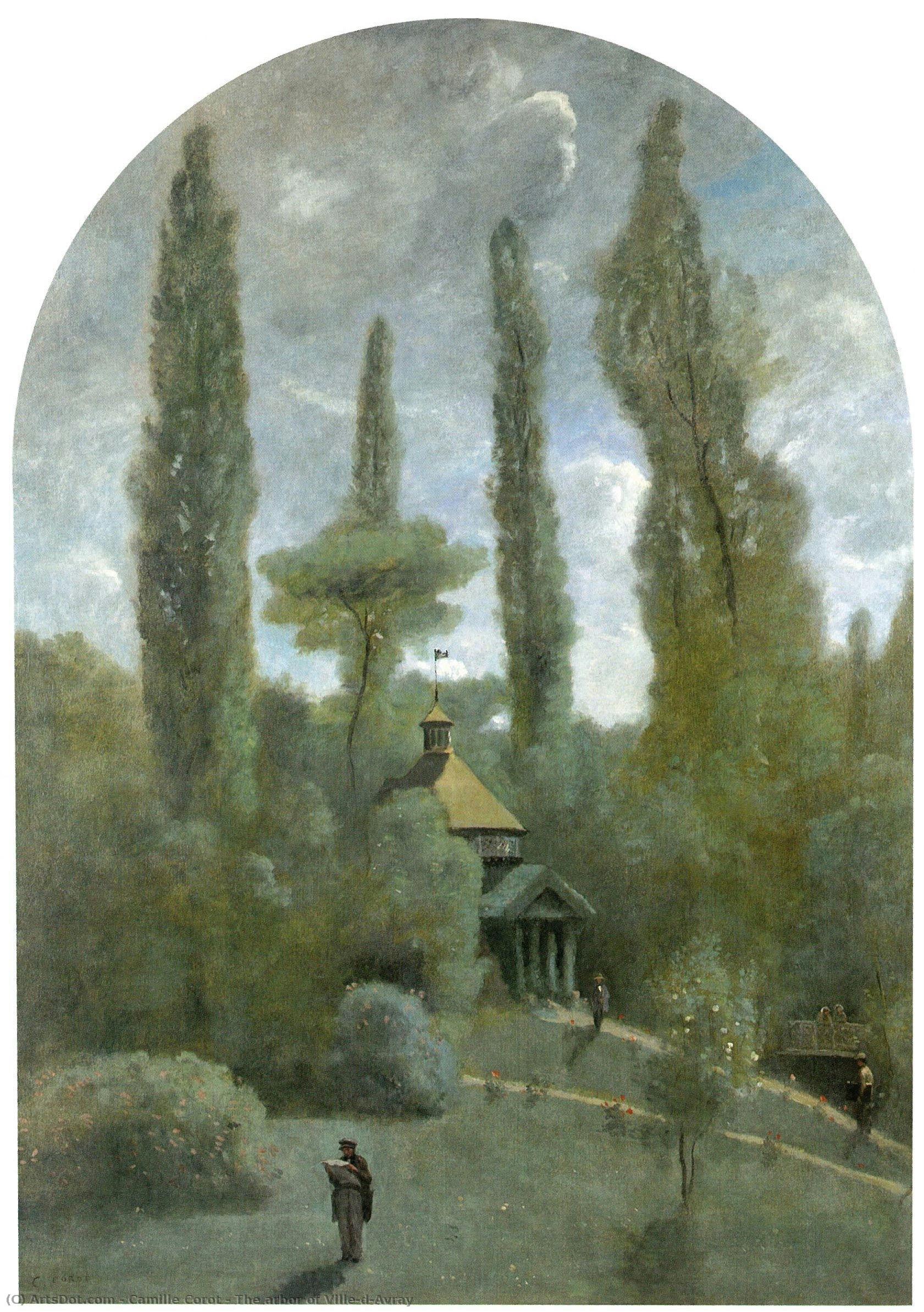
Jean-Baptiste-Camille Corot's "The Arbor of Ville-d’Avray," painted in 1847, is a captivating landscape that transcends mere depiction. It offers an intimate glimpse into the artist's personal life while embodying the core tenets of French Romanticism. This work, part of a series of six paintings adorning the walls of a small gazebo at his family estate, was created as a gift for his mother’s birthday and portrays Corot’s family amidst a tranquil garden setting.
Subject Matter and Composition
The painting centers around a picturesque arbor within a lush garden. The composition is vertically oriented, emphasizing the height of the surrounding trees and the structure itself. A soft, overcast sky creates an atmospheric perspective that lends a dreamlike quality to the scene. In the foreground, Corot’s father stands reading a newspaper, bathed in dappled sunlight. To his right, two women—believed to be his mother and sister—rest on a bridge. The artist himself is depicted returning from sketching outdoors, adding a personal touch to the narrative. Further into the garden, his brother-in-law, Monsieur Sennegon, awaits him near a path, symbolizing welcome and connection.
Style and Technique: Romanticism in Action
“The Arbor of Ville-d’Avray” exemplifies Corot's signature style within the Romantic movement. He masterfully blends observation with emotion, creating a scene that is both realistic and imbued with poetic sentiment. The brushwork is loose and expressive, contributing to the hazy, dreamlike quality characteristic of his later works. Corot employed a wet-on-wet technique, allowing colors to blend seamlessly and create soft transitions. This approach enhances the atmospheric perspective and contributes to the overall mood of tranquility and introspection. The painting’s palette consists primarily of muted greens, browns, and grays, further reinforcing the sense of quiet contemplation.
Historical Context and Symbolism
Painted in 1847 during a period when Corot was deeply connected to his family due to his father's illness, "The Arbor of Ville-d’Avray" reflects a shift in his artistic focus towards more personal and lyrical landscapes. It moves away from the grand historical narratives favored by earlier Neoclassical painters and embraces a quieter, more intimate portrayal of everyday life. Symbolically, the solitary figures within the garden can be interpreted as representing human introspection or the fleeting nature of time. The gazebo itself might symbolize refuge and contemplation, while the surrounding foliage suggests growth, renewal, and connection with nature. Corot’s decision to depict his family in this idyllic setting underscores the importance of personal relationships and domestic harmony.
Emotional Impact and Legacy
“The Arbor of Ville-d’Avray” evokes a profound sense of peace and serenity. The soft lighting, muted colors, and tranquil composition invite viewers to pause and reflect. It is a testament to Corot's ability to capture not just the visual aspects of a scene but also its emotional essence. This painting, along with other works from his later period, significantly influenced the development of Impressionism, demonstrating the power of capturing fleeting moments and atmospheric effects in landscape art. It remains a cherished example of Romantic artistry and a poignant portrayal of family life in 19th-century France.