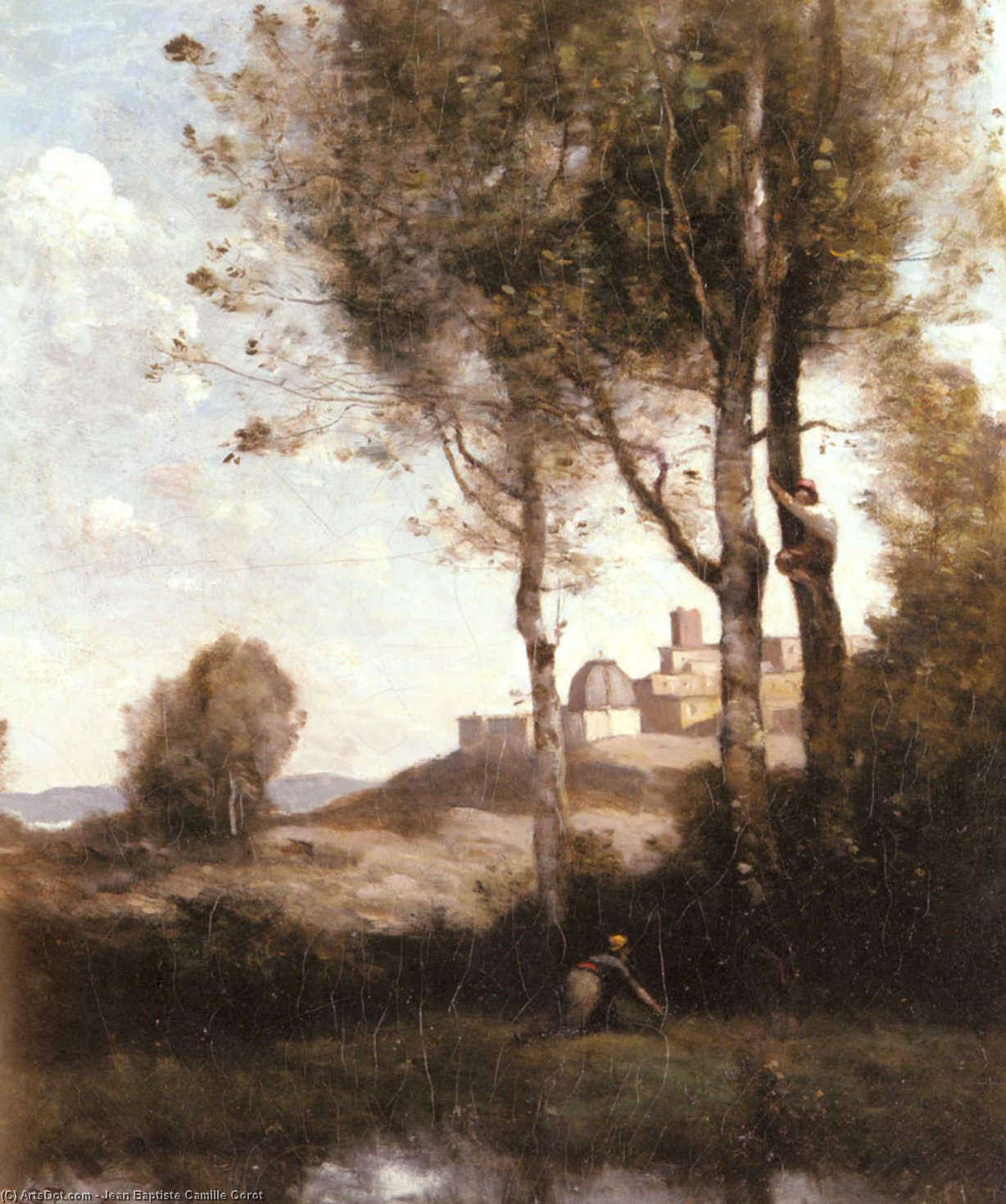
Discover "Les Denicheurs Toscans" by Corot – a serene Romantic landscape painting of Tuscany’s rolling hills & distant castle. Oil on canvas, timeless beauty.
19世紀フランス絵画を代表するコロー。穏やかな光と風景が特徴で、新古典主義から印象派への橋渡し的存在として知られます。叙情的な風景画や人物画は、自然の美しさと内面の静けさを表現。
Les Denicheurs Toscans – A Romantic Reverie
The painting “Les Denicheurs Toscans,” attributed to Jean-Baptiste-Camille Corot (1796-1875), embodies the quintessential spirit of Romantic landscape art—a profound communion with nature imbued with melancholic contemplation. Executed in oil paint on canvas, this artwork transports viewers back to a bygone era, capturing not merely a visual representation but an emotional resonance that continues to captivate audiences today.
Subject Matter and Composition
At its core lies a breathtaking depiction of the Tuscan countryside—rolling hills draped in verdant foliage punctuated by scattered cypress trees and distant fortifications. The focal point is a solitary shepherd, positioned prominently in the foreground, gazing upwards towards a crumbling castle perched atop one of the higher elevations. This deliberate compositional choice isn’t accidental; Corot skillfully employs atmospheric perspective to heighten the drama and convey a sense of grandeur. The vast expanse of landscape serves as a backdrop for human presence, emphasizing both the insignificance of individual experience against the immensity of nature and the inherent beauty found within solitude.
Style and Technique – Impressionistic Echoes
Corot’s approach aligns closely with the burgeoning Impressionist movement, albeit predating its formal establishment. Unlike academic painters who prioritized meticulous detail and idealized representations, Corot favored loose brushstrokes—a hallmark of his distinctive style—that prioritize capturing fleeting moments of light and color. The artist eschews sharp outlines, opting instead for blended hues that merge seamlessly into one another, creating an ethereal quality reminiscent of hazy sunlight filtering through the trees. Impasto – thick layers of paint applied to the canvas – contributes textural richness and reinforces the sense of immediacy, inviting viewers to experience the scene as if they were present within it.
Historical Context: Romanticism’s Embrace of Emotion
“Les Denicheurs Toscans” emerged during a period marked by significant intellectual and artistic upheaval—the Romantic era (roughly 1800-1850). This movement reacted against Enlightenment rationalism, prioritizing emotion, imagination, and intuition as pathways to understanding the human condition. Artists like Corot sought inspiration in folklore, mythology, and sublime landscapes, aiming to evoke feelings of awe and wonder alongside intellectual contemplation. The castle itself—a symbol of decaying grandeur—represents not merely architectural ruin but also the inevitable passage of time and the fragility of human ambition against the enduring forces of nature.
Symbolism: Light, Loneliness, and Remembrance
The pervasive use of diffused sunlight is laden with symbolic significance. Corot’s masterful rendering captures the “sublime”—a concept championed by Edmund Burke—where beauty inspires terror and elevates the soul beyond earthly concerns. The shepherd's solitary gaze embodies themes of contemplation, remembrance, and perhaps even melancholy. He represents humanity grappling with its place within the universe, acknowledging both its vulnerability and its capacity for profound appreciation. The cypress trees—often associated with mourning and immortality—further underscore the painting’s contemplative mood.
Emotional Impact: Tranquility Amidst Decay
Ultimately, “Les Denicheurs Toscans” succeeds in conveying a powerful emotional response. Despite the castle's crumbling façade – representing decay and loss – the scene exudes an undeniable serenity. The artist invites viewers to pause, breathe deeply, and contemplate the beauty of the natural world alongside its inevitable transformations. It’s a painting that lingers in the memory long after viewing, prompting reflection on themes of solitude, resilience, and the enduring power of artistic vision.