The Painting's Significance
Jean-Baptiste Simeon Chardin's
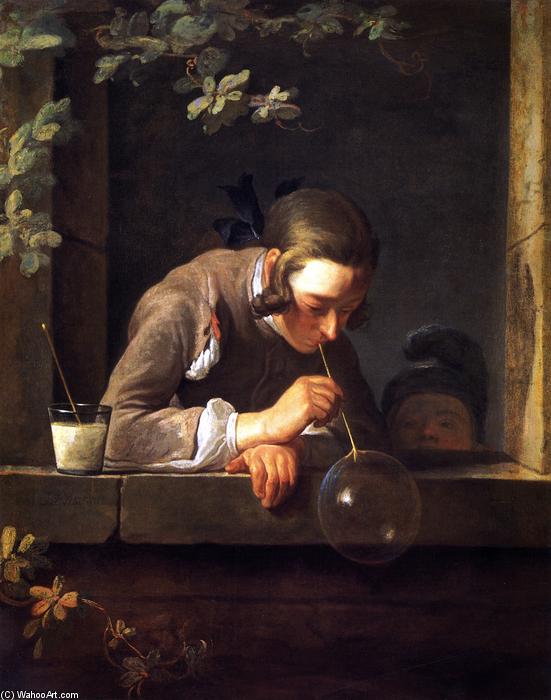
Soap Bubbles, created in 1735, is a remarkable example of Rococo art. This oil on canvas painting measures 93 x 74 cm and is currently housed at the
National Gallery of Art in Washington, United States.
Composition and Symbolism
The painting depicts a woman blowing bubbles in a glass bowl, seemingly engrossed in her activity. Her reflection can be seen in a mirror placed nearby, adding an element of self-awareness to the scene. The setting is near an open window, allowing natural light to illuminate the room. This use of light is a significant aspect of the painting, as it highlights the subject's actions and creates a sense of depth. Other objects in the painting include bottles, cups, a chair, and a vase, which contribute to the overall atmosphere of domestic tranquility. The woman's engagement with blowing bubbles symbolizes the fleeting nature of life and the joy found in simple pleasures.
Lighting Techniques
Chardin's mastery of light is evident in
Soap Bubbles. The play of light on the subject and objects creates a sense of volume and texture, drawing the viewer into the scene. This technique is reminiscent of the Renaissance period, where artists like Leonardo da Vinci used chiaroscuro to create dramatic effects.
Artistic Influences
Chardin's work was influenced by various artistic movements, including Rococo and Baroque. His use of light and shadow reflects the techniques employed by artists such as Caravaggio and Rembrandt. The emphasis on everyday life and domestic scenes is also characteristic of Dutch Realism.
Relevance in Modern Art
The significance of
Soap Bubbles extends beyond its historical context. It continues to inspire contemporary artists who explore themes of light, shadow, and the human experience. The painting's enduring appeal lies in its ability to capture a moment of quiet contemplation, inviting viewers to reflect on their own relationship with time and beauty.
Conclusion
Jean-Baptiste Simeon Chardin's
Soap Bubbles is a masterpiece that showcases the artist's skill in capturing light and shadow. The painting's themes of domesticity, self-awareness, and the fleeting nature of life continue to resonate with audiences today. As a testament to the power of art,
Soap Bubbles remains an important work in the history of painting.