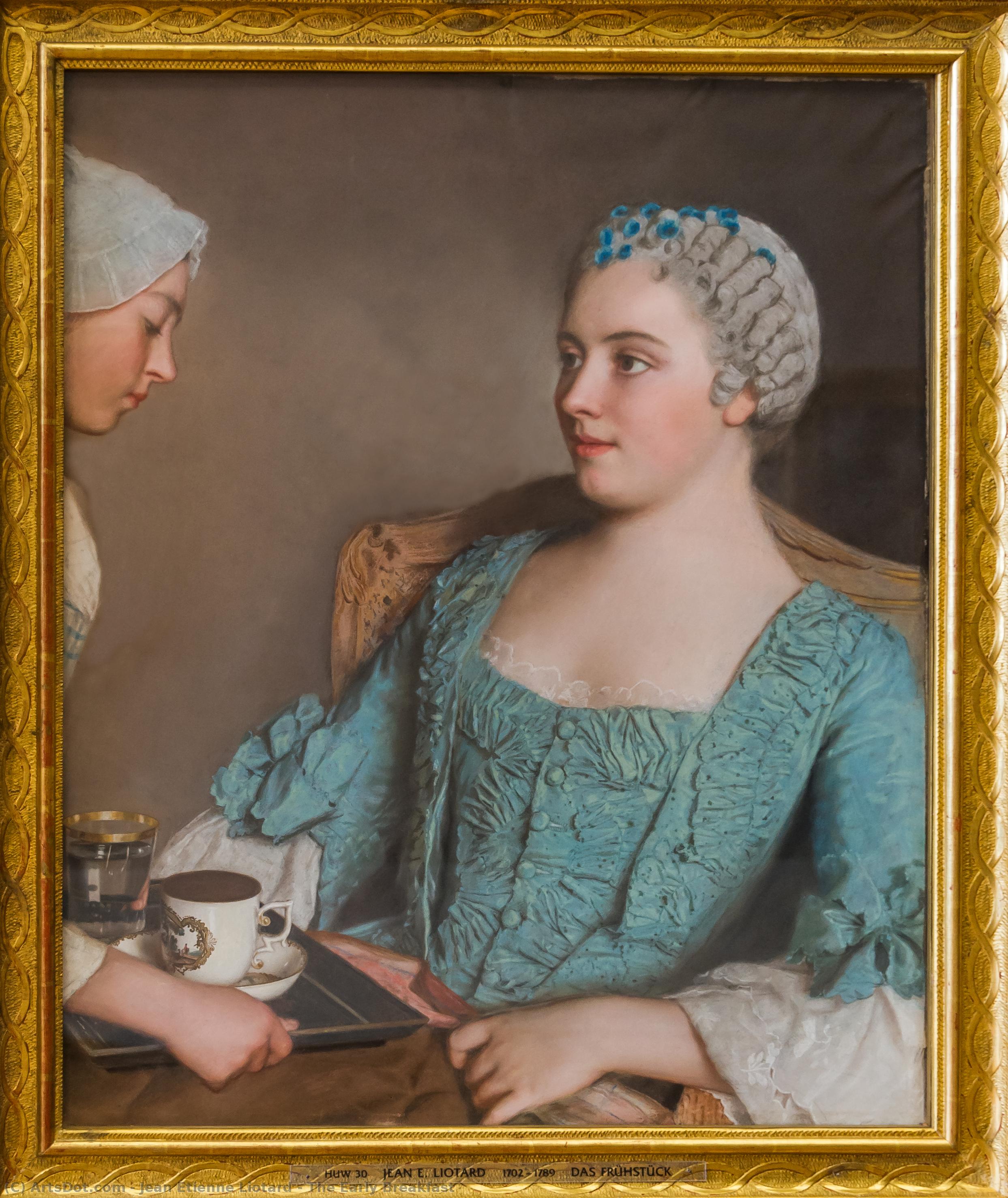
A Moment of Refined Intimacy: Jean-Étienne Liotard’s “The Early Breakfast”
Jean-Étienne Liotard's "The Early Breakfast," painted in 1756, is more than just a depiction of two women sharing tea; it’s a meticulously crafted tableau of Rococo elegance and subtle psychological depth. This pastel masterpiece, now residing in the Alte Pinakothek in Munich, offers a glimpse into the refined social life of the European aristocracy while simultaneously hinting at quiet contemplation and perhaps even a touch of melancholy. Liotard, a Genevan artist renowned for his travels throughout Europe and his mastery of pastel, expertly captures an intimate scene that speaks volumes through its carefully considered details.
A Window into Rococo Style
The painting firmly establishes itself within the Rococo style – a movement characterized by its delicate ornamentation, soft color palettes, and emphasis on grace and pleasure. Liotard’s brushwork is remarkably fluid, creating an atmosphere of luxurious softness. The forms are rounded and flowing, reminiscent of shells or swirling fabrics, typical hallmarks of this era. Notice how the drapery of the women's clothing seems to undulate with a life of its own, contributing significantly to the painting’s overall sense of movement and elegance. The shallow perspective further enhances this feeling of intimacy, drawing the viewer directly into the scene as if they are witnessing this private moment firsthand.
Technique and Materials: The Art of Pastel
Liotard's choice of pastel is crucial to understanding the painting’s impact. Pastel, a relatively new medium at the time, allowed for an unprecedented level of detail and luminosity. Liotard skillfully layered thin glazes of color, building up complex textures and subtle gradations of tone. The rendering of fabric—the lace trim on the young woman's dress, the folds in her shawl—is particularly remarkable, demonstrating his meticulous attention to surface detail. The use of light is diffused and even, creating a serene atmosphere that contrasts with the vibrant colors used. This technique allows for an almost velvety texture, adding depth and richness to the image.
Symbolism and Social Context
Beyond its aesthetic beauty, “The Early Breakfast” is rich in symbolic meaning. The luxurious clothing—the blue dress, the pearl pendant—clearly indicates the women’s elevated social status. Tea itself was a symbol of sophistication and leisure during this period, representing an opportunity for polite conversation and refined entertainment. The partially visible second woman, with her back to the viewer, adds an element of mystery and perhaps even a hint of longing. The composition suggests a quiet moment of connection between these two women, a shared experience within the confines of their privileged world. Liotard’s background as an art dealer and connoisseur likely informed his understanding of the social rituals depicted here.
Emotional Resonance and Lasting Appeal
Despite its formal elegance, “The Early Breakfast” possesses a remarkable emotional resonance. The painting evokes a sense of quiet intimacy, serenity, and perhaps even a subtle melancholy. It’s not a boisterous or dramatic scene; rather, it captures a fleeting moment of grace and connection. Liotard's ability to convey such complex emotions through the careful arrangement of figures and colors is what makes this work so enduringly captivating. It invites viewers to contemplate the quiet beauty of everyday moments and the subtle nuances of human interaction – a testament to the artist’s profound understanding of both art and life.