A Glimpse into an Artist's Ambition
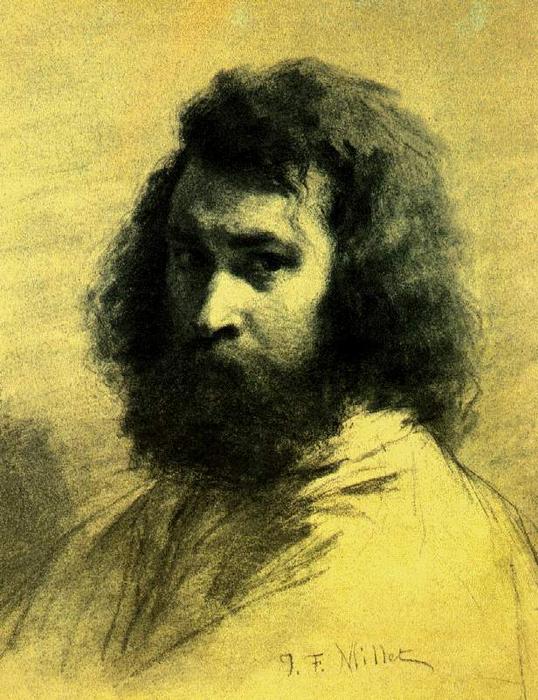
In the quiet intensity of Jean-François Millet’s 1840 self-portrait, we encounter more than just the likeness of a young man; we witness the emergence of a profound artistic consciousness. Painted when Millet was approximately twenty-six years old, this work serves as a poignant bridge between his provincial roots in Normandy and the vibrant, demanding art circles of Paris. The portrait captures a moment of transition, where the rugged simplicity of his upbringing in Gruchy meets the sophisticated intellectualism of the French capital. As he gazes toward the viewer, there is an unmistakable sense of purpose—a confident declaration of intent from an artist who was already beginning to forge a path that would eventually redefine the boundaries of Realism.
The subject presents himself with a dignified, contemplative stillness. His features, framed by thoughtful eyes and a burgeoning beard, suggest a soul deeply attuned to the world around him. There is no pretense of aristocratic grandeur here; instead, Millet offers an honest representation of himself, stripped of romanticized artifice. This early work hints at the stylistic evolution that would later lead him to become a cornerstone of the Barbizon school, moving away from the dramatic flourishes of Romanticism toward a more grounded, truthful depiction of human existence.
The Mastery of Earth and Light
Technically, the portrait is a masterclass in the subtle use of tone and texture. Executed in oil on canvas, Millet employs a palette that feels inherently connected to the soil. The dominance of muted browns, deep ochres, and soft creams creates an atmosphere of warmth and stability, echoing the earthy landscapes of the French countryside that would later become his signature subject. His brushwork, while meticulous, possesses a tactile quality that breathes life into the fabric of his clothing and the soft contours of his face.
The interplay of light and shadow in this piece is particularly evocative. Rather than relying on harsh contrasts, Millet utilizes delicate tonal gradations to sculpt form and create depth. This technique does more than just provide a three-dimensional quality; it imbues the portrait with an emotional weight. The soft light falling across his features invites the viewer into a private moment of reflection, making the painting feel less like a static image and more like a living encounter. For the collector or interior designer, this subtle complexity allows the piece to anchor a room with a sense of historical gravity and quiet sophistication.
A Legacy of Realism and Resonance
To understand this self-portrait is to understand the heartbeat of the Realist movement. Emerging from a period of profound social and philosophical shifts in France, Millet’s work rejected the idealized beauty of academic tradition in favor of an uncompromising look at reality. This painting embodies that spirit of rebellion through its very simplicity. It celebrates the dignity found in the unadelineated, a theme that would later define his iconic depictions of peasant life and agricultural toil.
Symbolically, the portrait acts as a window into the artist's psyche and his connection to the land. The choice of an earthy palette is not merely aesthetic but deeply biographical, representing the indelible mark left by his years spent amidst the rhythms of farming. For those seeking to adorn a space with art that inspires contemplation, this reproduction offers a timeless connection to the human experience. It is a piece that does not shout for attention but rather commands it through its enduring honesty, making it an exquisite choice for any collection dedicated to the profound beauty of the real world.