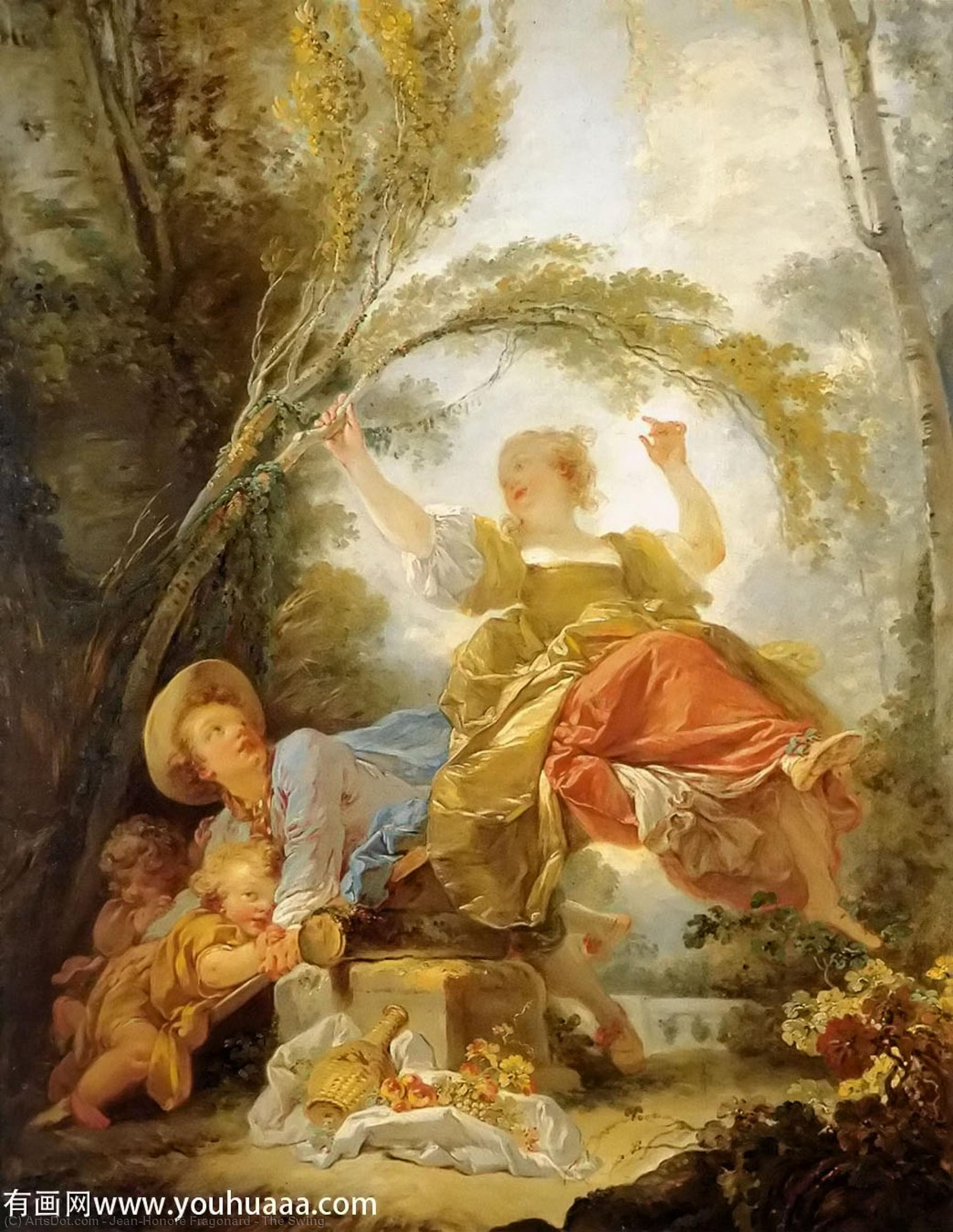
Experience Jean-Honoré Fragonard’s iconic "The Swing," a masterpiece of Rococo art depicting playful romance and sensual delight with its pastel hues and dynamic brushstrokes. Discover this exquisite hand-painted reproduction and bring a touch of aristocratic pleasure into your home.
The Swing: A Dance of Pleasure and Secret Desire
Jean-Honoré Fragonard’s “The Swing,” completed in 1767, stands as an emblem of Rococo art—a style characterized by opulent decoration, playful frivolity, and a celebration of sensual beauty. Hanging proudly in the Wallace Collection in London, this painting captures a fleeting moment of aristocratic leisure, transporting viewers back to the gilded age of Louis XV’s reign.
At first glance, “The Swing” presents a scene of carefree delight: a young woman perched on a swing, accompanied by her lover who hides amongst bushes. The artist employs a masterful technique—loose brushstrokes and vibrant colors—to convey an atmosphere of airy movement and joyous abandon. Fragonard’s palette is dominated by pastel hues – delicate pinks, creams, and golds – reflecting the prevailing aesthetic sensibilities of the period.
- Subject Matter: The painting depicts a woman enjoying a swing ride with her lover, symbolizing romantic passion and flirtation.
- Style: Rococo—known for its graceful forms, asymmetrical compositions, and emphasis on decorative elements.
- Technique: Fragonard’s brushwork is remarkably fluid and energetic, capturing the dynamism of movement and creating a sense of immediacy.
- Color Palette: Pastel shades – pinks, creams, golds – contribute to the painting's ethereal quality and convey an aura of luxury.
Beyond its visual splendor, “The Swing” is laden with symbolism. The woman’s flamboyant dress—lined with lace and adorned with shimmering embellishments—represents wealth and sophistication. Her gesture of tossing her shoe into the air embodies defiance against convention and a playful disregard for social norms. The hidden lover, peering from behind foliage, underscores the secretive nature of romantic desire.
Furthermore, Fragonard incorporates classical motifs – sculptures representing Cupid and nymphs – to elevate the scene beyond mere earthly pleasure. These figures evoke notions of mythology and idealized beauty, reinforcing the painting’s overarching theme of harmonious balance between sensual indulgence and artistic refinement. The artist skillfully uses light and shadow to create depth and drama, guiding the viewer's eye across the canvas.
“The Swing” continues to captivate audiences today because it embodies the spirit of its time—a period marked by aristocratic extravagance and a fascination with beauty and pleasure. It serves as a poignant reminder that art can transcend historical boundaries, resonating with viewers who appreciate its masterful execution and profound emotional impact.