A Window into Faith and Observation: Examining Joachim Beuckelaer’s “Le Calvaire”
Joachim Beuckelaer's "Le Calvaire," or The Crucifixion, stands as a remarkable testament to the burgeoning spirit of Northern Renaissance art—a period marked by an unprecedented fascination with capturing the tangible world alongside profound spiritual contemplation. More than just a depiction of Christ’s suffering, this monumental panel offers a complex tapestry woven from meticulous realism and subtle religious symbolism, reflecting Beuckelaer's pioneering role in establishing still life as a distinct artistic genre.
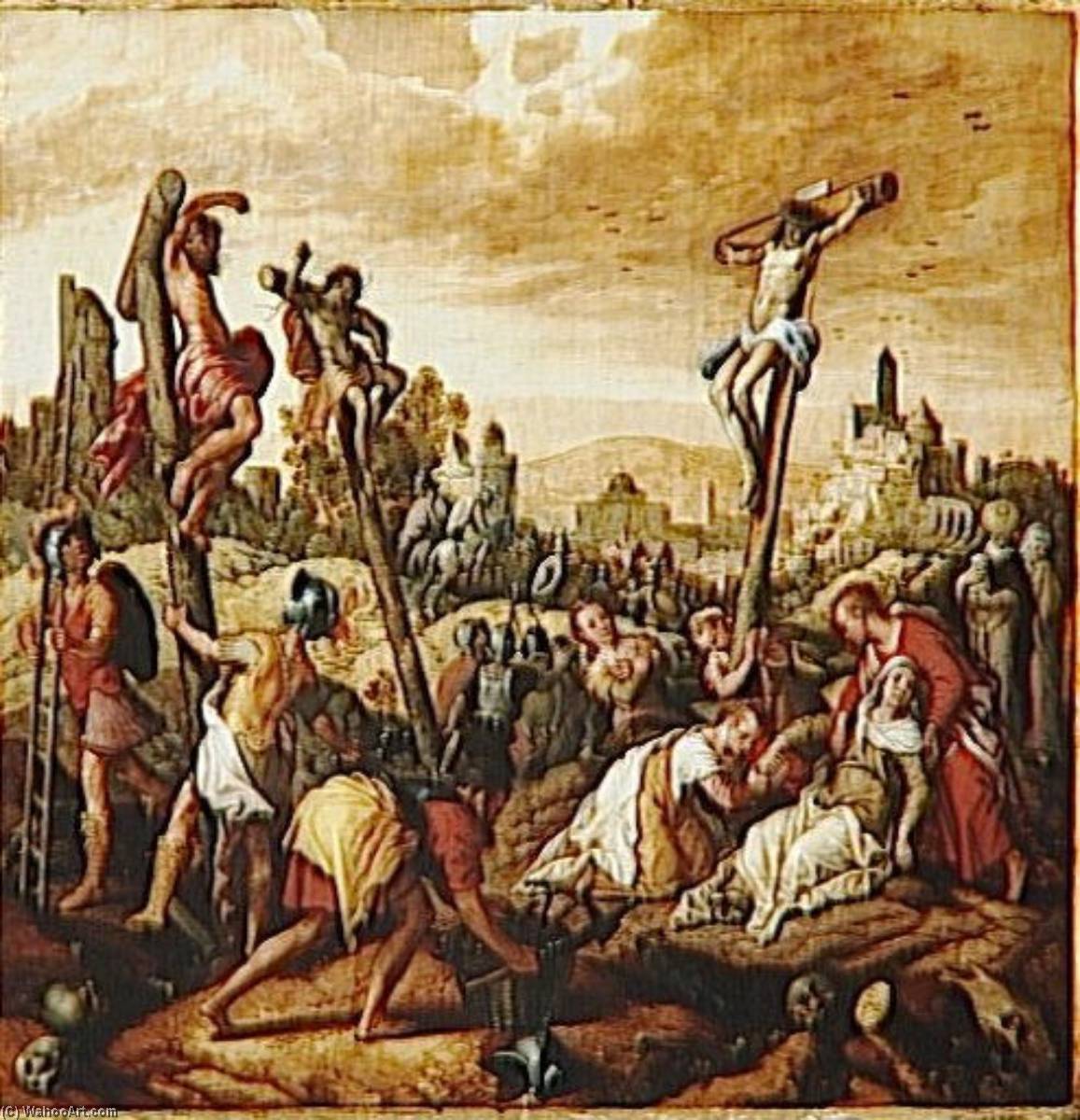
- Subject Matter & Narrative Depth: The painting plunges viewers into the heart of Christian iconography. It portrays the crucifixion with startling immediacy, presenting a crowded scene populated by Roman soldiers, grieving mourners, and onlookers—a deliberate choice to engage the audience emotionally and intellectually. Beuckelaer doesn’t simply portray an event; he crafts a narrative that invites reflection on mortality and redemption.
- Style & Technique: Characteristic of the Northern Renaissance tradition, “Le Calvaire” showcases Beuckelaer's masterful command of oil paint on panel. Layers of glazing create luminous surfaces, while hatching and cross-hatching techniques imbue the composition with textural richness—particularly evident in the drapery of Christ and the faces of the figures. Fine brushwork contributes to an astonishing level of detail.
- Composition & Perspective: The painting’s pyramidal structure draws attention upwards towards the crucifix, emphasizing its central importance. Diagonal lines created by the crosses inject dynamism into the scene, mirroring the turbulent emotions conveyed by the participants. Atmospheric perspective subtly diminishes the distant cityscape, reinforcing the sense of depth and conveying a feeling of solemn grandeur.
- Color Palette & Symbolism: Dominated by earthy hues—browns, ochres, and muted reds—the color palette underscores the painting’s grounding in earthly realities. However, splashes of crimson highlight Christ's garments and certain figures’ clothing, symbolizing sacrifice and divine passion. The inclusion of skeletal remains at the base serves as a poignant reminder of human vulnerability and the inevitability of death.
- Historical Context & Influence: Beuckelaer’s work anticipates developments in later still life painting by prioritizing observation and detailed representation—a departure from earlier artistic conventions. Like Pieter Bruegel the Elder, he elevates everyday scenes to artistic significance, demonstrating a profound understanding of humanist ideals and establishing Beuckelaer as a pivotal figure in shaping the visual landscape of his time.
“Le Calvaire” transcends mere representation; it’s an invitation to contemplate faith, suffering, and beauty—a timeless masterpiece that continues to inspire awe and admiration centuries after its creation. A reproduction offers a captivating glimpse into the artistic spirit of the Northern Renaissance, allowing collectors and interior designers alike to appreciate Beuckelaer's enduring legacy.