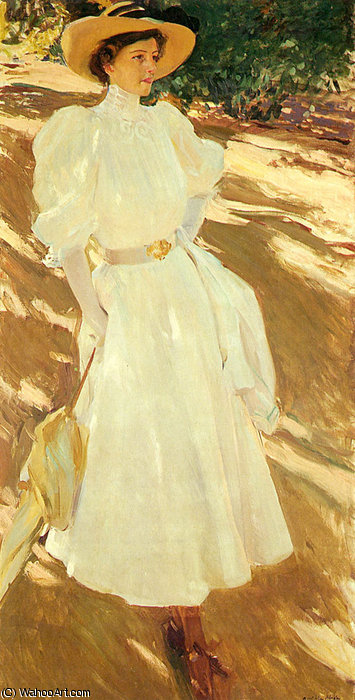
Joaquin Sorolla’s "Maria en la Granja" captures a radiant young woman in an Impressionistic stroll. Explore light, brushstrokes & Spanish elegance – a timeless piece of art.
スペインの光と色彩を捉えた画家、ホアキン・ソローヤ。地中海沿岸の風景や人々の日常を描き、印象派の影響を受けながら独自の Luminism を確立しました。『悲しき相続』から『海岸の子どもたち』まで、鮮やかな筆致で描かれた作品は、スペイン文化と光の美しさを永遠に伝えます。
Joaquín Sorolla’s “Maria en la Granja”: A Symphony of Light and Rustic Elegance
Sorolla's "Maria en la Granja," painted circa 1895, embodies the very essence of Impressionism – a deliberate rejection of academic conventions in favor of capturing the immediacy of sensory experience. More than just a portrait of a young woman amidst foliage, it’s an ode to Valencian rural life and a masterful demonstration of Sorolla's signature technique: luminous color blending achieved through rapid brushstrokes. The painting depicts Maria Fernández Ruiz, Sorolla’s wife, strolling along a dirt path bordered by lush greenery – olive trees laden with fruit and shrubs bursting with blossoms. This seemingly simple scene is imbued with profound symbolic significance.
The artist’s meticulous attention to light is paramount. Sorolla expertly utilizes dappled sunlight filtering through the leaves, creating an ethereal glow that illuminates Maria's dress and casts delicate shadows across her face. This technique—broken color application—was revolutionary for its time, prioritizing visual perception over precise representation. Unlike traditional painters who painstakingly layered pigments to achieve tonal accuracy, Sorolla employed loose brushstrokes to build up color gradually, allowing the light itself to dictate the palette. The resulting surface is textured and vibrant, conveying a palpable sense of warmth and vitality.
Beyond its technical brilliance, “Maria en la Granja” speaks volumes about the cultural landscape of Spain at the turn of the century. Sorolla’s work reflects the burgeoning interest in plein air painting—the practice of working outdoors directly from nature—which gained considerable momentum during this period. The idyllic setting underscores a celebration of rural tranquility and embodies the idealized vision of domestic harmony prevalent in bourgeois society. Maria's attire – a modest dress adorned with a fashionable hat – symbolizes refinement and grace, reflecting Sorolla’s fascination with portraying women as figures of beauty and dignity.
The painting’s emotional impact is undeniable. It evokes feelings of serenity, nostalgia, and appreciation for the natural world. Sorolla captures not just what he sees but also how he feels—a desire to convey a moment of fleeting beauty and tranquility. Reproductions of “Maria en la Granja” offer collectors and interior designers alike an opportunity to bring this masterpiece into their homes, allowing them to experience firsthand the captivating luminescence and textural richness that define Sorolla’s artistic legacy.