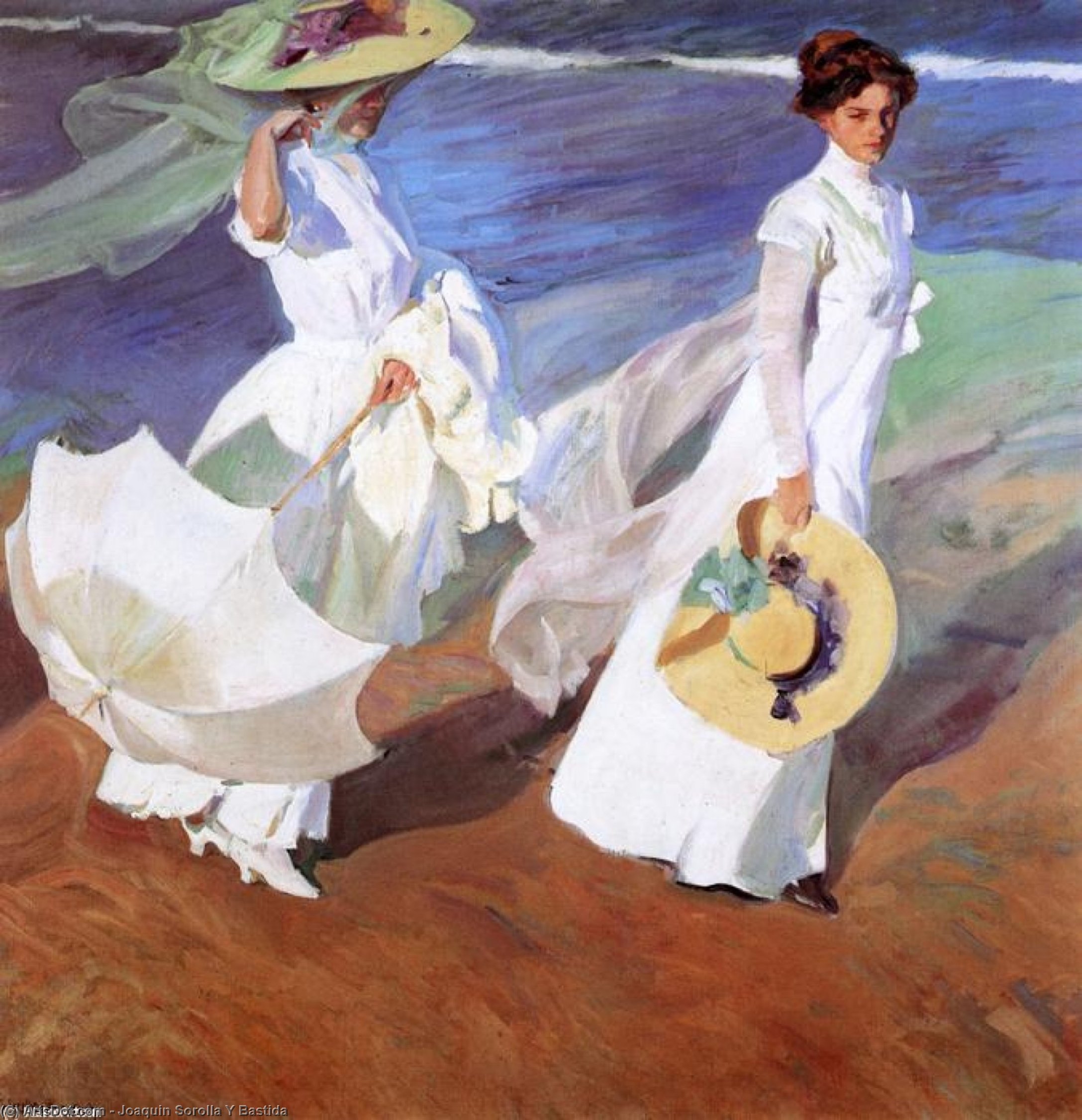
Joaquin Sorolla’s ‘Promenade by the Sea,’ painted in 1909, captures the golden hour glow of Valencia’s coastline with luminous brushstrokes depicting two women enjoying a tranquil beach stroll. Explore Impressionism's mastery at WikiArt.
スペインの光と色彩を捉えた画家、ホアキン・ソローヤ。地中海沿岸の風景や人々の日常を描き、印象派の影響を受けながら独自の Luminism を確立しました。『悲しき相続』から『海岸の子どもたち』まで、鮮やかな筆致で描かれた作品は、スペイン文化と光の美しさを永遠に伝えます。
A Symphony of Light and Leisure: Exploring Joaquín Sorolla’s Promenade by the Sea
Joaquín Sorolla y Bastida stands as one of Spain's most beloved Impressionist painters, celebrated for his ability to capture fleeting moments of beauty—primarily landscapes infused with the golden hues of the Mediterranean sun. “Promenade by the Sea,” completed in 1909 and currently residing at the Museo Sorolla in Valencia, exemplifies this artistic philosophy perfectly. It’s more than just a painting; it's an invitation into a scene brimming with warmth, tranquility, and the simple joys of human connection.
The Canvas Speaks Volumes: Composition and Technique
Sorolla’s masterful technique is immediately apparent upon viewing Promenade by the Sea. He employs loose, horizontal brushstrokes—a signature characteristic of Impressionism—to depict the expansive beach sands and shimmering water surface. These strokes aren't meticulously blended; instead, they retain their individual texture, conveying a palpable sense of movement and immediacy. The artist’s use of color is equally remarkable. Dominating the palette are shades of ochre, lemon yellow, and peach, mirroring the radiant sunlight bathing the coastline. Sorolla skillfully utilizes atmospheric perspective—a technique where distant objects appear paler and less detailed—to create depth and enhance the illusion of space. Notably, he avoids sharp outlines, allowing forms to merge seamlessly with their surroundings, furthering this immersive experience.
Valencia’s Embrace: Historical Context and Artistic Vision
Painted during Sorolla's formative years as a solo artist, Promenade by the Sea represents a pivotal moment in his artistic evolution. Following a successful exhibition at the Hispanic Society of America in 1909—a triumph that secured his financial stability—Sorolla embarked on a series of experiments aimed at pushing the boundaries of Impressionistic convention. The square format chosen for this canvas deliberately contrasts with the traditional rectangular canvases favored by many contemporaries, fostering a feeling of intimacy and immediacy. Furthermore, Sorolla’s depiction aligns closely with the broader artistic currents of the time, reflecting the burgeoning interest in capturing everyday life—a departure from academic art's preoccupation with mythological subjects or historical narratives.
Symbolism Beneath the Surface: Women, Light, and Reflection
Beyond its technical brilliance, Promenade by the Sea resonates with symbolic significance. The two women strolling along the beach embody femininity and grace, representing a celebration of female companionship and leisure. Their attire—flowing white gowns—symbolizes purity and serenity, mirroring the tranquil atmosphere of the seaside setting. Crucially, Sorolla’s masterful manipulation of light is central to conveying this emotional impact. The golden sunlight filtering through the umbrellas casts dappled shadows on the sand, creating a captivating interplay of illumination and darkness. This technique isn't merely decorative; it serves as a conduit for capturing the ephemeral beauty of nature—a core tenet of Sorolla’s artistic worldview. Moreover, the reflections shimmering on the water surface symbolize introspection and contemplation, inviting viewers to pause and appreciate the profound stillness of the moment.
An Enduring Legacy: Emotional Resonance and Artistic Inspiration
“Promenade by the Sea” continues to captivate audiences today with its evocative portrayal of idyllic coastal life. Sorolla’s ability to distill complex emotions—joy, tranquility, connection—into a single visual composition remains remarkably powerful. It serves as an enduring testament to the transformative potential of Impressionism and inspires artists and designers alike to embrace spontaneity, color, and texture in their own creative endeavors. Its luminous beauty transcends time, reminding us that art can transport us back to moments of pure delight and contemplation—a gift bestowed upon us by one of Spain’s greatest masters.