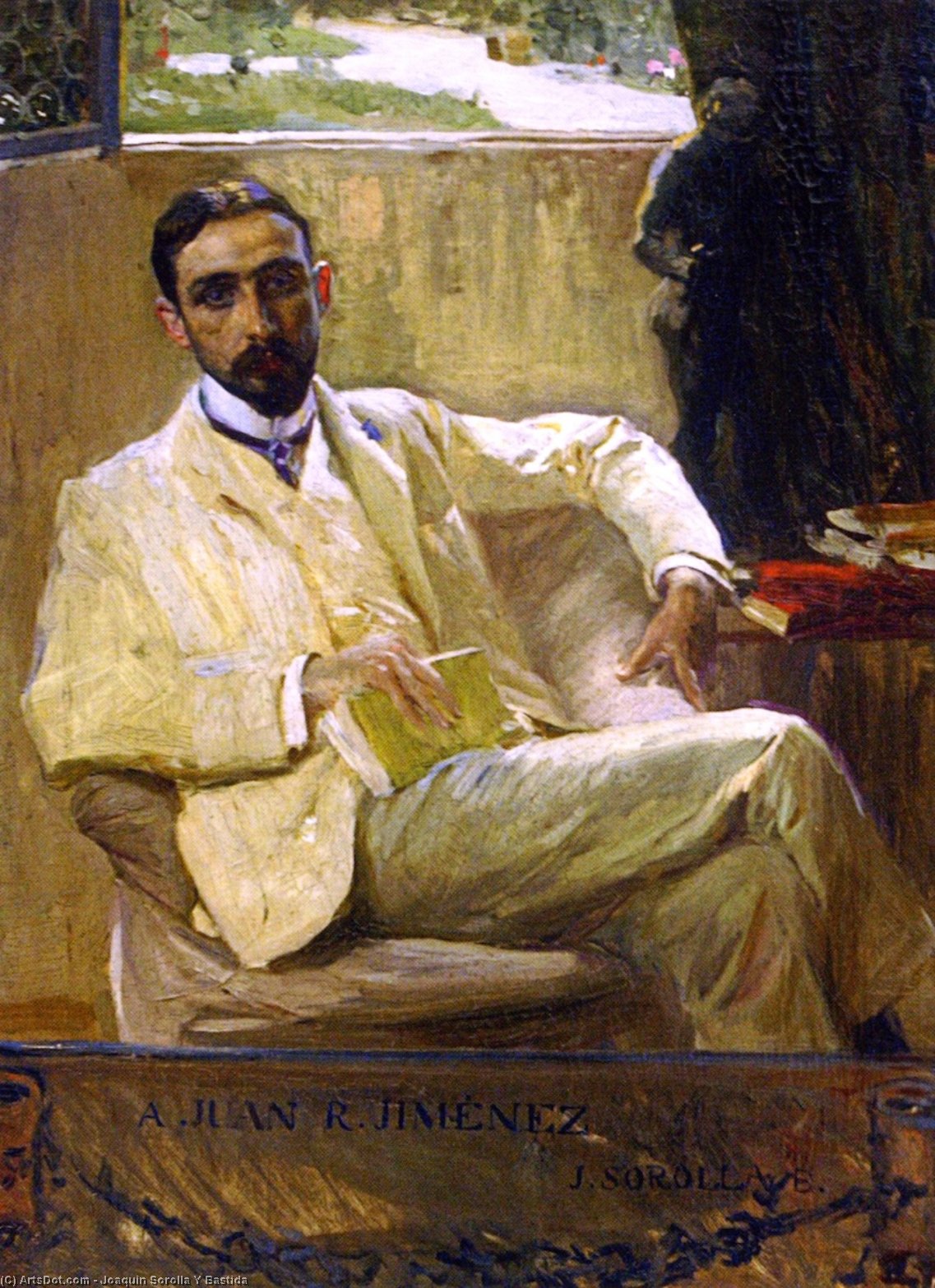
Experience the brilliance of Joaquín Sorolla’s masterpiece – ‘The Poet Juan Ramón Jiménez.’ This stunning oil painting captures the essence of Spanish literature and Sorolla's signature impressionistic style, housed in Puerto Rico.
スペインの光と色彩を捉えた画家、ホアキン・ソローヤ。地中海沿岸の風景や人々の日常を描き、印象派の影響を受けながら独自の Luminism を確立しました。『悲しき相続』から『海岸の子どもたち』まで、鮮やかな筆致で描かれた作品は、スペイン文化と光の美しさを永遠に伝えます。
Sala Zenobia y Juan Ramón Jiménezで、ノーベル賞作家フアン・ラモン・ヒメネスの生涯と作品に触れましょう!彼のアーカイブや希少本、プエルトリコ文化との繋がりを発見できます。
A Portrait Illuminated: Exploring Joaquín Sorolla’s “The Poet Juan Ramón Jiminez”
Joaquín Sorolla y Bastida's "The Poet Juan Ramón Jiminez," painted in 1903, transcends mere representation; it embodies the very essence of Impressionism and captures a moment frozen in time—a testament to Sorolla’s masterful ability to translate light and emotion onto canvas. This captivating portrait resides within the Sala Zenobia y Juan Ramon Jiminez museum in Puerto Rico, offering visitors a glimpse into a pivotal era of Spanish art and culture.
The Painter's Vision: Impressionistic Brilliance
Sorolla’s artistic philosophy revolved around capturing the ephemeral beauty of nature—specifically, the way sunlight dances across surfaces. He eschewed meticulous detail, prioritizing instead the impression of light and color as perceived by the eye. This approach is vividly evident in “The Poet Juan Ramón Jiminez.” The artist skillfully employs broken brushstrokes and layering techniques to recreate the dappled illumination filtering through foliage onto Jiménez’s face and attire. Unlike academic painters who sought to depict subjects with photographic accuracy, Sorolla aimed for an emotional resonance that surpassed mere visual observation—he wanted to convey a feeling of serenity and contemplation.
Technical Mastery: Oil on Canvas – A Delicate Balance
Sorolla's preferred medium was oil paint on canvas, allowing him to achieve remarkable luminosity and textural richness. He meticulously blended pigments to create subtle gradations of color, skillfully manipulating light to sculpt form and imbue the painting with depth. The artist’s meticulous attention to detail—particularly in rendering the textures of Jiménez’s suit and the foliage surrounding him—demonstrates a profound understanding of artistic principles. Furthermore, Sorolla's use of glazing techniques – applying thin layers of translucent paint over previous coats – enhances the overall vibrancy and luminosity of the artwork, creating an ethereal quality that distinguishes it from other portraits of its time.
Historical Context: Spain at the Dawn of Modernity
“The Poet Juan Ramón Jiminez” emerged during a period of significant artistic experimentation in Spain—the Belle Époque. Sorolla’s work aligns with the broader Impressionist movement, which challenged traditional conventions and championed subjective experience. Jiménez himself was a celebrated poet whose verses explored themes of Catalan identity and philosophical reflection – aligning perfectly with Sorolla's desire to portray intellectual pursuits alongside natural beauty. The painting reflects Spain’s burgeoning interest in artistic innovation and its embrace of new aesthetic sensibilities as it transitioned from Romanticism toward the modern era.
Symbolic Resonance: Light, Tranquility, and Intellectual Pursuit
Beyond its technical brilliance, “The Poet Juan Ramón Jiminez” carries symbolic weight. The pervasive light symbolizes enlightenment and inspiration—mirroring Jiménez’s role as a literary figure who illuminated the minds of his contemporaries. The seated posture conveys calmness and contemplation, suggesting that Jiménez is immersed in thought. Even the inclusion of a dog – often interpreted as representing loyalty and companionship – adds to the painting's narrative richness. Sorolla subtly communicates an idealized vision of human intellect intertwined with the restorative power of nature.
Emotional Impact: A Moment Preserved
Ultimately, “The Poet Juan Ramón Jiminez” succeeds in evoking a profound emotional response. The warmth of the palette—dominated by greens and yellows—creates an atmosphere of tranquility and optimism. Sorolla’s masterful depiction of Jiménez's gaze invites viewers to contemplate the poet’s inner world—a gesture that transcends time and speaks to universal themes of beauty, contemplation, and human connection. It remains a captivating artwork, demonstrating Sorolla’s enduring legacy as one of Spain’s most beloved Impressionist painters.