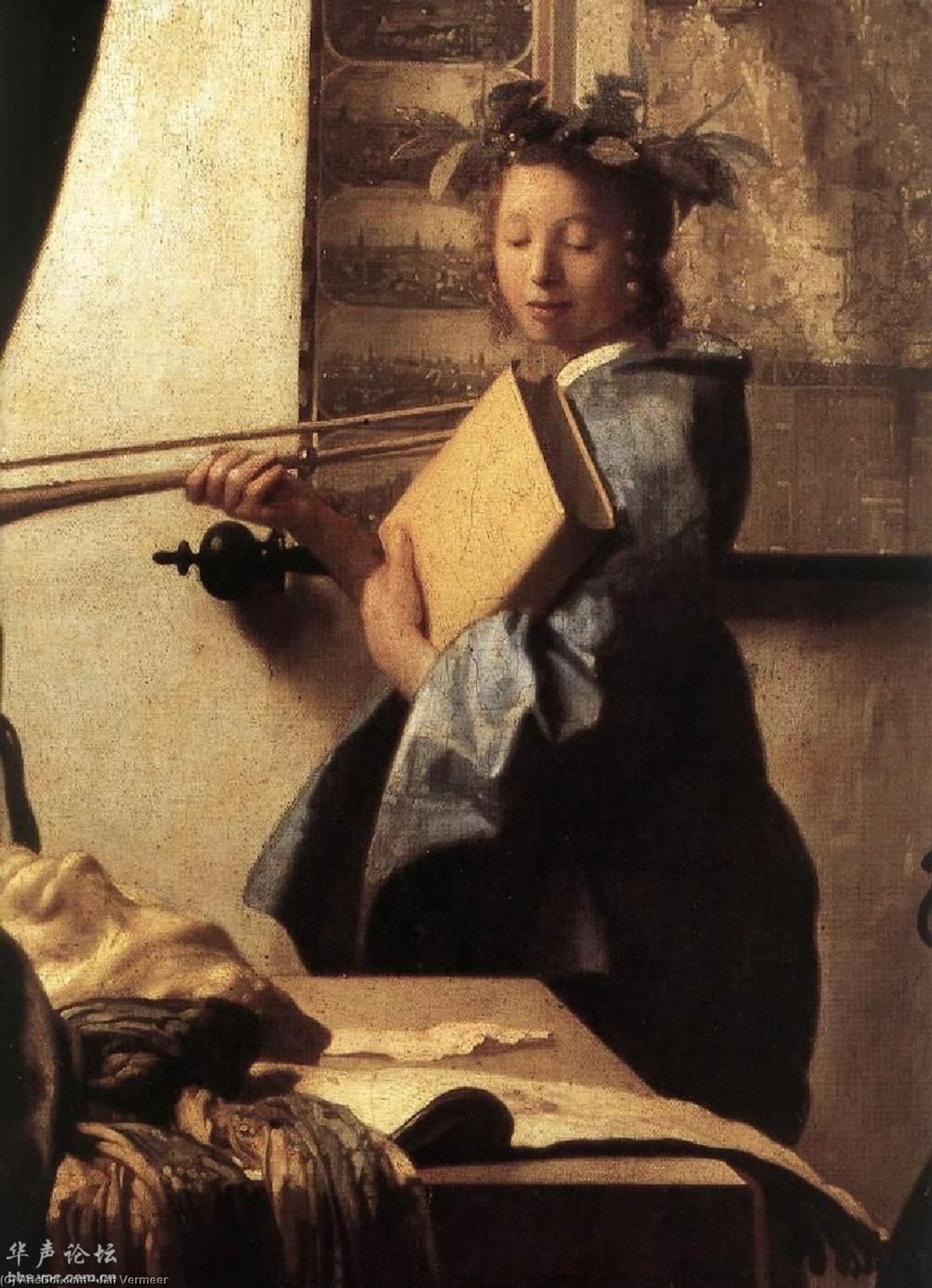
A Window into the Soul: The Enigmatic ‘Art of Painting’
Johannes Vermeer's “The Art of Painting,” a captivating oil on canvas completed in 1665, isn’t merely a depiction of an artist at work; it’s a profound allegory, a meditation on creativity itself. Owned by the Austrian Republic and residing within the hallowed halls of the Kunsthistorisches Museum in Vienna, this painting transcends its seemingly simple subject matter to become one of Vermeer's most complex and intensely felt works. It’s a scene brimming with quiet contemplation, inviting us into a private studio where the act of creation unfolds—a space both familiar and utterly mysterious.
The composition is remarkably ambitious for its time, an illusionistic panorama that draws the viewer in. Vermeer masterfully employs naturalistic technique – the subtle play of light on the draped fabrics, the meticulous rendering of textures from the wooden chair to the worn leather of the book – creating a believable and intimate domestic setting. Yet, beneath this realism lies a carefully constructed symbolism, hinting at the intellectual and emotional labor involved in artistic endeavor. The presence of the map, depicting the Seventeen Provinces of the Netherlands, suggests the vastness of knowledge and experience that informs an artist’s vision; the plaster mask, perhaps referencing the ongoing debate about ‘paragone’ – the relative merits of painting versus sculpture – speaks to the challenges inherent in any creative pursuit.
The Artist's Studio: A World of Light and Shadow
Vermeer’s signature use of light is particularly striking here. The room is bathed in a soft, diffused glow, emanating from an unseen window—a source that seems to illuminate not just the objects within the space but also the artist’s mind. This masterful manipulation of chiaroscuro – the dramatic contrast between light and dark – creates a sense of depth and atmosphere, drawing our attention to the central figures while simultaneously suggesting the hidden depths of artistic inspiration. The carefully arranged elements—the book, the musical instrument, the partially completed painting on the easel—speak to the multifaceted nature of creativity: the accumulation of knowledge, the expression of emotion, and the ongoing process of refinement.
The woman depicted is not a passive model; she possesses an air of quiet contemplation, her gaze directed towards the viewer with a subtle invitation. Some scholars believe she represents Fama (Fame), Pictura (Painting), or Clio (History), each associated with different aspects of artistic creation. The inclusion of a map and a book suggests the importance of both observation and intellectual understanding in the artist’s process. The overall effect is one of serene intensity, capturing a fleeting moment of creative focus within a carefully constructed world.
Vermeer's Legacy: A Timeless Master
Johannes Vermeer’s “The Art of Painting” stands as a testament to his extraordinary skill and profound insight. Born in Delft in 1632, he spent his life capturing the essence of everyday life with an unparalleled sensitivity to light and color. Though he produced relatively few paintings during his lifetime, each one is imbued with a remarkable depth of emotion and technical brilliance. His work profoundly influenced generations of artists, and his legacy continues to inspire awe and admiration today.
ArtsDot offers exquisite, hand-painted reproductions of Vermeer’s masterpieces, allowing you to bring this iconic artwork into your home or office. Explore our collection and discover the beauty and complexity of “The Art of Painting” – a timeless symbol of artistic creation itself. For more information on Vermeer's style and influence, visit ArtsDot.com. You can also delve deeper into the history of this painting and Vermeer’s life on the Wikipedia page, or explore the Kunsthistorisches Museum in Vienna at ArtsDot.com.