A Window into 17th-Century Intimacy: Unveiling Vermeer’s *The Concert (detail)*
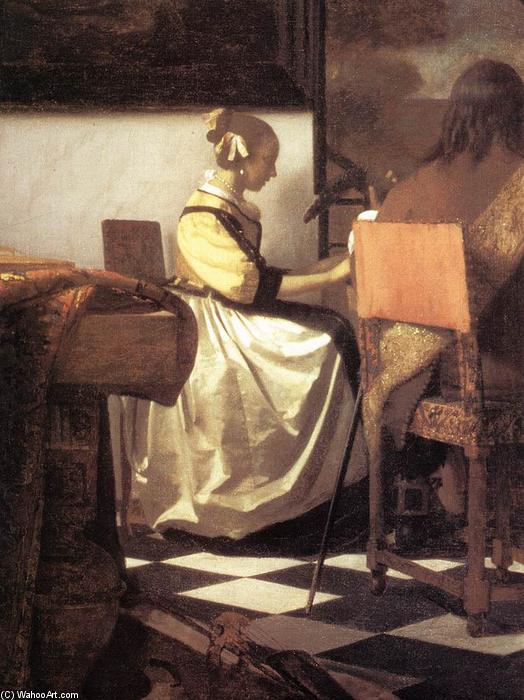
Johannes Vermeer's *The Concert (detail)*, painted in 1665, offers a captivating glimpse into the refined world of Delft during the Dutch Golden Age. This fragment, taken from a larger composition currently housed at the Isabella Stewart Gardner Museum in Boston, is not merely a depiction of musical performance; it’s an exploration of harmony, contemplation, and the subtle dynamics of human connection.
Subject & Composition
The detail focuses on a woman seated at a virginal (a keyboard instrument), poised to play or perhaps already engaged in music-making. A man stands beside her, attentively observing – his expression suggesting appreciation, encouragement, or even a shared intimacy. The composition is deliberately balanced yet subtly asymmetrical, drawing the eye across the scene and inviting us into their private world. Though a detail, it hints at a larger ensemble, with other figures partially visible, creating a sense of depth and social context.
Vermeer’s Masterful Technique
Vermeer was renowned for his unparalleled handling of light and color, and this fragment exemplifies his skill. He employs a *chiaroscuro* effect – the dramatic interplay of light and shadow – to sculpt forms and create an atmosphere of quiet intensity. Notice how the light gently illuminates the woman’s face and hands, highlighting her delicate features and emphasizing her role as the focal point. The meticulous brushwork builds up layers of paint, creating rich textures in the fabrics, wood, and polished surfaces. His technique isn't about bold strokes but rather a patient layering that achieves an almost photographic realism.
Historical Context & Style
As a leading figure of the Dutch Baroque period, Vermeer specialized in *genre painting* – scenes from everyday life. Unlike his contemporaries who favored grand historical or religious narratives, Vermeer focused on the beauty and dignity found within domestic interiors. This focus reflected the burgeoning middle class of the Netherlands during the 17th century, a society that valued comfort, education, and artistic expression. The painting’s style is characterized by its serene atmosphere, precise detail, and subtle psychological insight.
Symbolism & Interpretation
While seemingly straightforward, *The Concert (detail)* is rich in potential symbolism. Music itself was often associated with harmony, love, and spiritual devotion during this period. The virginal, a popular instrument among women of the time, could represent refinement and artistic skill. The attentive gaze of the man suggests a respectful admiration for the woman’s talent, perhaps even hinting at a romantic connection.
The act of making music together can be interpreted as a metaphor for harmonious relationships and shared experiences.
Emotional Impact & Lasting Appeal
This detail from *The Concert* evokes a sense of tranquility, intimacy, and quiet contemplation. It invites us to pause and reflect on the beauty of everyday moments and the power of human connection. The painting’s enduring appeal lies in its ability to transcend time and culture, resonating with viewers across generations.
It's a testament to Vermeer’s genius that even a fragment of his work can transport us to another world.
Key Features
- Exceptional use of light and shadow (*chiaroscuro*)
- Meticulous attention to detail in textures and surfaces
- Intimate portrayal of a domestic scene
- Subtle psychological insight into the figures’ emotions
- Harmonious composition and balanced arrangement