A Glimpse into 17th-Century Delft: The Enigmatic “Procuress”
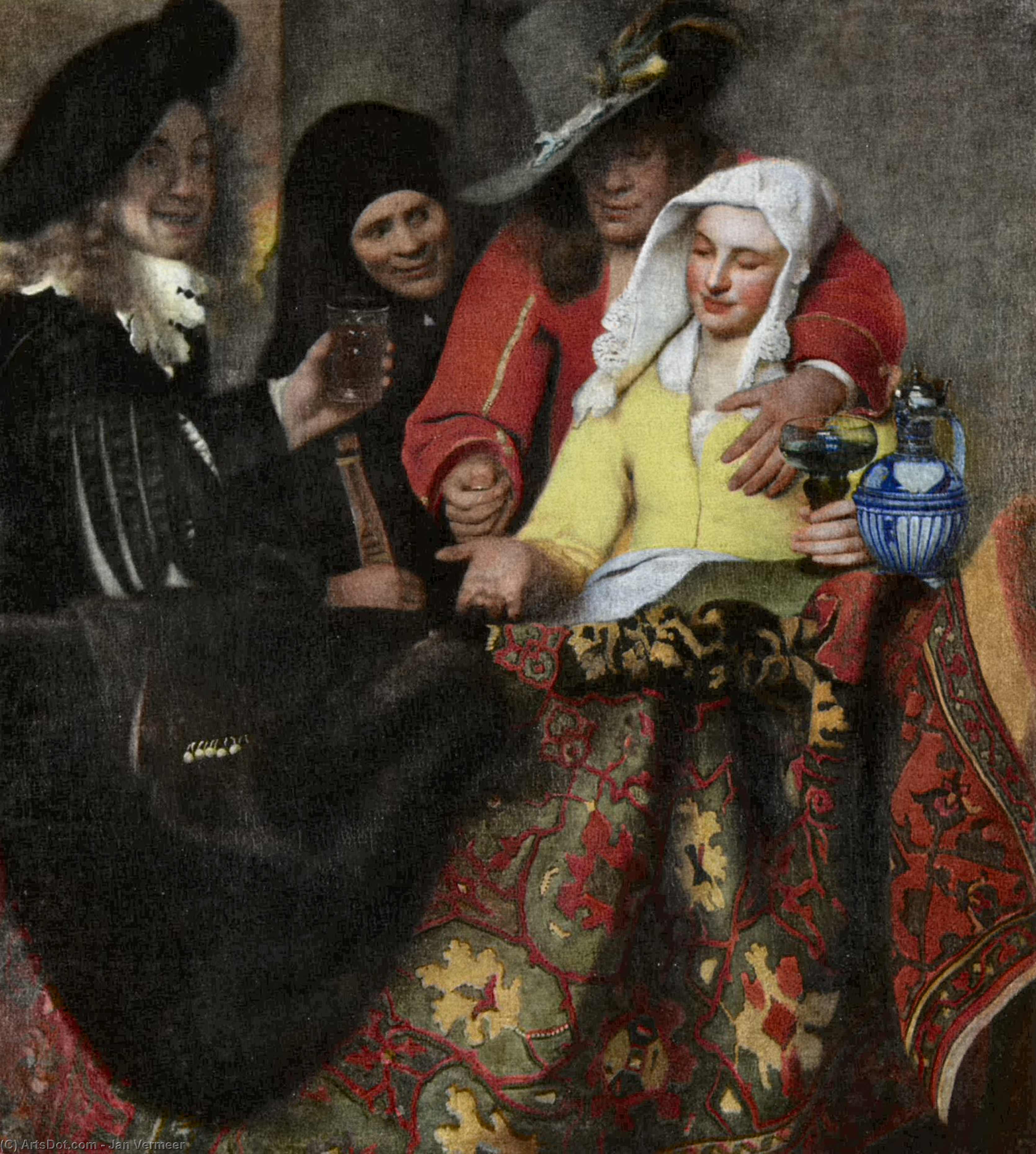
Johannes Vermeer’s “The Procuress,” completed in 1656, isn't merely a painting; it’s a carefully constructed tableau of intrigue and quiet observation—a window into the subtle social dynamics and burgeoning commercialism of Delft during the Dutch Golden Age. This oil on canvas, measuring just 143 x 130 cm, immediately draws the eye with its masterful use of chiaroscuro lighting, casting deep shadows that heighten the drama and intimacy of the scene. Vermeer, a relatively unknown artist at the time, had begun his career painting biblical and mythological subjects, but “The Procuress” marks a pivotal shift – his first foray into genre painting, depicting a contemporary subject with remarkable realism and psychological depth.
The composition itself is deceptively simple. A young woman, dressed in a vibrant yellow gown that seems to glow against the darker backdrop, sits poised on a balustrade, her head turned slightly away as if observing the transaction unfolding before her. Beside her stands a man, his face partially obscured by a wide-brimmed hat and a dark cloak, engaged in a discreet exchange of coins with a younger figure – likely a young man, though his features are deliberately ambiguous. The presence of four wine glasses, a vase, and a bottle scattered around the room suggests a gathering, a moment of leisure amidst the business at hand. Yet, there’s an underlying tension, a sense of veiled transaction that speaks to the complexities of wealth, desire, and social status in 17th-century Delft.
The Baroque Influence and Vermeer's Unique Style
While “The Procuress” is often categorized as Baroque due to its dramatic lighting and theatrical staging, it’s crucial to recognize that Vermeer’s style transcends simple categorization. He masterfully employs the techniques of the Baroque – particularly the use of strong contrasts between light and shadow (chiaroscuro) – but infuses them with a distinctly Vermeerian sensibility: an unparalleled attention to detail, a subtle exploration of texture, and a remarkable ability to capture the fleeting effects of light on everyday objects. The painting’s realism is heightened by meticulous rendering of fabrics—the shimmering silk of the woman's gown, the rough weave of the carpet—and the delicate details of the wine glasses and bottles.
Notably, Vermeer’s use of color is restrained yet impactful. The yellow of the woman’s dress immediately commands attention, while the dark tones of the room create a sense of mystery and intimacy. The subtle variations in hue—the muted greens and browns of the furniture, the deep blues of the wine jugs—add depth and richness to the scene. This careful orchestration of color contributes significantly to the painting's overall atmosphere.
Symbolism and Social Commentary
Beyond its immediate depiction of a clandestine meeting, “The Procuress” is laden with symbolic meaning. The woman’s averted gaze suggests a certain detachment, perhaps reflecting her awareness of the transactional nature of the encounter. The ambiguous identity of the figures—the procuress herself, the young man, and the older gentleman—adds to the painting's complexity and invites multiple interpretations. Some scholars believe that Vermeer subtly included a self-portrait within the figure of the man in the dark cloak, adding another layer of intrigue to the composition.
Furthermore, the presence of the wine glasses and bottles speaks to the importance of social gatherings and celebrations in 17th-century Dutch society. However, these elements are juxtaposed with the serious nature of the transaction taking place, creating a tension between pleasure and commerce. The painting can be seen as a commentary on the moral ambiguities of wealth and desire, reflecting the changing values of the era.
A Timeless Masterpiece: Reproduction Possibilities
ArtsDot offers meticulously crafted hand-painted reproductions of “The Procuress,” capturing the essence of Vermeer’s genius with unparalleled accuracy. Our artists replicate every detail—from the subtle nuances of light and shadow to the intricate textures of fabrics—ensuring that your reproduction will be a stunning addition to any interior space. Whether you're an art enthusiast, a collector, or simply seeking a beautiful piece of art to enhance your home, our reproductions provide a faithful representation of this iconic masterpiece, allowing you to experience the timeless beauty and profound psychological depth of Vermeer’s “The Procuress” in exquisite detail.