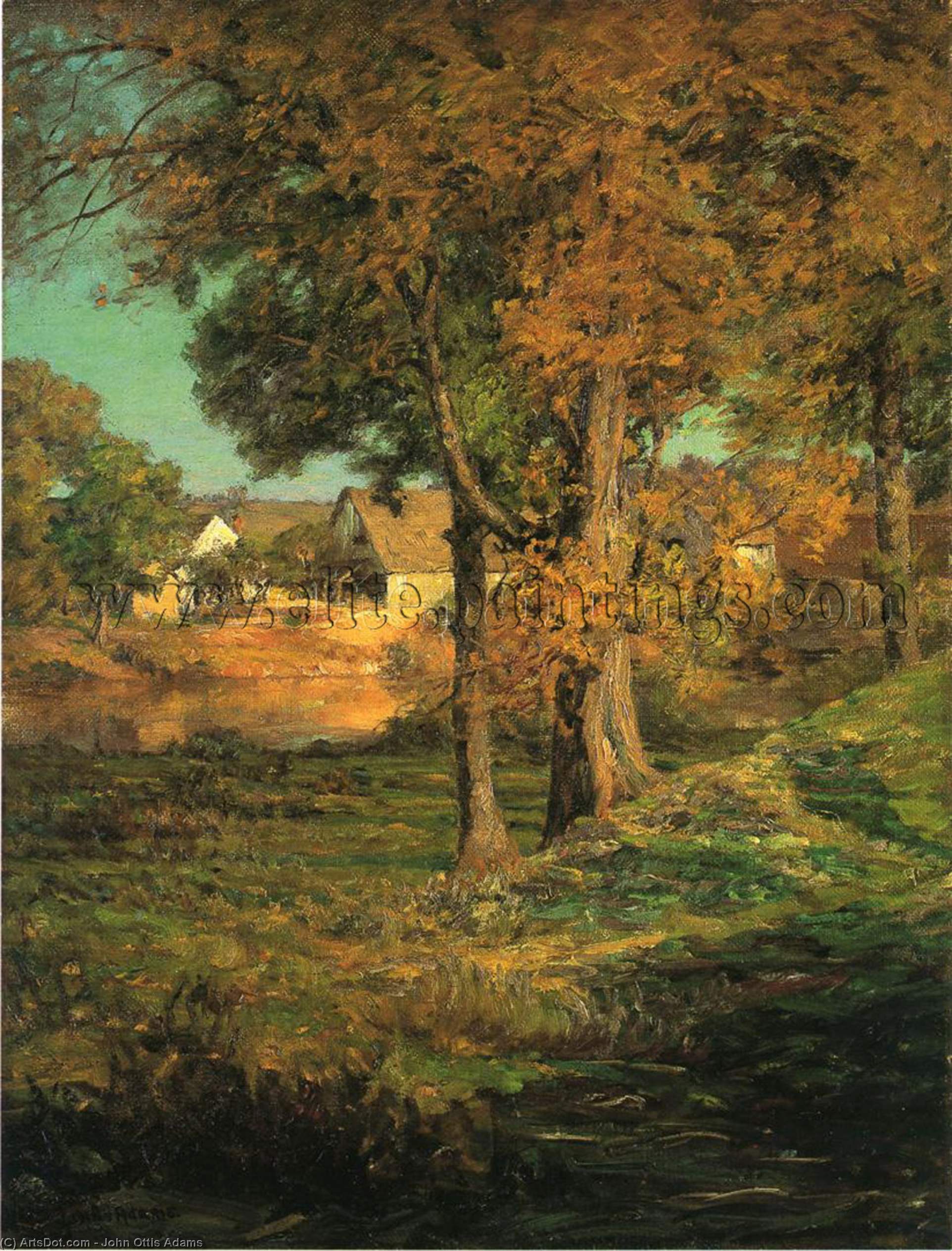
Discover "Thornberry's Pasture," a serene 1904 landscape by John Ottis Adams. Admire his soft brushstrokes & capture of rural Indiana beauty. A timeless American art piece.
フーシャー・グループの主要なアメリカ印象派画家、ジョン・オティス・アダムス(1851-1927)をご紹介します。複製画を通じて、彼の穏やかな風景画や肖像画、そして忘れ去られた遺産を探求し、美術教育への献身についても学んでください。
インディアナポリスのニューフィールズへ!54,000点以上のアフリカ、アジア、ヨーロッパコレクション、美しい庭園、歴史的建造物、自然公園を探索。あらゆる年齢層向けの展示会、ツアー、イベントをお楽しみください。
A Quiet Reflection on Indiana’s Heartland
The painting “Thornberry's Pasture Brooklyn, Indiana” by John Ottis Adams stands as a poignant testament to the American Impressionist movement’s fascination with capturing fleeting moments of beauty and tranquility. Completed in 1904, this oil on canvas masterpiece resides within the Indianapolis Museum of Art, offering visitors a glimpse into a pivotal era of artistic exploration—a time when painters sought to distill the essence of nature's grandeur without resorting to grand narratives or dramatic poses.
The Artist’s Vision: Adams and His Hoosier Group
John Ottis Adams wasn’t merely an artist; he was a cornerstone of the Hoosier Group, alongside luminaries like T.C. Steele and William Forsyth. This collective championed a distinctive aesthetic rooted in regional landscapes—specifically Indiana—and embraced a stylistic approach characterized by soft brushstrokes and a masterful manipulation of light. Unlike Impressionists who often prioritized capturing optical sensations, Adams aimed to convey an emotional resonance derived from observing the natural world. His canvases weren’t intended to simply depict what was seen; they were vehicles for expressing feelings of serenity and contemplation—a deliberate counterpoint to the anxieties prevalent during the period.
Technique and Style: Impressionistic Mastery
Adams's technique exemplifies the core tenets of Impressionism. He employed loose, visible brushstrokes – a hallmark of the Hoosier Group – layering pigment onto the canvas in thin glazes that allowed light to penetrate through the paint surface. This method brilliantly rendered the dappled sunlight filtering through the foliage, creating an illusion of shimmering luminescence and enhancing the painting’s overall atmosphere. The muted palette—dominated by greens, browns, and blues—further contributes to the scene's calming effect, mirroring the quiet stillness of Brooklyn, Indiana. Careful attention was paid to tonal gradations, subtly shaping the contours of the landscape and imbuing it with depth and realism.
Historical Context: Embracing Rural America
The painting emerged during a period of significant social and economic transformation in America—the burgeoning industrial revolution juxtaposed against an enduring appreciation for rural life. Artists like Adams responded to this duality by portraying scenes from the Midwest, celebrating its unspoiled vistas and fostering a connection with the natural world. The Hoosier Group’s commitment to depicting American landscapes reflected a broader cultural yearning for simplicity and authenticity amidst the complexities of urban expansion. Furthermore, it aligns with the burgeoning interest in psychology and introspection that characterized the era—a desire to capture not just what was seen but also how one felt when confronted with beauty.
Symbolism: The Quietude of Observation
Beyond its technical brilliance, “Thornberry’s Pasture Brooklyn, Indiana” carries subtle symbolic weight. The solitary figures positioned near the river represent humanity's engagement with nature—a deliberate gesture toward mindful contemplation and appreciation for the rhythms of daily life. The trees themselves symbolize resilience and permanence against the backdrop of transient seasons, reminding viewers of the enduring beauty found in the natural world. Adams’s masterful depiction of light – particularly its diffused glow – embodies a spiritual aspiration to illuminate the inner landscape as well as the external one.
Emotional Impact: A Balm for the Soul
Ultimately, “Thornberry's Pasture Brooklyn, Indiana” succeeds in transporting the viewer to a place of profound peace and tranquility. Its soft colors, delicate brushstrokes, and evocative composition evoke feelings of nostalgia and contentment—a timeless reminder that true beauty resides not in grand spectacle but in quiet observation. Like Clyfford Still’s paintings – which share Adams's focus on color and texture – this artwork speaks to a fundamental human desire for connection with the natural world and offers an enduring invitation to savor the simple joys of existence.