A Vision in Brick and Sky: Rediscovering John Piper’s Bristol
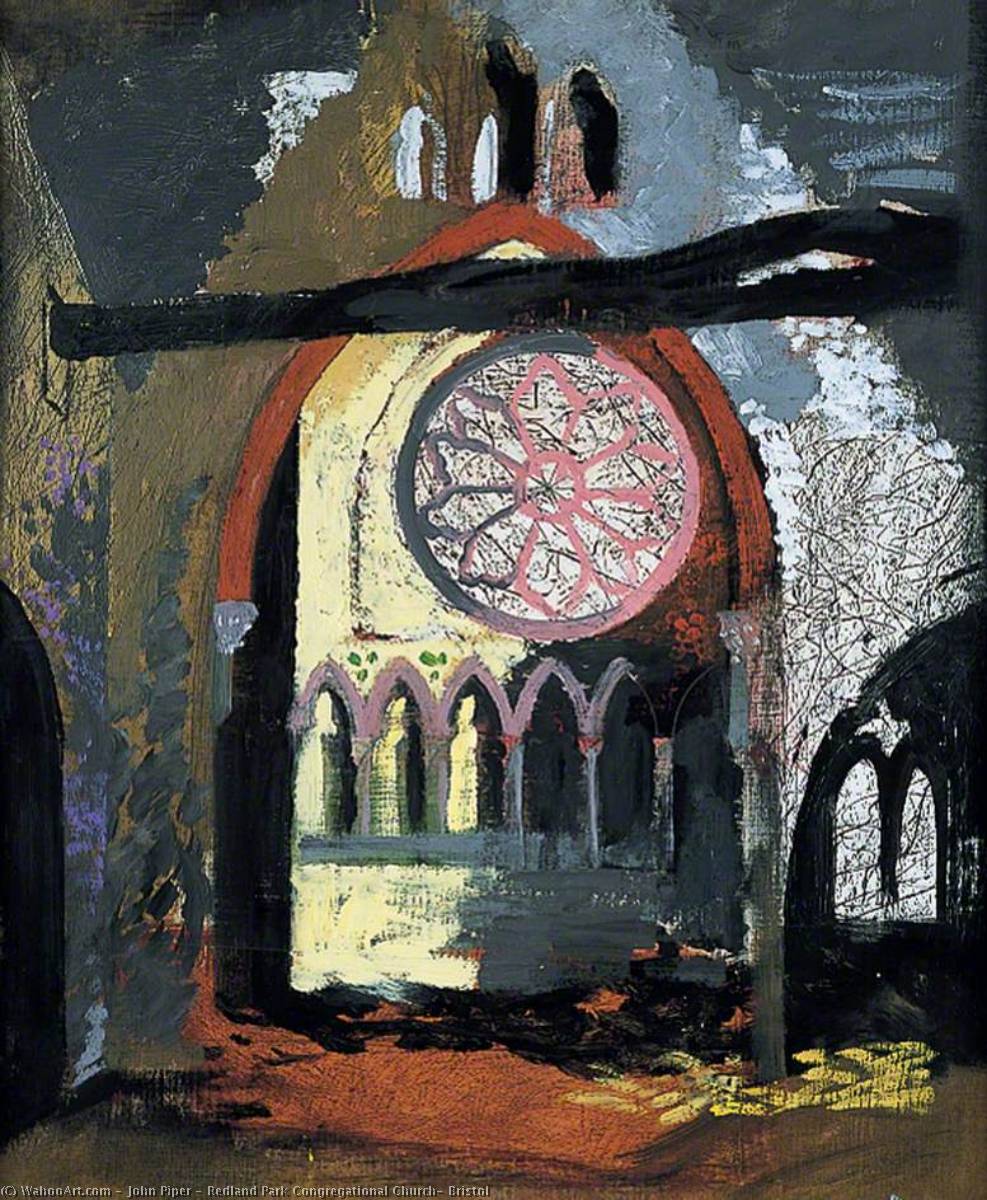
In the evocative landscape of mid-twentieth-century British art, few names resonate with as much architectural soul as John Piper. His 1940 masterpiece, Redland Park Congregational Church, Bristol, serves as a profound meditation on the intersection of human devotion and the enduring strength of the built environment. Captured during a period of immense global upheaval, this painting transcends mere architectural documentation; it is an atmospheric window into a moment where the permanence of stone and brick meets the fleeting, dramatic shifts of the English sky. The composition is anchored by the commanding presence of the clock tower, which pierces the heavens, acting as a vertical bridge between the terrestrial world of the congregation and the ethereal expanse above.
The artist’s technique reveals a masterful command over texture and light, characteristic of his unique ability to imbue structures with a sense of living history. Through a deliberate application of color and form, Piper renders the red brick exterior of the church not as a static surface, but as a vibrant, breathing entity. The large stained glass window, a focal point of spiritual significance, is treated with a delicate touch that suggests the play of light through colored glass, even within the muted tones of the era. His brushwork possesses an expressive energy, where the sharp lines of the clock tower and the smaller architectural details are softened by a romantic, almost melancholic atmosphere that invites the viewer to linger on the subtle nuances of the shadows and the structural rhythm of the windows.
Beyond its aesthetic brilliance, the painting carries a deep symbolic weight. The presence of a solitary figure standing before the church introduces a poignant human element, suggesting themes of contemplation, community, and the individual's relationship with the monumental. In the context of 1940, as Britain faced the shadows of war, such depictions of steadfast landmarks offered a sense of continuity and resilience. For the discerning collector or interior designer, this work offers more than just visual beauty; it provides a sophisticated focal point that brings a sense of historical gravity and British heritage to any space. Whether placed in a contemporary gallery setting or a classic study, this reproduction of Piper’s vision serves as an enduring tribute to the architectural spirit and the quiet majesty of the English landscape.