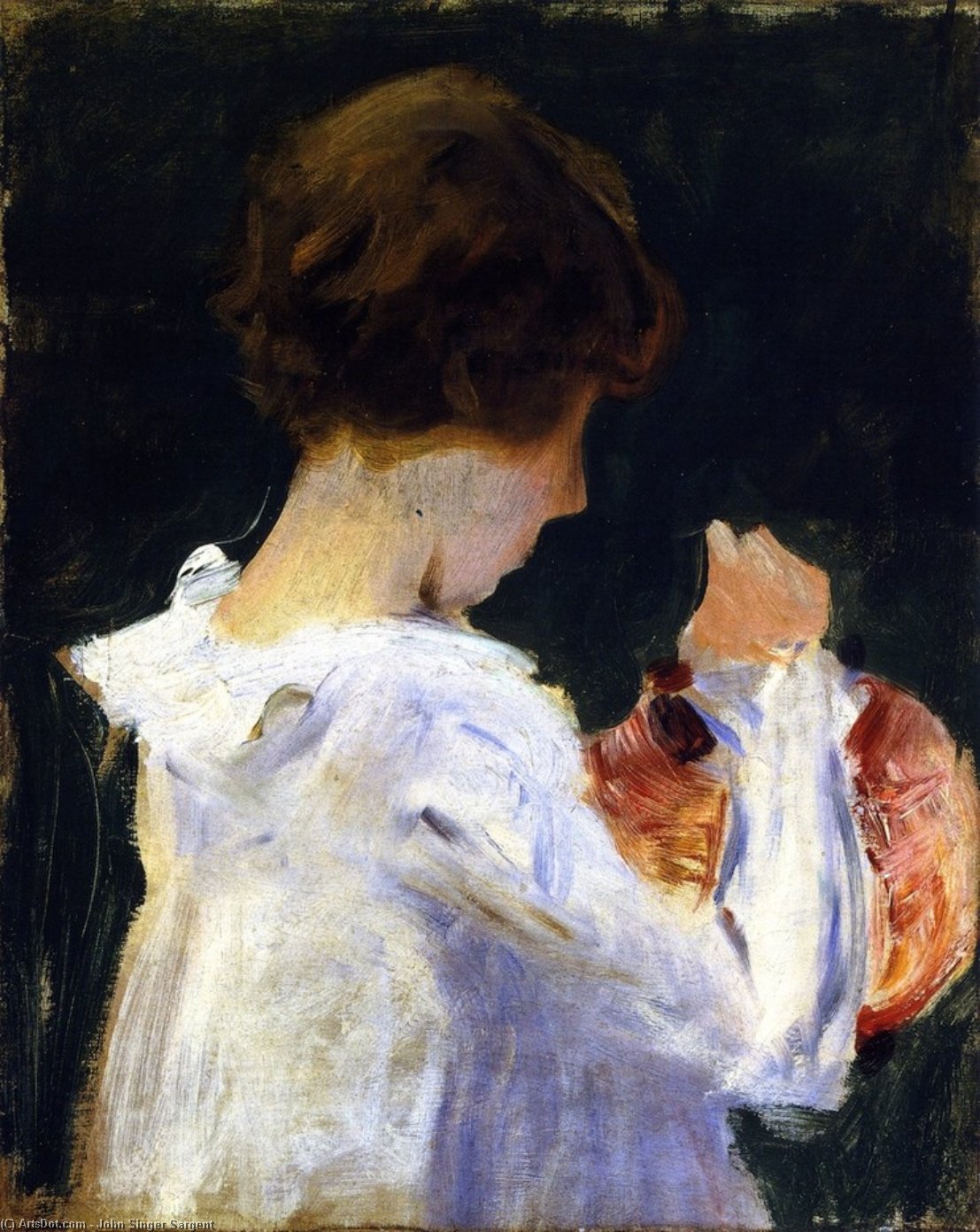
Carnation, Lily, Lily, Rose (Study): A Dream of Childhood Innocence
John Singer Sargent’s “Carnation, Lily, Lily, Rose” (study) is more than just a painting; it's a captured moment of pure enchantment. Completed in 1885, this intimate scene – inspired by Joseph Mazzini’s evocative song – transports us to a world of shimmering light, delicate blooms, and the unadulterated joy of childhood. The study, a preparatory piece for the larger work, offers an even more concentrated glimpse into Sargent's masterful ability to evoke atmosphere and emotion through subtle brushstrokes and luminous color.
At its heart, the painting depicts two young girls, Polly and Dorothy, daughters of artist Frederick Barnard, gently lighting paper lanterns in a secret garden. The setting itself is a carefully constructed fantasy – a haven of pink roses, lush foliage, and the warm glow emanating from the lanterns. Sargent’s genius lies not just in depicting these elements realistically, but in imbuing them with an almost dreamlike quality. The composition, deliberately off-center, creates a sense of movement and invites the viewer to step into this private world alongside the children.
Impressionist Techniques & A Masterful Hand
Sargent’s execution is quintessential Impressionism, yet imbued with his own distinctive style. Notice the rapid, broken brushstrokes – not intended to create a photographic representation, but rather to capture the fleeting effects of light and color as they danced across the scene. The artist skillfully uses short, vibrant dabs of paint to build up form, particularly in the delicate petals of the roses and the intricate patterns on the lanterns. This technique creates a shimmering effect, enhancing the sense of luminosity that defines the painting.
The attention to detail is remarkable. Sargent’s meticulous rendering of the girls' clothing – the soft folds of the fabric, the subtle variations in tone – adds to the overall realism and tactile quality of the work. Furthermore, his use of color is remarkably restrained, relying on muted tones punctuated by flashes of pink and white, creating a harmonious and serene palette.
Symbolism & Emotional Resonance
Beyond its technical brilliance, “Carnation, Lily, Lily, Rose” resonates with powerful symbolic meaning. The title itself – borrowed from Mazzini’s song – adds a layer of romanticism and nostalgia to the scene. The lanterns, symbols of hope and illumination, guide the viewer's eye through the composition, drawing attention to the central figures. The painting evokes feelings of innocence, wonder, and the preciousness of childhood memories. It is a testament to Sargent’s ability to capture not just a visual image, but also the emotional essence of a fleeting moment.
As one of Sargent's most beloved works, "Carnation, Lily, Lily, Rose" exemplifies his skill in capturing beauty and emotion. Its enduring appeal lies in its ability to transport us back to a time of simple joys and unburdened innocence – a timeless reminder of the magic found within the natural world.