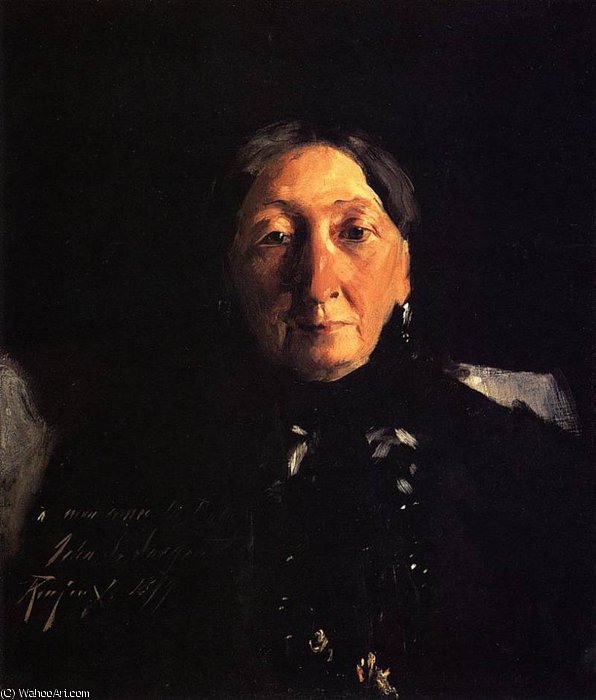
A Study in Quiet Dignity
In the vast, shimmering repertoire of John Singer Sargent, few works capture the profound stillness of character as intimately as Madame François Buloz. Executed around 1916, this striking monochrome portrait transcends the mere recording of a likeness, offering instead a window into a soul defined by resilience and grace. The subject, an older woman of unmistakable presence, meets the viewer’s gaze with a directness that is both commanding and contemplative. There is no artifice here to hide behind; Sargent strips away the distractions of vibrant color to focus entirely on the interplay of light, shadow, and the intangible essence of the sitter. In this grayscale realm, every subtle tonal shift serves to deepen the psychological narrative, inviting those who stand before it to contemplate the quiet strength that often resides within a life well-lived.
The emotional resonance of the piece lies in its ability to evoke a sense of timelessness. While the portrait is rooted in the social fabric of the early 20th century, its impact is universal. The subject’s expression—a delicate balance of authority and perhaps a hint of melancholy—creates an atmospheric tension that lingers in the mind long after one has turned away. For the discerning collector or interior designer, this artwork offers more than just visual beauty; it provides a focal point of profound emotional depth, capable of anchoring a room with its somber elegance and commanding a space through its sheer, understated power.
The Mastery of Impressionistic Light
Technically, Madame François Buloz is a masterclass in the wet-on-wet method, a technique Sargent utilized to achieve the breathtakingly fluid quality that defines his Impressionistic style. Rather than relying on the rigid, meticulous outlines characteristic of traditional academic portraiture, Sargent applied paint with a loose, bravura brushwork. This approach allows the light to appear as though it is dancing across the canvas, catching the soft folds of fabric and the subtle textures of skin with a luminous, atmospheric effect. The edges of the composition remain soft and somewhat indistinct, particularly where secondary figures fade into the shadows of the background, ensuring that the viewer’s eye remains locked upon the luminous face of Madame Buloz.
This deliberate use of texture and light creates a sense of three-dimensional form within a relatively flat perspective. The contrast between the deep, velvety blacks and the brilliant highlights on the subject's features generates a dramatic chiaroscuro effect that breathes life into the monochrome palette. To possess a reproduction of such a work is to bring a piece of this technical brilliance into one's own environment—a chance to experience the tactile energy of Sargent’s brushstrokes and the sophisticated interplay of light that makes his work a cornerstone of Gilded Age portraiture.
A Legacy of Elegance and Status
To understand this portrait is to understand the era of its creation. Painted during the twilight of the Gilded Age, the work reflects a period when portraiture served as a vital instrument of social identity. Sargent, the preeminent portraitist of his generation, was frequently commissioned by the elite to capture not just their physical features, but their prestige and social standing. In Madame François Buloz, we see the hallmarks of this tradition: the dignified posture, the suggestion of fine attire, and a sense of refined composure that speaks of a life of distinction.
For those seeking to curate an art collection or design a sophisticated interior, this painting serves as an exquisite bridge between historical grandeur and modern aesthetic sensibilities. Its monochromatic palette makes it remarkably versatile, allowing it to integrate seamlessly into contemporary minimalist settings or complement the rich textures of a classical study. It is an investment in atmosphere—a piece that brings with it the prestige of the Belle Époque and the enduring, masterful touch of one of history's greatest visual storytellers.