「ジョン・シガー・サージェント」は、エドワード年代の優雅さを表現した印象派絵画や、豪華な肖像画で知られるアメリカ画家。彼の作品は美術史に大きな影響を与え、今なお多くの人々を魅了しています。特に『マダムX』は社会的なタブーをテーマにした作品として話題になりました。
Tate Gallery
(London, United Kingdom)
ロンドンのテート・ブリテンで英国美術の歴史を体験!ターナーをはじめとする名画たちを無料で鑑賞できます。テート・モダンやテート・スティーブスも合わせて訪れる価値あり。
テート・ブリテン、ロンドン美術館、英国美術、ターナー、プリペラヒエティスト、ミルバンク、建築、現代美術、彫刻、絵画、版画、ギャラリー、博物館、コレクション、シドニー・スミス
A Portrait Steeped in Refinement: Exploring John Singer Sargent’s Mrs. Ian Hamilton
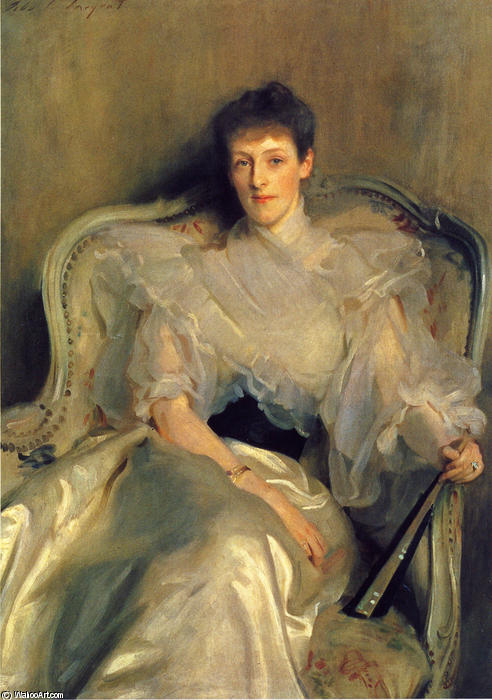
John Singer Sargent's "Mrs. Ian Hamilton (Jean Muir)" transcends mere representation; it embodies the very essence of Edwardian elegance and captures a moment of quiet contemplation within a meticulously crafted tableau vivant. Painted in 1896, this portrait resides prominently at the Tate Gallery in London, serving as a testament to Sargent’s unparalleled ability to distill complex psychological states into visual form.
The Subject: Jean Muir – A Woman Defined by Grace
Jean Muir, wife of General Ian Hamilton, is depicted with remarkable sensitivity. Sargent eschews dramatic poses or overtly expressive gestures, opting instead for a posture that conveys serenity and inner reflection. Her hands folded gracefully before her torso speak volumes about composure and dignity—a characteristic often attributed to Muir herself, who possessed an understated beauty and cultivated a reputation for quiet strength. The artist’s careful attention to detail extends beyond the physical appearance; he subtly captures the nuances of Muir's gaze, hinting at thoughts unseen and emotions unspoken.
Stylistic Mastery: Sargent’s Impressionistic Approach
Sargent’s distinctive style—a masterful blend of realism and impressionism—is evident throughout “Mrs. Ian Hamilton.” Unlike many portrait painters of his era who prioritized idealized depictions, Sargent embraced a technique that sought to convey the immediacy of perception. He employed loose brushstrokes and subtle tonal variations to create an atmosphere of diffused light, mirroring the soft luminescence characteristic of London’s aristocratic salons during the Victorian period. This approach wasn't merely stylistic; it served to heighten the emotional impact of the painting, inviting viewers to immerse themselves in Muir’s inner world.
Technique & Materials: Precision Meets Atmosphere
The canvas itself is executed with oil paints on linen—a standard medium for portraiture at the time—but Sargent’s technique goes beyond conventional methods. He meticulously blended colors and applied layers of paint with remarkable precision, ensuring that every surface was rendered with exceptional accuracy. However, this meticulousness never overshadows his artistic vision; rather, it serves as a foundation upon which he builds an evocative atmosphere. The artist skillfully utilized chiaroscuro—the interplay between light and shadow—to sculpt Muir’s form and imbue the scene with depth and dimensionality.
Historical Context & Symbolism: Echoes of Victorian Society
“Mrs. Ian Hamilton” is firmly rooted in the social landscape of late Victorian England, a period marked by rigid social conventions and an obsession with appearances. The opulent chair—a symbol of status and comfort—further underscores this context. Alongside it are two additional chairs, subtly positioned to create visual balance and reinforce the sense of refined domesticity. Even the handbag resting at Muir’s feet carries symbolic weight, representing practicality amidst beauty – a quiet reminder that even those inhabiting privileged circles navigated everyday life with grace and consideration. Sargent's portrayal captures not just a woman's likeness but also the spirit of an era defined by restraint and sophistication.
Emotional Resonance: A Moment Frozen in Time
Ultimately, “Mrs. Ian Hamilton” succeeds in conveying a profound emotional resonance. It’s more than simply a portrait; it’s a distillation of character—a glimpse into Muir's contemplative mind and inner life. Sargent’s masterful brushwork captures the subtle beauty of human emotion, inviting viewers to contemplate themes of dignity, grace, and quiet introspection. This enduring image continues to fascinate audiences today, cementing Sargent’s legacy as one of the most influential portrait painters of his time.