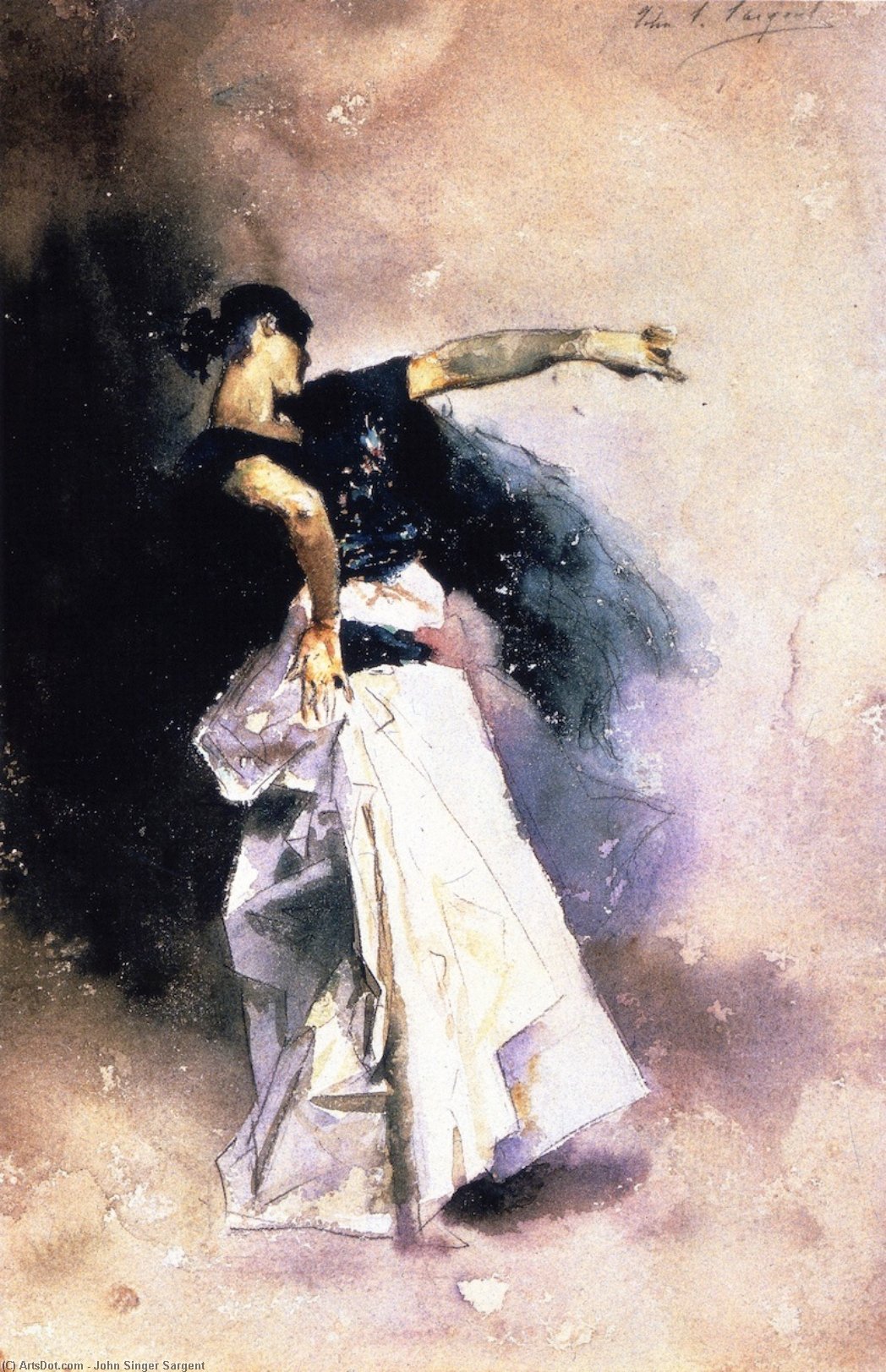
スペインのダンサー(制作):ジョン・シガー・サージェントによる繊細な水彩画。躍動感と色彩豊かな表現が特徴的な作品で、バレエダンサーの優美さを捉えた美しい芸術品です。詳細はこちらから!
「ジョン・シガー・サージェント」は、エドワード年代の優雅さを表現した印象派絵画や、豪華な肖像画で知られるアメリカ画家。彼の作品は美術史に大きな影響を与え、今なお多くの人々を魅了しています。特に『マダムX』は社会的なタブーをテーマにした作品として話題になりました。
Spanish Dancer (Study) – A Delicate Dance Between Light and Emotion
The watercolor painting “Spanish Dancer (Study)” by John Singer Sargent holds an undeniable allure—a glimpse into the artist’s masterful approach to capturing fleeting moments of grace and movement. Created in 1880, this piece transcends mere representation; it embodies Sargent's signature style and speaks volumes about his artistic vision during the Belle Époque. Examining its details reveals a profound understanding of color theory, composition, and psychological nuance—elements that continue to resonate with audiences today.
The Artist’s Technique: Watercolor’s Transparent Embrace
Sargent’s choice of watercolor was deliberate, reflecting his belief in its ability to convey atmosphere and luminosity. Unlike oil paints which build up layers of pigment, watercolor relies on translucent washes applied to a porous surface—a technique that allows for remarkable subtlety and depth. Observe how Sargent skillfully blends pinkish hues into the background, creating an ethereal glow that illuminates the dancer’s form without overwhelming it. This layering process isn't simply about achieving visual beauty; it mirrors Sargent’s artistic philosophy – prioritizing feeling over precise detail. The artist meticulously builds up color gradually, capturing the nuances of light and shadow with astonishing accuracy.
A Portrait of Movement: Composition and Symbolism
The composition itself is strikingly dynamic. Sargent places the dancer centrally within the frame, emphasizing her posture—a deliberate gesture pointing upwards—which communicates confidence and aspiration. Her dress, rendered in flowing folds, contributes to the sense of movement, mirroring the rhythm of dance itself. Beyond its visual appeal, the pose carries symbolic weight; it represents a desire for transcendence, an upward gaze signifying hope and ambition. The dancer’s hand is positioned strategically, directing the viewer's eye towards her torso—a compositional choice that draws attention to the core of her presence.
Historical Context: Sargent and Impressionism
Sargent’s work aligns seamlessly with the broader artistic currents of his time – particularly Impressionism. While he eschewed the overtly expressive brushstrokes favored by Monet and Renoir, he nonetheless embraced the Impressionist preoccupation with capturing fleeting impressions of light and color. Like Monet's paintings of water lilies, Sargent sought to convey not just what he saw but how he *felt* about what he saw—a characteristic that distinguishes him from more academic painters. The painting’s influence can be seen in subsequent generations of artists who admired Sargent’s ability to distill emotion into visual form.
Emotional Resonance: Capturing the Essence of Grace
Ultimately, “Spanish Dancer (Study)” succeeds in conveying a palpable sense of energy and passion. It's more than just a depiction of a dancer; it’s an embodiment of beauty—a celebration of movement and grace. Sargent captures not only the physical form but also the inner spirit of his subject, inviting viewers to contemplate themes of aspiration, confidence, and artistic contemplation. This enduring appeal speaks to the power of art to transcend time and connect us with universal emotions.