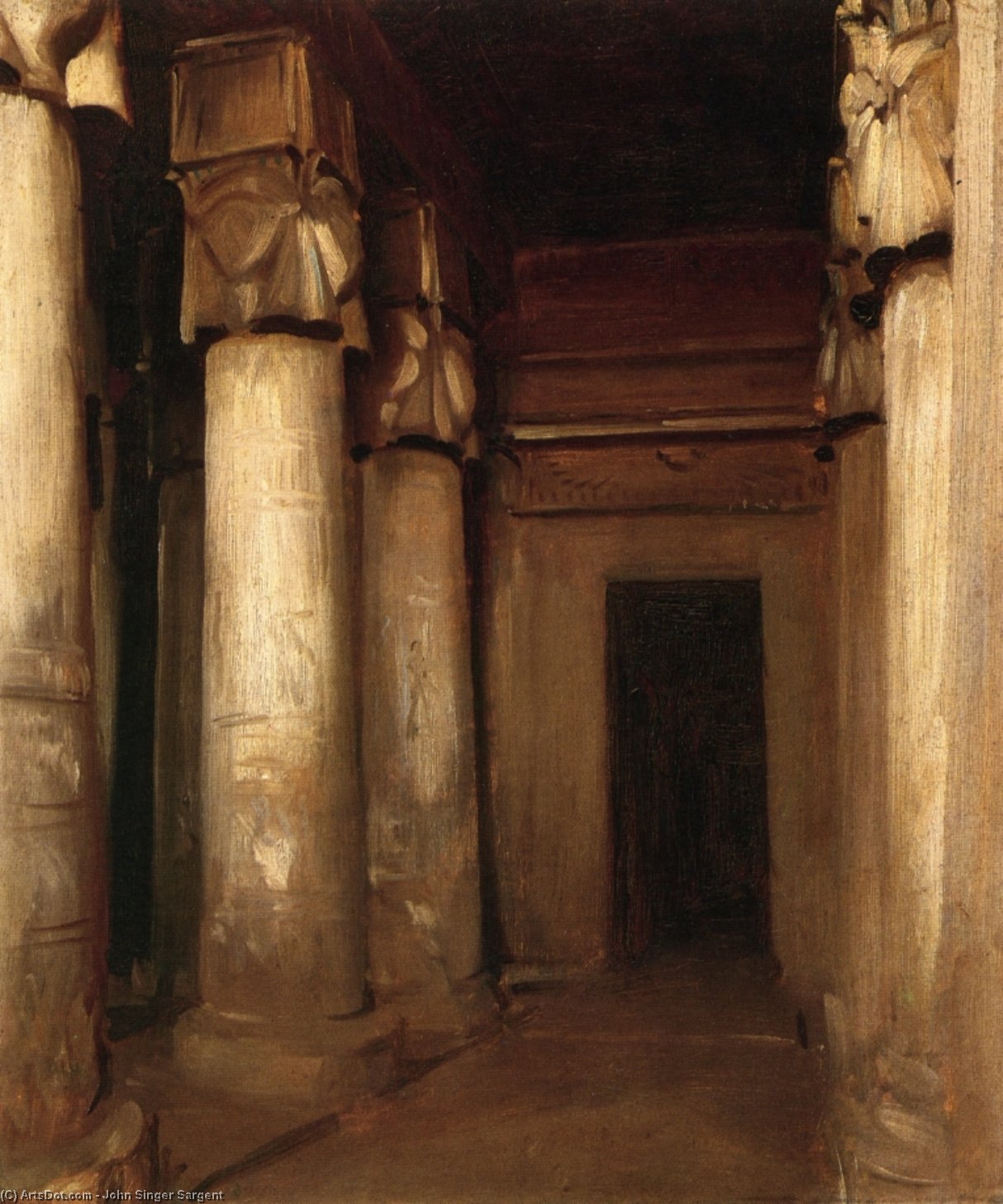
Captured in exquisite black and white by John Singer Sargent during the late Victorian era, this Temple of Denderah reproduction showcases a mesmerizing temple scene adorned with ornate columns—a testament to Sargent’s masterful style and an invitation to bring timeless beauty into your home.
A Glimpse into Egyptian Majesty: John Singer Sargent’s Temple of Denderah
The painting “Temple of Denderah,” executed by John Singer Sargent in 1891, stands as a testament to the artist's remarkable ability to capture not just visual likeness but also the spirit of a bygone era. More than simply depicting a temple structure—a monumental edifice dedicated to Isis and Osiris—Sargent’s artwork delves into the profound symbolism embedded within its architectural grandeur and offers an evocative glimpse into the artistic sensibilities of the late Victorian period.
- Subject Matter: The scene portrays the Temple of Dendera, located in Upper Egypt, a site revered for centuries as one of the most sacred places of worship dedicated to Egyptian deities. Sargent meticulously rendered the temple’s towering columns and intricate carvings, capturing its imposing presence against the backdrop of the desert landscape.
- Style: Sargent's style is characterized by Impressionistic tendencies blended with meticulous realism. While acknowledging the influence of Impressionism—particularly in his use of tonal gradations to convey light and atmosphere—he maintains a level of detail that surpasses purely atmospheric depictions, ensuring accuracy in portraying the temple’s architectural features.
- Technique: Sargent employed oil paint on canvas, utilizing layering techniques to achieve depth and luminosity. He skillfully blended colors to create subtle nuances of tone, capturing the textures of stone and highlighting the interplay of light and shadow across the columns. This meticulous approach reflects his dedication to mastering the craft of painting and conveying a sense of palpable reality.
Historical Context: Egyptomania and Artistic Inspiration
The late Victorian era witnessed an unprecedented fascination with Ancient Egypt—a phenomenon known as Egyptomania. Driven by scholarly discoveries concerning Tutankhamun’s tomb in 1922, fueled by popular literature like “A Tale of Two Cities,” and bolstered by advancements in archaeology and ethnography, Egyptian motifs permeated art, design, and decorative arts across Europe and America. Sargent's decision to depict Dendera wasn’t merely an aesthetic choice; it was a response to this cultural fervor—a deliberate engagement with the grandeur and mystery of Egyptian civilization. The temple itself served as a powerful symbol of faith, royalty, and divine power, concepts that resonated deeply within Victorian society.
Symbolism: Pillars of Belief and Divine Presence
The temple’s columns are more than just structural elements; they embody profound symbolic significance. Representing the pillars supporting the heavens and symbolizing stability and permanence, they convey a sense of unwavering faith and devotion. The figures flanking the columns—likely intended to represent priests or worshippers—further emphasize the spiritual dimension of the scene. Sargent's careful positioning of these figures contributes to the overall composition’s solemnity and reinforces the temple’s role as a locus of religious reverence.
Emotional Impact: Tranquility Amidst Monumental Scale
Despite its monumental scale, “Temple of Denderah” exudes an atmosphere of serene contemplation. Sargent's masterful use of tonal color and light creates a feeling of tranquility—drawing the viewer into the temple’s sacred space. The painting invites reflection on themes of spirituality, history, and artistic achievement, leaving a lasting impression on anyone who appreciates its beauty and intellectual depth. It serves as an enduring reminder of Sargent’s ability to transform observation into evocative art that transcends time.