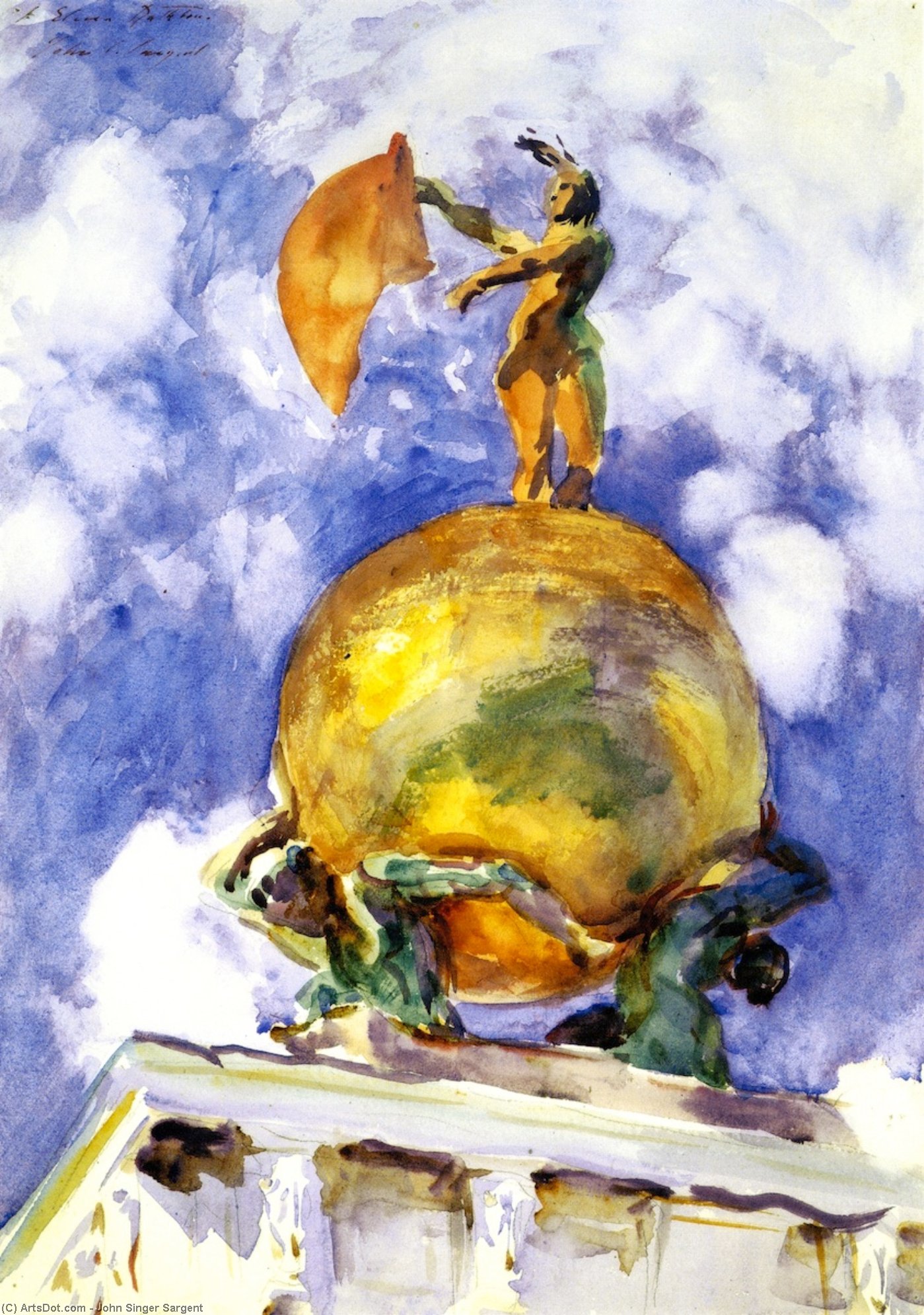
ジョン・シガー・サージェントの傑作「ドゥオガナ、富の女神像」はヴェネツィア建築と雰囲気を捉えた印象派絵画。女性が凧を掲げる彫刻に囲まれたダイナミックな風景を描き上げました。高品質な複製をお届け。
「ジョン・シガー・サージェント」は、エドワード年代の優雅さを表現した印象派絵画や、豪華な肖像画で知られるアメリカ画家。彼の作品は美術史に大きな影響を与え、今なお多くの人々を魅了しています。特に『マダムX』は社会的なタブーをテーマにした作品として話題になりました。
The Dogana, Statue of Fortune – A Venetian Vision
John Singer Sargent’s “The Dogana, Statue of Fortune” is more than just a watercolor painting; it's a distillation of Venice itself—a moment captured in shimmering light and infused with the spirit of its artistic heritage. Created around 1909-11 during Sargent’s prolific Venetian period, this artwork exemplifies his masterful ability to convey atmosphere and emotion through subtle brushstrokes and luminous color palettes. It resides within the Isabella Stewart Gardner Museum's collection, a testament to Sargent’s enduring influence on Impressionistic landscape painting.
A Symphony of Watercolor Technique
Sargent’s technique is quintessential watercolor—a medium he embraced wholeheartedly for its capacity to achieve unparalleled transparency and luminosity. As detailed in scholarly articles like “The Art Media Watercolor,” this process involves layering diluted pigments onto absorbent paper, allowing water to carry the color outwards, creating ethereal washes that capture the nuances of Venetian light. Unlike oil paints which build up layers, watercolor offers a spontaneity that perfectly suits Sargent’s vision of capturing fleeting impressions. The resulting surface possesses an almost luminous quality, mirroring the reflections on the canal waters and enhancing the painting's overall sense of tranquility.
Venetian Architecture and Mythological Symbolism
The scene depicts the Dogana Vecchia (Old Customs House), a prominent Venetian landmark overlooking the Grand Canal. Sargent skillfully renders its façade with meticulous detail—the textured stone, the arched windows, and the interplay of shadows—establishing a grounding element within the composition. However, the painting’s focal point is a statue depicting Fortuna – Roman goddess of fortune and prosperity – holding aloft a kite. This symbolic gesture speaks to Venice's role as a hub of trade and commerce during Sargent’s time, representing aspiration and success amidst beauty. The inclusion of two figures adds dynamism to the scene, suggesting movement and interaction within this idealized Venetian landscape.
Influences Beyond Impressionism
Sargent’s artistic sensibilities extended beyond the Impressionist movement's core tenets. He deeply admired Bernardo Falconi’s monumental sculptures—particularly “Statua della Fortuna”—drawing inspiration from their grandeur and expressive power. Furthermore, Sargent’s formative years spent absorbing European art history instilled in him a profound understanding of classical mythology and its role in conveying moral and spiritual truths. These influences are subtly woven into the painting's aesthetic, contributing to its timeless appeal.
Owning a Piece of Venetian History
A meticulously crafted reproduction of “The Dogana, Statue of Fortune” allows art enthusiasts to experience Sargent’s genius firsthand. Available at https://ArtsDot.com, these reproductions utilize archival inks on premium canvas or paper, guaranteeing exceptional color fidelity and preserving the artwork's original beauty for generations to come. Explore more about John Singer Sargent and his captivating oeuvre at ArtsDot.com – where art history meets exquisite craftsmanship.