A Divine Encounter in Pigment and Light
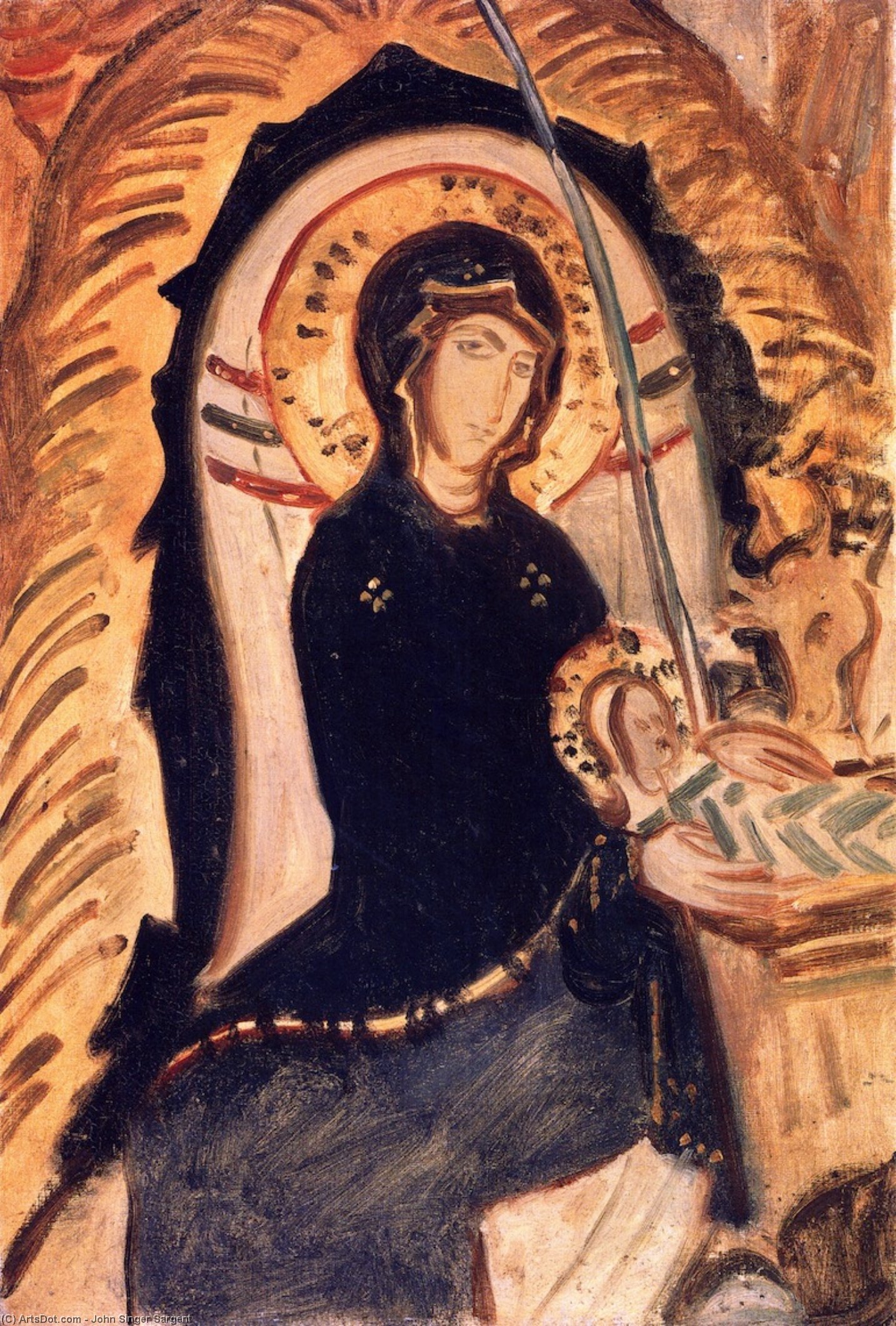
In the quiet, luminous depths of John Singer Sargent’s 1897 masterpiece, Virgin and Child (also known as The Virgin and Head of Christ, Ravenna), we are invited into a moment of profound spiritual intimacy. This painting transcends mere religious iconography, offering instead a tender, humanized glimpse into the divine. The composition centers on the Virgin Mary, her presence radiating a serene yet heavy grace as she cradles the infant Christ. Sargent, a master of capturing the ephemeral qualities of light, uses his brush to weave a scene where the sacred and the earthly coalesce. The delicate interplay of shadow and brilliance across the figures creates a sense of depth that draws the viewer into their private, hallowed world, making the piece an evocative centerpiece for any collection dedicated to classical beauty.
The technical brilliance of this work lies in Sargent’s ability to balance his Impressionistic sensibilities with the structured elegance of traditional portraiture. His technique is characterized by a fluid, confident brushwork that breathes life into the textures of the scene—from the soft, ethereal glow of skin to the intricate details of the surrounding elements. One might notice the subtle presence of two birds, positioned like silent witnesses to this holy event, and a book resting nearby, perhaps signifying the fulfillment of prophecy or the weight of sacred scripture. These small, symbolic details are not merely decorative; they are carefully placed anchors that ground the ethereal subject matter in a tangible, narrative reality.
Symbolism and the Gilded Age Aesthetic
Beyond its immediate visual splendor, the painting serves as a profound meditation on motherhood, divinity, and the continuity of faith. The crown adorning the Virgin’s head is a potent symbol of her celestial status, yet it does not distance her from the viewer; rather, it elevates the emotional weight of her maternal care. For the discerning collector or interior designer, this artwork offers more than just aesthetic appeal; it provides a narrative depth that can transform a space. The inclusion of symbolic objects—the birds and the text—invites a contemplative gaze, encouraging anyone who views the piece to linger on its layered meanings.
As an inhabitant of the late 19th century, Sargent brought his cosmopolitan, European-trained eye to this religious subject, infusing it with the sophisticated light and atmosphere of the Gilded Age. This makes the reproduction of such a work particularly compelling for modern interiors. Whether placed in a sunlit gallery or a moody, classically appointed study, the Virgin and Child acts as a window into a lost era of elegance. It is an investment in emotion, a piece that commands attention through its quiet strength and timelessly beautiful execution, offering a sense of peace and historical grandeur to any curated environment.