Introduction
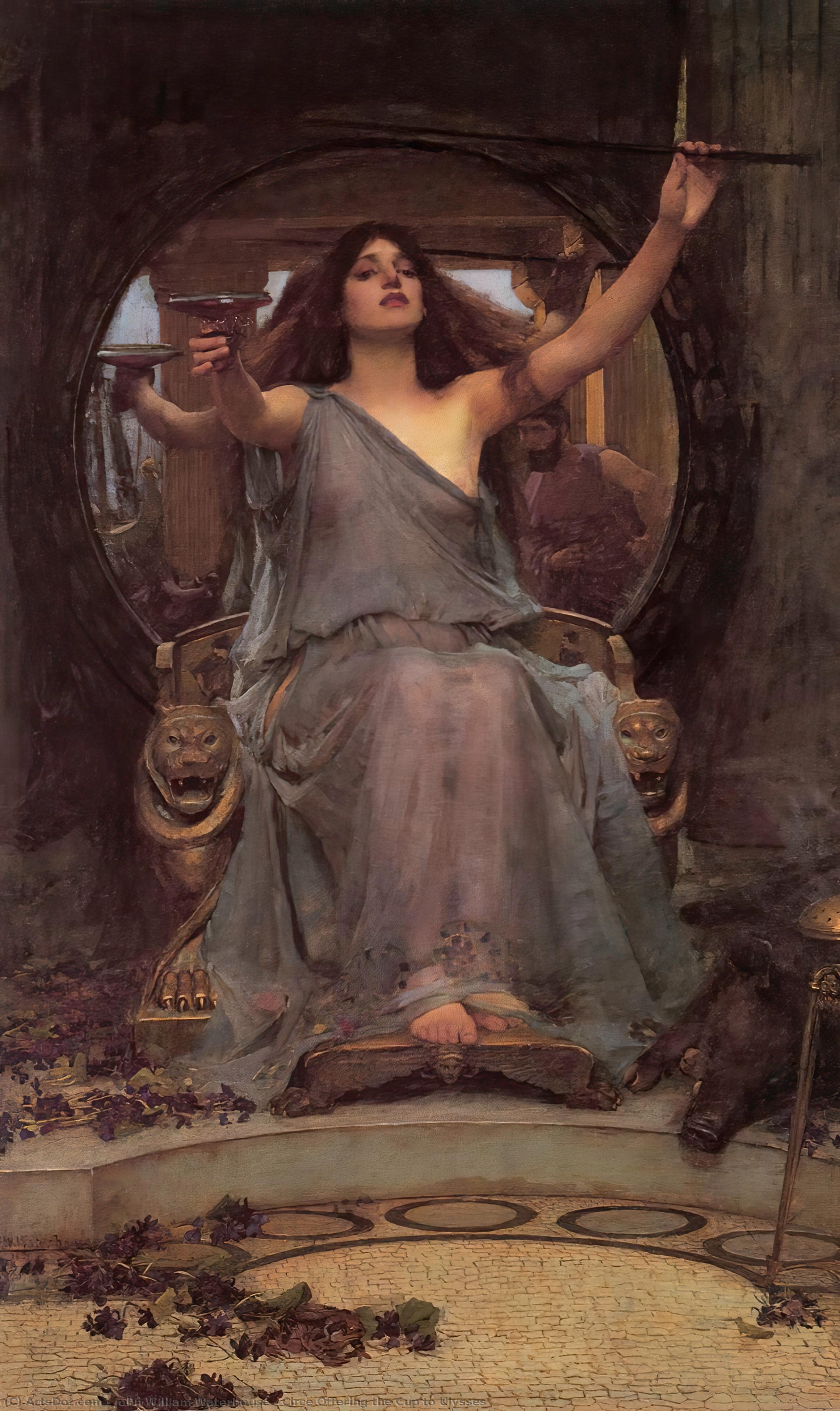
John William Waterhouse, a renowned English painter, created
Circe Offering the Cup to Ulysses in 1891. This oil painting is a masterpiece of the Pre-Raphaelite style and depicts a scene from Greek mythology where the sorceress Circe offers Ulysses a cup containing a potion with which she seeks to bring him under her spell.
The Painting's Significance
The painting measures 90 x 146 cm and is currently housed at the
Gallery Oldham in England. It showcases Waterhouse's skillful use of color and composition, drawing the viewer into the mystical world of Greek mythology. The scene is set in a dimly lit room with Circe seated on a chair, extending her arm to offer Ulysses the enchanted cup.
Artistic Style
Waterhouse was influenced by the Romanticism art movement, which emphasized emotions, imagination, and individuality. His work often featured dreamlike scenes and mythological subjects, as seen in
Circe Offering the Cup to Ulysses. The painting's style is characterized by its use of rich colors, intricate details, and a sense of mystique.
Other Works by John William Waterhouse
Waterhouse was a prolific artist, and his other notable works include:
These paintings demonstrate Waterhouse's fascination with mythological themes and his ability to capture the essence of these stories through his art.
Conclusion
Circe Offering the Cup to Ulysses is a captivating painting that showcases John William Waterhouse's mastery of the Pre-Raphaelite style. The painting's intricate details, rich colors, and mystical atmosphere make it a standout piece in the world of art. For those interested in exploring more of Waterhouse's works,
Circe Offering the Cup to Ulysses is a must-see. To learn more about John William Waterhouse and his contributions to the Romanticism art movement, visit
The Romanticism Art Movement.