The Painting and Its Artist
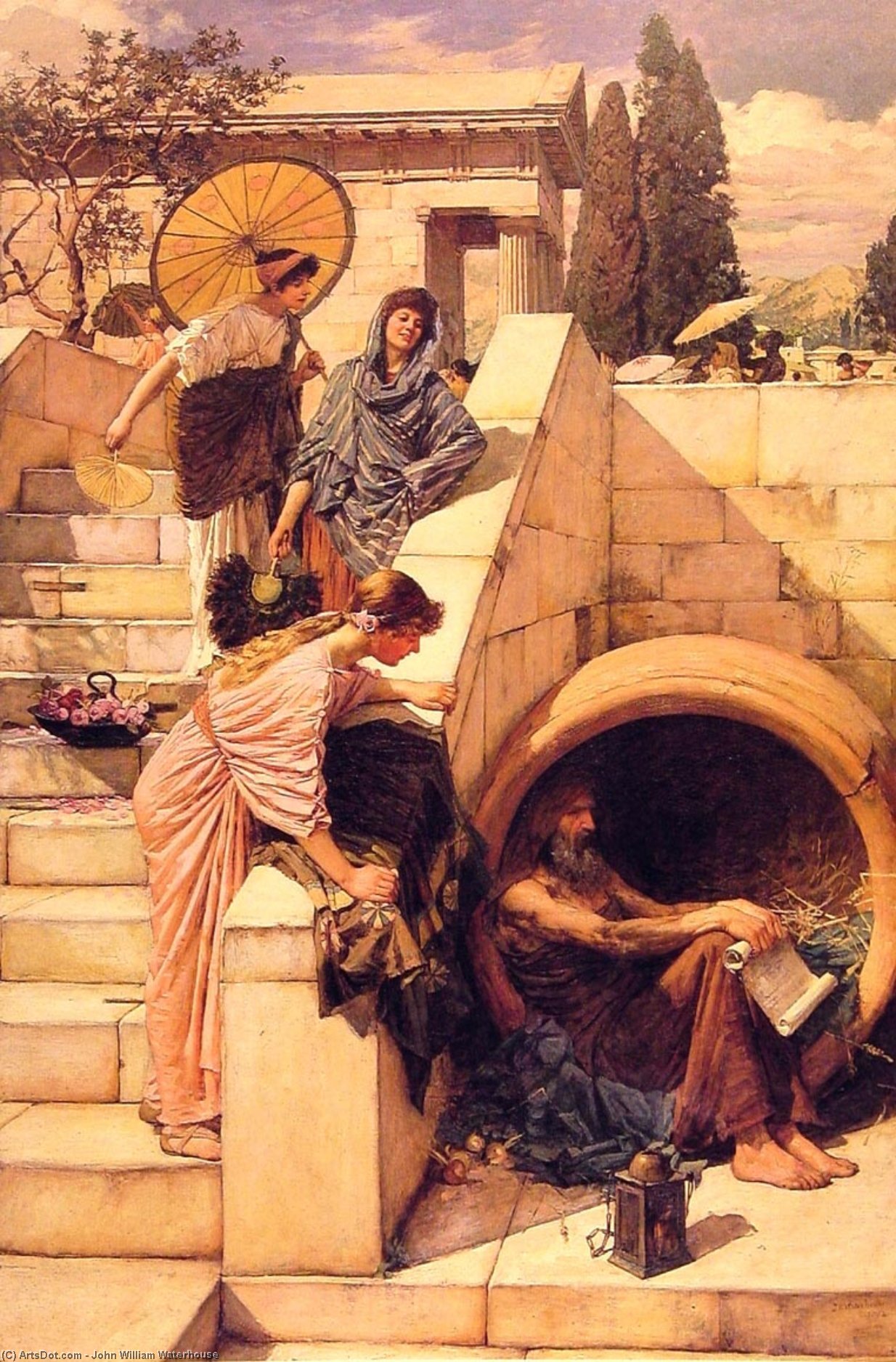
John William Waterhouse, a renowned English Pre-Raphaelite painter, created the captivating oil painting Diogenes in 1882. This artwork is housed at the
Art Gallery of New South Wales in Australia and exemplifies the Romanticism art movement.
Romanticism Art Movement
Romanticism was an art movement that emerged in the late 18th century and lasted until the mid-19th century. It was a reaction against the Neoclassical style, focusing on expressing emotions, imagination, and individuality through artwork. For more information on Romanticism, visit
The Romanticism Art Movement.
Diogenes: The Philosopher
Diogenes of Sinope, a Greek philosopher, lived around 320 BC and was known for his pursuit of self-sufficiency. He believed in living a natural life, free from the luxuries of civilization. Diogenes is often depicted in art carrying a lantern, symbolizing his search for an honest man.
Painting Description
The painting Diogenes by
John William Waterhouse measures 134 x 208 cm and is executed in oil on canvas. It depicts a group of people gathered around Diogenes, who sits in a large clay vase or urn. The scene is set in an outdoor environment with umbrellas, potted plants, books, and vases, creating an atmosphere of relaxation and leisure.
Other Works by John William Waterhouse
John William Waterhouse was known for his Pre-Raphaelite style, which influenced many of his works. Some notable paintings include:
These paintings can be found on ArtsDot.com, where you can explore more of Waterhouse's artwork and learn about his contributions to the Pre-Raphaelite movement.
Conclusion
Diogenes by
John William Waterhouse is a significant piece of Romanticism art that captures the essence of Diogenes' philosophy. The painting's detailed depiction and the artist's use of oil on canvas create a captivating visual experience. For those interested in exploring more of Waterhouse's works, visit ArtsDot.com to discover hand-made oil painting reproductions.
To learn more about John William Waterhouse and his contributions to art, visit
John William Waterhouse on ArtsDot.com.