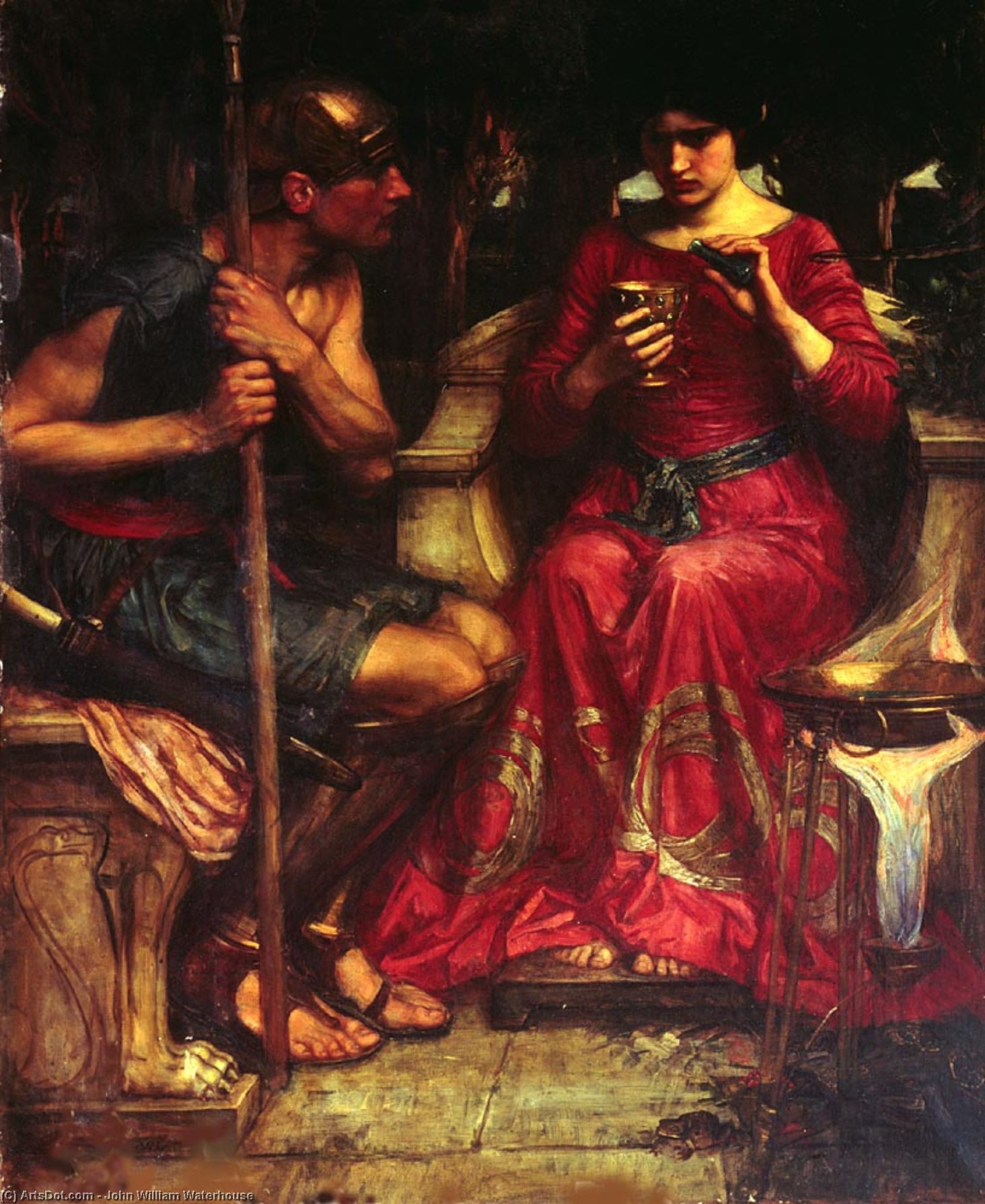
John William Waterhouse’s ‘Jason and Medea,’ a captivating Pre-Raphaelite oil painting from 1907, depicts a romantic scene of intimacy and magic. Explore this stunning artwork by Waterhouse and discover its rich symbolism and timeless beauty – perfect for your collection.
John William Waterhouse's *Jason and Medea*: A Pre-Raphaelite Dream
John William Waterhouse’s 1907 painting, *Jason and Medea*, is more than just a depiction of a classical myth; it’s an immersive experience, a carefully constructed dream rendered in oil on canvas. This captivating work exemplifies the height of Pre-Raphaelite romanticism, transporting the viewer to a world where ancient legend intertwines with potent emotion and a profound sense of mystery. Measuring 105 x 131 cm, the painting’s intimate scale draws us into the scene, fostering a feeling of closeness with the figures as they contemplate their shared destiny.
- Subject Matter: The artwork portrays Jason and Medea in a moment of quiet intensity. Jason, clad in a helmet – a symbol of his heroic quest – sits alongside Medea, who holds a wine glass, suggesting both indulgence and perhaps a subtle warning.
- Setting: A serene, dreamlike landscape forms the backdrop, characteristic of Waterhouse’s Pre-Raphaelite style. The environment is deliberately ambiguous, blurring the lines between reality and fantasy.
- Technique: Waterhouse's masterful use of oil paint creates a rich tapestry of color and texture. Noticeable brushstrokes contribute to the painting's dynamism while maintaining an overall sense of elegance and refinement.
A Symphony of Symbolism
*Jason and Medea* is steeped in symbolism, reflecting Waterhouse’s engagement with themes of love, betrayal, magic, and the human condition. The scene itself represents a pivotal moment – the point of no return for Jason and Medea as they embark on their perilous journey to retrieve the Golden Fleece. Medea's potion, though not explicitly visible, symbolizes her power and influence, while Jason’s helmet signifies his role as a hero driven by ambition and fate. The wine glass can be interpreted as a symbol of shared knowledge or perhaps a foreshadowing of tragic consequences. Waterhouse expertly weaves these elements together to create a narrative that transcends simple storytelling, inviting viewers to contemplate the complexities of human relationships and the seductive power of magic.
The Romantic Vision of John William Waterhouse
Waterhouse was a key figure in the Pre-Raphaelite movement, an artistic reaction against the perceived artificiality of academic art. He shared with his contemporaries a desire to recapture the spirit of early Renaissance painting – particularly the works of Raphael and Leonardo – emphasizing beauty, detail, and emotional intensity. His style is immediately recognizable: elegant lines, meticulously rendered figures, and a focus on the female form are hallmarks of his work. *Jason and Medea* perfectly embodies these qualities, showcasing Waterhouse’s ability to evoke a sense of timeless romance and profound emotion through his masterful technique.
Historical Context and Lasting Relevance
Painted in 1907, *Jason and Medea* reflects the broader cultural fascination with ancient mythology that characterized the late Victorian era. The Pre-Raphaelites sought to revive classical themes and narratives, believing them to hold enduring truths about human nature. Waterhouse’s interpretation of this myth continues to resonate today, offering a poignant meditation on love, power, and the consequences of ambition. Its dreamlike atmosphere and evocative symbolism ensure its place as a cornerstone of Pre-Raphaelite art and a testament to Waterhouse's artistic genius.